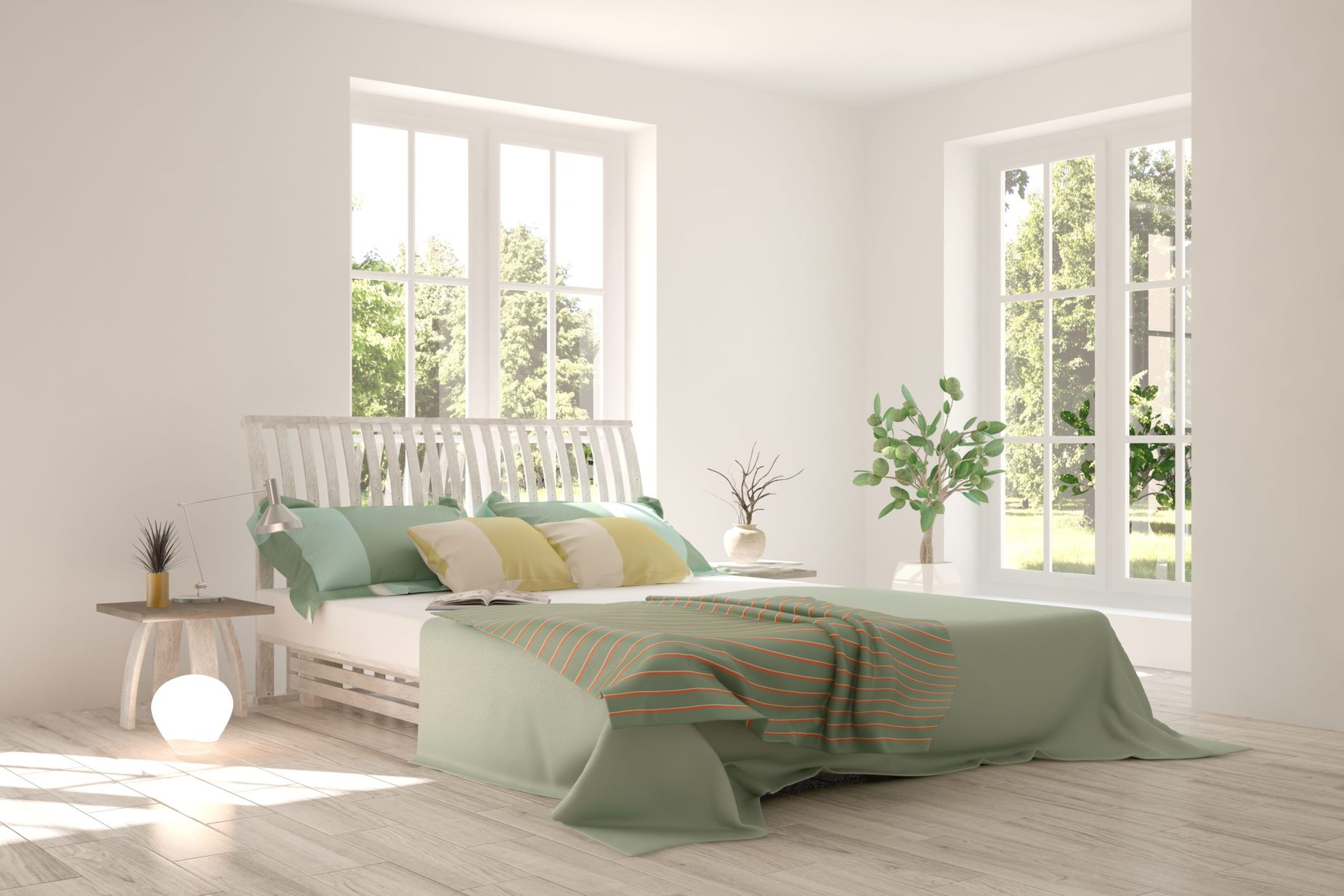
Your bedroom is your sanctuary. But even a sanctuary has rules. And while you doze in the dark, you still must have a window to officially call the room of your dreams a bedroom.
States have guidelines that clarify what can officially be considered a bedroom. Often times the definition and requirements define a bedroom vary even more by municipal jurisdictions. In some cases, local jurisdictions require a closet, a specific ceiling height, heating and ventilation sources or a certain square footage.
However, overwhelmingly local and state requirements include a window as a requirement to define a space as a bedroom.
Quick Answer: Is a Window Required in a Bedroom?
Yes, a window is required in a bedroom according to most building codes. Specifically, bedrooms must have an egress window—a window large enough to serve as an emergency exit in case of fire or other emergencies.
Key Requirements:
- Minimum window size: 5.7 square feet of opening area
- Minimum width: 20 inches
- Minimum height: 24 inches
- Maximum sill height: 44 inches from floor
- Must be operable (cannot be fixed or picture windows)
Without a legal egress window, a room cannot be officially classified as a bedroom, regardless of how it’s being used.
IRC (International Residential Code) Bedroom Window Requirements
The International Building Code requires every bedroom contains at least one egress window that is 5.7 square feet, at least 20 inches wide by 24 inches high with an opening no higher than 44 inches from the floor.
Detailed IRC Requirements (Section R310.2):
Minimum Opening Area:
- 5.7 square feet (820 square inches)
- This is the actual opening when window is fully open, not the frame size
- Calculation: Width × Height of the openable area
Minimum Opening Dimensions:
- Width: 20 inches minimum (when fully open)
- Height: 24 inches minimum (when fully open)
- Both requirements must be met simultaneously
Maximum Sill Height:
- 44 inches from finished floor to bottom of window opening
- Allows person to easily climb out in emergency
- Lower is better for accessibility
Operational Requirements:
- Must be operable from inside without keys, tools, or special knowledge
- Cannot require removal of sash or other parts
- Must be openable with reasonable force
- Cannot have bars or grilles that don’t release from inside
Style, design and color are up to the homeowner, however the window must be operable so window options like picture windows do not satisfy the requirement.
Important Notes:
- These are MINIMUM requirements; many jurisdictions have stricter codes
- Local building codes always supersede IRC if they’re more restrictive
- Basement bedrooms have additional requirements (see below)
Why Bedrooms Must Have Windows: 3 Critical Reasons
1. Emergency Egress (Fire Safety)
How you choose to use your space is totally up to you. Aside from legal reasons, there are many practical reasons for including a window in your bedroom.
A bedroom must have two exits in case of emergency, such as a fire. Aside from a bedroom door, a window is the most common second emergency exit. It is absolutely essential to have proper carbon monoxide and smoke detectors in place. A window can provide a lifesaving purpose in case of emergency.
Fire Safety Statistics:
- House fires spread in 2-3 minutes
- Smoke inhalation causes 70% of fire deaths
- Egress windows save hundreds of lives annually
- Fire departments can access occupants from outside through windows
Emergency Scenarios Where Egress Windows Save Lives:
- Fire blocks primary door exit
- Door jammed or swollen shut
- Smoke-filled hallways
- Structural collapse blocking doorway
- Home invasion requiring escape route
- Carbon monoxide emergency
2. Natural Light and Ventilation
There are many studies that report that natural light can uplift your mood and improve your overall mental health. A window is the most practical way to bring natural light into a room.
Fresh air is also a good way to boost your mood, so consider spending time in your bedroom with the windows cracked open.
Health Benefits of Bedroom Windows:
- Better Sleep: Natural light regulates circadian rhythms
- Improved Mood: Sunlight boosts serotonin production
- Vitamin D: Morning sunlight exposure provides essential vitamin D
- Air Quality: Fresh air reduces CO2 and indoor pollutants
- Lower Humidity: Ventilation prevents mold and mildew
- Mental Health: Views of nature reduce stress and anxiety
Studies Show:
- Workers in offices with windows get 46 minutes more sleep per night
- Natural light exposure improves sleep quality by 65%
- Bedrooms with windows have 30% better air quality
3. Legal and Resale Value
Since technically a room cannot be considered a bedroom without a window, a realtor may be hesitant to list it as one when reselling your home.
The room may need to be classified as something else officially even if it does end up being used as a bedroom by the buyer. If you are looking to sell in the near future, adding a bedroom with a window could greatly increase your home’s value.
Impact on Home Value:
- Homes are appraised based on number of legal bedrooms
- Each additional bedroom adds 10-20% to home value (depending on market)
- Rooms without egress windows must be listed as “bonus room,” “office,” or “den”
- Buyers specifically search by bedroom count
- Mortgages may be affected if bedroom count is misrepresented
Legal Implications:
- Cannot advertise room as bedroom without code-compliant window
- Violates truth-in-housing laws
- May void home insurance in case of emergency
- Can result in fines during home inspections
- Liability issues if injury/death occurs
Bedroom Window Requirements by State
While the IRC provides baseline standards, individual states and municipalities often have their own requirements:
Common State Variations:
More Restrictive States:
- California: Requires 5% of floor area for natural light (window) AND 5% for ventilation OR mechanical ventilation
- New York: Some jurisdictions require windows on two walls for bedrooms
- Florida: Hurricane zones require impact-resistant glass on egress windows
- Texas: Some cities require minimum 80 square feet of floor space in addition to window
Standard IRC Followers: Most states follow IRC exactly:
- Virginia, Maryland, Pennsylvania, North Carolina, South Carolina, Georgia, Tennessee, Kentucky, West Virginia (Mid-Atlantic/Southeast states)
Additional Local Requirements: Even within states, cities and counties may require:
- Minimum bedroom square footage (70-80 sq ft common)
- Minimum ceiling height (7-7.5 feet)
- Closet (not in IRC but required in some areas)
- Electrical outlets (minimum 2)
- Heat source (radiator, vent, etc.)
How to Verify Your Requirements:
- Contact local building department
- Request bedroom definition requirements
- Ask specifically about egress window specifications
- Inquire about basement bedroom exceptions
- Request permit requirements for adding windows
Basement Bedroom Egress Window Requirements
Basement bedrooms face additional challenges because they’re below grade (ground level). These require special egress window installations:
Additional Requirements for Basements:
Window Wells (Below-Grade Windows):
- Required when window sill is below ground level
- Minimum well size: 9 square feet of area
- Minimum horizontal projection: 36 inches from foundation
- Drainage system required to prevent water accumulation
Ladder or Steps: If window well is deeper than 44 inches:
- Permanent ladder or steps required
- Must provide continuous path to ground level
- Ladder rungs spaced maximum 18 inches apart
- Steps minimum 12 inches wide
Cover Requirements:
- Window well covers must be removable from inside without tools
- Cannot obstruct emergency egress
- Must support 150-200 lbs if person steps on it
Lighting:
- Many codes require exterior light at egress window
- Improves emergency visibility for rescue personnel
Unique Challenges:
- Excavation required for window installation
- Potential foundation cutting necessary
- Waterproofing critical
- More expensive than above-grade windows
Cost to Add Egress Window to Bedroom
Understanding the investment required helps you plan whether to convert a room into a legal bedroom:
Above-Grade Bedroom (Standard Installation):
Materials:
- Egress window (vinyl double-hung or casement): $300-$700
- Window well (if needed): $100-$300
- Framing lumber: $50-$150
- Insulation and weatherproofing: $30-$80
- Interior/exterior trim: $50-$150
Labor:
- Window installation: $300-$600
- Wall framing modification: $200-$500
- Siding repair/replacement: $150-$400
- Interior drywall repair: $200-$400
- Painting: $100-$300
Total Above-Grade Cost: $1,000-$2,500
Basement Bedroom (Below-Grade Installation):
Materials:
- Egress window: $400-$900
- Window well (metal or concrete): $300-$800
- Window well cover: $100-$300
- Drainage materials: $100-$250
- Concrete saw rental or service: $150-$400
- Framing and finishing: $200-$500
Labor:
- Excavation: $500-$1,500
- Foundation cutting (concrete): $400-$1,000
- Window installation: $400-$800
- Waterproofing: $200-$500
- Interior finishing: $300-$600
- Backfill and grading: $200-$400
Total Basement Installation Cost: $2,500-$5,000
Additional Costs:
Permits and Inspections: $150-$500
- Required in most jurisdictions
- Ensures code compliance
- Final inspection validates bedroom legal status
HVAC Modifications: $500-$2,000 (if needed)
- Bedrooms must have heat source in most codes
- May require duct work extension
- Register installation
Electrical Work: $200-$600 (if needed)
- Minimum 2 outlets required per wall
- May need circuit addition
Closet Addition: $500-$3,000 (if required locally)
- Not IRC requirement but some areas require
- Varies by size and style
Return on Investment:
Cost vs Value Analysis:
- Investment: $1,000-$5,000 per bedroom window
- Home value increase: $10,000-$30,000 per additional bedroom
- ROI: 200-500% (depending on local market)
Example:
- 3-bedroom home value: $250,000
- Add legal 4th bedroom: $2,500 window investment
- New 4-bedroom home value: $270,000-$280,000
- Net gain: $17,500-$27,500 (700-1,000% ROI)
Payback Period: Immediate upon sale (if selling soon) or adds to equity immediately
How to Convert a Room to a Legal Bedroom
If you have a bonus room, den, or office that lacks a proper egress window, here’s how to convert it:
Step 1: Verify Requirements
- Contact local building department
- Confirm egress window specifications
- Ask about additional requirements (closet, square footage, ceiling height)
- Determine if room already meets other criteria
Step 2: Choose Window Location
- Exterior wall access (obviously)
- Avoid load-bearing considerations if possible
- Consider furniture placement and room layout
- Factor in exterior landscaping and access
- Verify underground utilities location
Step 3: Obtain Permits
- Submit plans to building department
- Pay permit fees ($150-$500)
- Schedule inspections (rough framing, final)
Step 4: Hire Professionals or DIY
Professional Installation: $1,500-$4,000 complete
- Licensed contractors ensure code compliance
- Guaranteed workmanship
- Faster completion (1-3 days)
DIY Installation: $500-$1,500 materials only
- Requires carpentry skills
- 2-4 days of work
- Must still pass inspection
- Risk of errors or code violations
Step 5: Window Installation Process
- Cut opening in exterior wall
- Frame rough opening
- Install egress window
- Insulate and weatherproof
- Install interior and exterior trim
- Repair/patch siding and drywall
- Paint and finish
Step 6: Inspection
- Schedule final inspection with building department
- Inspector verifies code compliance
- Receive certificate of occupancy or approval
- Update home records with new bedroom count
Step 7: Update Home Documentation
- Notify insurance company (may affect coverage/rates)
- Update property tax records (may increase assessment)
- Inform realtor if selling soon
- Update MLS listing to reflect bedroom count
Types of Windows That Qualify for Bedroom Egress
Not all window styles meet egress requirements. Here’s what works and what doesn’t:
✓ Windows That Qualify:
- Double-Hung Windows
- Both sashes slide vertically
- Most common egress window choice
- Wide size range available
- Clear opening when fully raised
- Egress sizing: Order window that provides 5.7+ sq ft when bottom sash is fully open
- Casement Windows
- Swing open like a door
- Provide 100% of window area as opening
- Excellent egress option
- Easy to operate in emergency
- Best choice for narrow wall spaces (can be tall and narrow)
- Sliding Windows
- Slide horizontally
- Half of window opens (other half stays fixed)
- Common in basements
- Egress sizing: Must be wide enough when fully slid open
- Awning Windows (if properly sized)
- Hinge at top, open outward from bottom
- Can meet size requirements if large enough
- Less common for bedrooms but acceptable
✗ Windows That Do NOT Qualify:
- Picture Windows
- Fixed (non-operable)
- No opening at all
- Cannot serve as egress
- Small Casement/Awning Windows
- If under 5.7 sq ft opening
- Common in bathrooms—too small for bedroom
- Hopper Windows (usually)
- Hinge at bottom, open inward from top
- Rarely meet size requirements
- Opening typically too small
- Jalousie Windows
- Louvered glass slats
- Cannot provide required opening size
- Not secure or weather-tight enough
- Garden Windows
- Project outward with shelves
- Not designed for egress
- Opening too small
- Bay/Bow Windows (depends)
- Only if center section is operable AND meets size requirements
- Most don’t qualify because center is picture window
Egress Window Size Calculator
Use This Formula to Determine if Your Window Qualifies:
Opening Area Calculation: Opening Area = Openable Width (inches) × Openable Height (inches)
Example 1: Double-Hung Window
- Window overall size: 30″ wide × 54″ tall
- Bottom sash opens: 30″ wide × 27″ tall (half the window)
- Opening area: 30 × 27 = 810 square inches
- Required: 820 square inches (5.7 sq ft)
- Result: Does NOT qualify (10 sq inches too small)
Example 2: Casement Window
- Window overall size: 24″ wide × 48″ tall
- Opens completely: 24″ wide × 48″ tall
- Opening area: 24 × 48 = 1,152 square inches
- Required: 820 square inches
- Width: 24″ (exceeds 20″ minimum)
- Height: 48″ (exceeds 24″ minimum)
- Result: QUALIFIES
Quick Reference Chart:
|
Window Type |
Minimum Size to Qualify |
|
Double-Hung |
32″ wide × 54″ tall (with 27″ opening sash) |
|
Casement |
24″ wide × 36″ tall (full opening) |
|
Sliding |
50″ wide × 32″ tall (half opens) |
|
Awning |
36″ wide × 36″ tall |
Online Calculators: Many building department websites offer egress window calculators where you input dimensions and they calculate compliance.
Does a Bedroom Need a Closet AND a Window?
Short Answer: Depends on location.
IRC (International Code): Does NOT require a closet
- Window: Required
- Closet: Not required
However, many local jurisdictions DO require closets:
- New York City: Requires closet
- Chicago: Requires closet
- San Francisco: Requires closet
- Many suburban areas: No closet requirement
The “Closet Myth”: Many people believe bedrooms must have closets because:
- Real estate agents often use closet as bedroom criteria
- Buyers expect closets in bedrooms
- It’s a practical necessity for most people
- Some areas do require them by code
Practical Advice: Even if not required by code, adding a closet significantly improves:
- Buyer appeal
- Room functionality
- Home value
- Marketability as a bedroom
Bedroom Window and Home Value
The relationship between legal bedrooms and home value is significant:
How Bedroom Count Affects Value:
Price Per Bedroom (National Averages):
- Each additional bedroom adds 10-15% to home value in most markets
- More pronounced in urban/suburban areas
- Less impact in rural areas
Example Markets:
- $300,000 home (3 bedrooms) → $345,000 (4 bedrooms) = $45,000 increase
- $450,000 home (4 bedrooms) → $495,000 (5 bedrooms) = $45,000 increase
Appraisal Considerations:
What Appraisers Look For:
- Code-compliant egress window
- Proper heating/cooling
- Adequate square footage
- Closet (if locally required)
- Proper access (not through another bedroom)
If Room Lacks Egress Window:
- Must be listed as “office,” “bonus room,” or “den”
- Does NOT count toward bedroom total
- Home appraised as one fewer bedroom
- Can reduce value by $15,000-$50,000+
Buyer Behavior:
Search Patterns:
- 80% of buyers search by bedroom count
- Moving from 3 to 4 bedrooms opens larger buyer pool
- Families with children prioritize bedroom count
- Extra bedroom provides flexibility (office, guest room, nursery)
Showing Impact:
- Homes with accurate bedroom count show better
- Rooms advertised as bedrooms without egress create buyer concerns
- Proper egress windows demonstrate quality and code compliance
Baltimore’s row homes and converted multi-family buildings frequently surface egress window questions during renovation and sale. Window replacement Baltimore and across Maryland projects often include code-compliant egress upgrades that satisfy both IRC requirements and the city’s building department.
Why Choose Thompson Creek for Bedroom Windows?
Whether it’s for safety reasons, decorative reasons or resale value, Thompson Creek professionals provide the best advice on where to install your window and how to get started.
Thompson Creek Bedroom Window Services:
Free Consultation:
- In-home assessment of current situation
- Code requirement verification
- Window placement recommendations
- Accurate cost estimates
Egress Window Expertise:
- Understanding of all local building codes
- Experience with both above-grade and basement installations
- Proper sizing to meet egress requirements
- Coordination with permit and inspection process
Quality Windows:
- All windows exceed egress size requirements
- Energy-efficient Low-E glass standard
- Easy operation for emergency situations
- Tilt-in cleaning (double-hung)
- 50-year warranty
Professional Installation:
- Licensed and insured crews
- Proper framing and waterproofing
- Interior and exterior finishing
- Basement window well installation (if needed)
- Drainage systems for below-grade windows
Complete Service:
- Permit application assistance
- Coordination with building inspectors
- Structural modifications if needed
- HVAC coordination (if heat source required)
- Electrical work coordination (if needed)
Why Homeowners Choose Thompson Creek:
- 40+ years of experience in Mid-Atlantic region
- Custom-built windows in Maryland factory
- Understanding of local Virginia, Maryland, Pennsylvania codes
- Expert installation teams
- Comprehensive warranty protection
- Free consultation and quote
Visit our website for a free quote today and get started on converting that dark room into your newest guest room or adding value to your home with legal bedrooms that meet all safety requirements. Philadelphia and Maryland homeowners renovating older rowhomes to add conforming bedroom spaces should verify egress dimensions before listing. Window replacement Philadelphia can address both code compliance and energy efficiency in the same installation.
Ready to add an egress window or convert a room to a legal bedroom? Contact Thompson Creek today for a free consultation. Our experts will assess your space, explain requirements, and provide a detailed quote for your bedroom window project.