Your home’s exterior takes a beating from Mid-Atlantic weather throughout the year. Winter snow, spring rains, summer humidity, and fall debris can all contribute to vinyl siding looking dingy, faded, or covered in mold and mildew. The good news? Vinyl siding from Thompson Creek is designed for easy maintenance, requiring only periodic cleaning to restore its like-new appearance and protect your investment for decades to come.
Spring and early fall are ideal times for cleaning vinyl siding in Maryland, Virginia, and surrounding areas. These seasons offer moderate temperatures that prevent cleaning solutions from drying too quickly while allowing you to prepare your home for the extreme weather ahead.
Why Regular Vinyl Siding Cleaning Matters
While vinyl siding is virtually maintenance-free compared to wood or fiber cement, regular cleaning provides important benefits:
- Prevents permanent staining from mold, mildew, and algae growth
- Maintains curb appeal and protects your home’s resale value
- Extends siding lifespan by removing damaging contaminants
- Improves energy efficiency by maintaining the siding’s reflective properties
- Protects your warranty by following proper maintenance procedures
Preparing for Safe Siding Cleaning
Before you begin cleaning, proper preparation protects both your property and the environment. Mid-Atlantic homeowners should take extra precautions given our region’s sensitive watersheds.
Protect Your Landscaping and Fixtures:
- Cover electrical outlets and outdoor light fixtures with plastic and waterproof tape
- Lay plastic sheeting or light tarps over foundation plantings and flower beds
- Water plants thoroughly before cleaning to dilute any solution runoff
- Remove or cover outdoor furniture and decorative items
Choose Eco-Friendly Cleaning Solutions: Select cleaning products carefully to protect the Chesapeake Bay watershed and local waterways. Harsh chemicals and chlorine bleach can harm plants and contaminate groundwater.
Best Cleaning Solutions for Vinyl Siding:
- Mild dish soap or laundry detergent mixed with warm water for routine cleaning
- White vinegar solution (70% water, 30% vinegar) for light mold and mildew
- Oxygen bleach (like Oxy-Clean) for stubborn stains without harsh chemicals
- Commercial cleaners specifically formulated for vinyl siding (Simple Green, Scotts Outdoor Cleaner)
Thompson Creek’s high-grade vinyl siding resists staining better than builder-grade alternatives, but proper cleaning maintains its appearance and protective qualities.
Step-by-Step Vinyl Siding Cleaning Process
Follow these professional techniques to clean your siding safely and effectively without causing damage.
Step 1: Rinse the Section Start by hosing down one section of siding with a garden hose. Always spray from top to bottom to prevent water from getting behind the siding panels. Water intrusion can cause mold growth inside walls and damage your home’s framing, foundation insulation, and structural integrity.
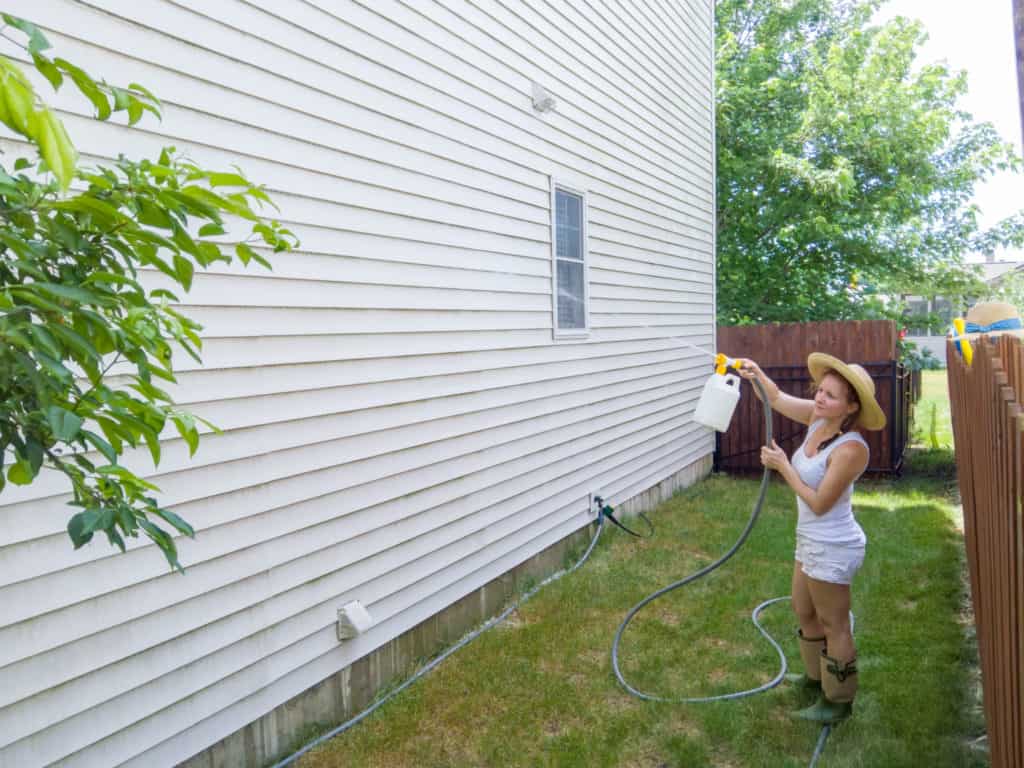
Step 2: Apply Cleaning Solution Use a handheld spray bottle or garden hose attachment to apply your chosen cleaning solution. Work in manageable sections to prevent the solution from drying before rinsing.
Step 3: Scrub Bottom to Top Using a soft-bristled brush attached to an extension pole, start at the bottom of each section and scrub side to side. This prevents dirty water from running down onto already-cleaned areas. For two-story homes or steep roof pitches, a telescoping brush eliminates most ladder work.
Step 4: Rinse Thoroughly Top to Bottom Rinse each section with your garden hose before the cleaning solution dries. Work quickly enough that soap residue doesn’t leave streaks or attract more dirt.
Tackling Mold and Mildew on Vinyl Siding
Mid-Atlantic homes often develop mold and mildew on north-facing walls or areas shaded by trees. Our humid climate creates perfect conditions for these growths, especially during summer months.
If you notice green or black spots that regular soap doesn’t remove, you’ll need a stronger approach:
For Light Mold and Mildew: Mix a 70/30 solution of water and white vinegar. This natural cleaner effectively kills mold spores without harming surrounding vegetation or contaminating local waterways.
For Stubborn Mold Growth: Use oxygen bleach (non-chlorine) at a 1:10 ratio with water. Apply the solution, let it sit for 3-5 minutes, then scrub with a soft-bristled brush and rinse thoroughly. Unlike chlorine bleach, oxygen bleach is environmentally safe and won’t damage your vinyl siding’s UV-resistant coating.
Pro Tip: Mold and mildew grow on the surface of vinyl siding but don’t penetrate the material. Once cleaned, properly installed vinyl siding from Thompson Creek looks like new again.
When to Use (and Avoid) Pressure Washing
Many homeowners wonder whether pressure washing is safe for vinyl siding. The answer depends on your siding’s age, quality, and the pressure washer settings.
Pressure Washing Guidelines:
- Use only low-pressure settings (1,300-1,600 PSI maximum)
- Keep the nozzle at least 12-18 inches from the siding surface
- Use a 25-40 degree nozzle, never a concentrated stream
- Always spray downward to prevent water intrusion behind panels
- Avoid pressure washing around windows, doors, and electrical fixtures
When to Avoid Pressure Washing:
- Older or damaged siding showing cracks or gaps
- Builder-grade thin vinyl that’s prone to warping
- Areas with loose or improperly installed panels
- During freezing temperatures or extreme heat
For most homeowners, a garden hose with a spray nozzle and manual scrubbing provides excellent results without the risks associated with pressure washing. Thompson Creek’s professionally installed siding includes proper moisture barriers, but water forced behind panels can still cause problems.
Essential Ladder Safety for Homeowners
If your home requires ladder work for high areas, safety must be your top priority. Ladder-related accidents send over 500,000 Americans to emergency rooms annually, with approximately 300 deaths each year.
Critical Ladder Safety Tips:
- Use a ladder rated for your weight plus equipment
- Set up on level, solid ground away from power lines
- Maintain three points of contact at all times
- Never lean or overreach; reposition the ladder instead
- Have someone spot you from below when possible
- Consider professional cleaning services for difficult-to-reach areas
Best Times to Clean Vinyl Siding in the Mid-Atlantic
Timing your cleaning project around Mid-Atlantic weather patterns ensures the best results:
Spring (April-May):
- Removes winter grime, salt residue, and accumulated debris
- Prepares siding for summer humidity and UV exposure
- Moderate temperatures prevent rapid solution evaporation
Early Fall (September-October):
- Cleans summer pollen, dust, and organic growth
- Prepares home for winter weather
- Ideal temperatures for comfortable outdoor work
Avoid:
- Peak summer heat (solutions dry too quickly, leaving streaks)
- Freezing temperatures (water can freeze on siding, causing damage)
- Extremely windy days (solutions blow onto unintended surfaces)
Maintaining Your Investment Year-Round
Thompson Creek’s high-grade vinyl siding offers 300% more impact resistance than builder-grade options and requires minimal maintenance. However, these simple practices protect your investment:
- Inspect siding twice yearly for damage or loose panels
- Trim trees and shrubs 12-18 inches away from siding to improve air circulation
- Clean gutters regularly to prevent overflow onto siding
- Address mold growth promptly before it spreads
- Document your maintenance for warranty purposes
Unlike wood siding that requires repainting every 3-7 years or fiber cement that needs periodic recaulking, Thompson Creek vinyl siding maintains its appearance with just occasional cleaning.
Frequently Asked Questions
How often should I clean my vinyl siding?
Most Mid-Atlantic homes benefit from cleaning once or twice per year. Homes in wooded areas or high-pollen locations may need more frequent cleaning.
Can I use bleach on vinyl siding?
While chlorine bleach can be effective, oxygen bleach (non-chlorine) is safer for your landscaping, the environment, and your siding’s finish. Always dilute properly and rinse thoroughly.
Will cleaning remove permanent stains?
Most stains come from surface dirt, mold, and mildew that clean easily. However, some substances like rust, driveway sealant, or motor oil may cause permanent discoloration. Address spills immediately for best results.
What should I avoid when cleaning vinyl siding?
Never use abrasive cleaners, steel wool, paint thinner, nail polish remover, or acetone on vinyl siding. These harsh products can permanently damage the surface. Stick to soft-bristled brushes and approved cleaning solutions.
Does Thompson Creek’s warranty cover cleaning?
Yes! Thompson Creek’s 50-year No-Hassle Warranty covers both materials and installation. Regular cleaning is considered routine maintenance that protects your warranty coverage.
Why Choose Thompson Creek for Your Vinyl Siding Needs
When it’s time to upgrade from siding that requires excessive maintenance, Thompson Creek’s custom-manufactured vinyl siding delivers superior quality with minimal upkeep. Our high-grade vinyl is custom-built in our Maryland facility, professionally installed by our expert team, and backed by an industry-leading 50-year warranty. Unlike generic vinyl siding from big-box stores, every panel is designed for Mid-Atlantic weather extremes and installed with precision to ensure proper moisture protection and long-lasting performance.
Ready to upgrade to low-maintenance vinyl siding that stands up to Mid-Atlantic weather? Schedule your free consultation with Thompson Creek today. Our experts will assess your home’s needs and show you why homeowners across Maryland, Virginia, and the region trust us for superior siding solutions. Call (301) 900-6825 or visit our website to get started with your no-obligation quote.