If your home is like most you have a combination of window types such as double hung, slider window or bay windows. When replacing any of your windows the process can be easier, quicker and less expensive if the swap is for standard sizes. Let’s take a look at one of the most common window type- double hung windows and how you will know if your double hung windows are standard sized meaning, they fit into openings with common dimension categories.
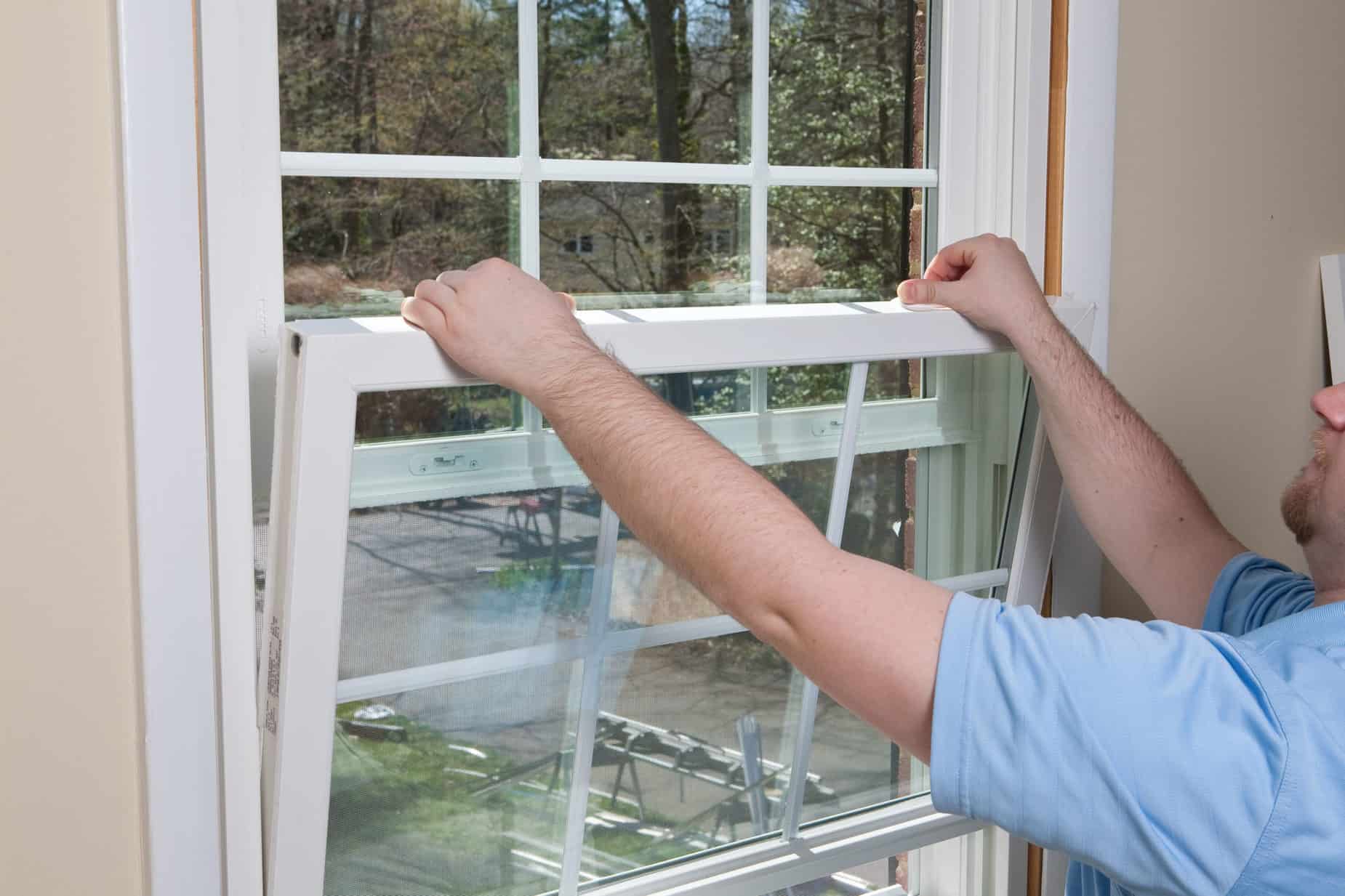
Double hung and single-hung windows can appear very similar, however there is one major difference. Double hung windows have two sashes that can both move up and down. That means both can be used to allow air to circulate into the home. Double hung windows often come with ability to tilt inward to allow for easy cleaning.
Double hung windows are taller than they are wide. The width of standards double-hung windows ranges from 24 to 48 inches.
Here are the most common standard double hung window combinations:
- 24″ x 36″
- 24″ x 48″
- 28″ x 40″
- 28″ x 48″
- 32″ x 48″
- 36″ x 48″
- 36″ x 60″
While the measurements are common, the way manufacturers identify the product may seem a bit tricky. Window manufacturers identify window sizes using four digits- the first two for the window’s width and last two for the window’s height. That’s why you will see window sizing descriptions such as 2840 which stands for 2 feet, 8 inches wide by 4 feet high.
How to Measure for Double Hung Window Replacement
Getting accurate measurements is the most critical step in window replacement. Even small errors can result in windows that don’t fit properly, leading to drafts, water leaks, and poor energy efficiency.
Step-by-step measurement guide:
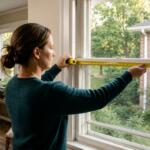
Measure the width first. Open your existing window so you can access the full frame. Measure from the inside edge of the left window jamb to the inside edge of the right jamb. Take three measurements: one at the top, one in the middle, and one at the bottom of the window opening.
Record the smallest width measurement. Window openings in older homes are rarely perfectly square. Using the smallest measurement ensures your new window will fit, even if the opening is slightly irregular. If measurements differ by more than 1/4 inch, your opening may need adjustment.
Measure the height next. Measure from the top of the window sill (the horizontal piece at the bottom) to the inside top of the window frame (the head jamb). Again, take three measurements: one on the left side, one in the center, and one on the right side.
Record the smallest height measurement. Like width, use the smallest measurement to ensure proper fit. Height variations are common, especially in homes that have settled over time.
Measure the depth (for replacement windows). This determines how much space is available for the new window frame. Measure from the outside edge of the window frame to the inside edge where the window will sit. This measurement is crucial for ensuring your replacement window will fit within the existing opening.
Common measurement mistakes to avoid:
- Measuring the old window instead of the rough opening
- Rounding measurements instead of recording exact dimensions
- Taking only one measurement per dimension
- Forgetting to account for frame thickness
- Measuring outside instead of inside dimensions
- Not checking that opening is square (diagonal measurements should be equal)
When to call a professional for measuring: If measurements vary significantly between multiple points, if your window opening is obviously out of square, or if you’re uncomfortable taking measurements, professional measurement is worth the investment. Incorrect measurements cost far more to fix than professional measuring services.
Thompson Creek offers free professional measurement as part of our custom window consultation. Our experienced technicians ensure precise measurements for perfect-fitting windows, eliminating the guesswork and risk of ordering incorrectly sized windows.
Standard vs. Custom Double Hung Window Sizes
Understanding the difference between standard and custom sizes helps you make informed decisions about your window replacement project.
Cost differences: Standard-size windows are manufactured in high volumes, making them less expensive—typically $100-200 less per window than custom sizes. However, if your openings don’t match standard dimensions perfectly, attempting to use standard windows can create problems.
When custom is necessary:
Old homes rarely have standard-size window openings. Homes built before the 1950s often have unique dimensions that don’t match modern standards. Trying to force standard windows into non-standard openings requires extensive shimming and can compromise energy efficiency.
Non-standard openings in any home age sometimes occur due to architectural features, additions, or previous non-standard window installations. If your measurements don’t closely match standard sizes, custom is your best option.
Architectural features like bay window sections, dormer windows, or windows in gable ends often require custom sizing to fit properly and maintain your home’s appearance.
Custom benefits beyond fit:
Perfect fit equals maximum energy efficiency. Even small gaps around windows lead to air infiltration and energy loss. Custom windows fit precisely, creating better seals and preventing the energy waste common with improperly fitted standard windows.
No shimming required. Standard windows in non-standard openings require wooden shims to fill gaps, which can shift over time and create weak points in the installation. Custom windows eliminate this problem entirely.
Better aesthetics. Custom windows fill openings completely without large gaps that need to be covered with excessive trim or caulking.
Thompson Creek manufactures all windows custom in our Maryland facility. This means every window is built to your exact specifications for perfect fit and performance, without the significant price premium typically associated with custom windows. Our approach combines the affordability of standard windows with the benefits of custom sizing. Learn more about our custom windows.
Lead time differences: Standard windows might ship immediately or within days, while custom windows typically require 4-6 weeks for manufacturing. However, the wait for properly fitting custom windows is far better than dealing with poorly fitting standard windows for years to come.
Room-by-Room Window Sizing Guide
Different rooms have different window size requirements based on function, building codes, and practical considerations.
Bedrooms require specific window sizes for safety reasons. Building codes mandate that at least one window in each bedroom must meet egress requirements, providing emergency escape routes and fire department access.
Typical bedroom window sizes range from 24″x36″ (small bedrooms, non-egress windows) to 36″x60″ (larger primary bedroom windows). The key is ensuring at least one window per bedroom meets egress minimums while providing adequate natural light.
Living rooms benefit from larger windows to maximize natural light and views. Common sizes range from 36″x48″ up to 48″x72″ or even larger custom sizes. Many homeowners choose to install multiple large windows or picture windows flanked by double-hung windows to create expansive window walls.
Bathrooms typically use smaller windows for privacy while still providing ventilation and light. Common bathroom window sizes are 24″x36″ or 24″x24″, often installed higher on the wall. Obscure or frosted glass provides privacy without sacrificing natural light.
Kitchens often feature windows above sinks where the sink cabinet limits vertical space. Common kitchen window sizes are 24″x24″, 28″x24″, or 36″x24″—wider than they are tall to maximize light while fitting the available space above countertops.
Basements have unique requirements combining size limitations with safety egress codes. Basement windows must be large enough to allow escape while fitting between foundation and floor joists. Common basement window sizes are smaller (32″x18″ or 36″x24″) unless specifically designed as egress windows, which must meet minimum size requirements.
Building code considerations vary by room but generally require windows to provide natural light equal to 8% of floor space and ventilation equal to 4% of floor space. Egress requirements override these minimums in sleeping rooms.
Egress Window Size Requirements
Safety codes require certain windows to be large enough for emergency escape or firefighter access.
Building code minimums specify that egress windows must provide at least 5.7 square feet of clear opening, with minimum dimensions of 20 inches wide and 24 inches high. The window sill must be no more than 44 inches above the floor.
Which rooms require egress windows? All sleeping rooms—bedrooms, and in many jurisdictions, any room that could reasonably serve as a bedroom—must have at least one window meeting egress requirements. This applies to finished basements with bedrooms and to any main-floor bedrooms.
Why egress matters beyond safety: Homes without proper egress windows face legal issues when selling. Home inspectors flag egress violations, and buyers can’t get mortgages for non-compliant homes. Additionally, insurance companies may have issues with homes lacking proper egress.
How to check if existing windows meet code: Measure the clear opening (not the frame, but the actual space you could fit through). Width times height must equal at least 5.7 square feet, with neither dimension less than the minimums. The bottom of the opening can’t be more than 44 inches from the floor.
Basement egress windows often require window wells outside to provide the necessary space. These wells must allow unobstructed egress and typically require at least 36 inches of projection from the foundation.
There are few important beginning steps when buying replacement windows:
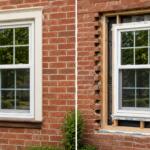
- Determining the condition of your existing window frame. If it is damaged or rotted, it won’t support a replacement window and instead will need a new-construction window.
- Making sure your current windows are all square by measuring the current window diagonally from corner to corner. The numbers should be within ¼ inch of each other to be eligible for a replacement window.
Double hung windows are the most common window style for your home. They are perfect for areas where you would like to encourage more air flow, and in rooms higher than the ground floor to make cleaning easier.
Frequently Asked Questions
What is the most common double hung window size?
The most common standard double-hung window size is 36″x60″ (3 feet wide by 5 feet tall), which fits well in many bedrooms and living areas. However, 28″x48″ and 32″x48″ are also very common depending on room size and architectural style.
Do I need custom windows for an old house?
Often yes. Homes built before the 1950s typically have non-standard window openings that don’t match modern standard sizes. Measuring your existing openings and comparing them to standard sizes will tell you if custom windows are necessary. If measurements are off by more than 1/4 inch from standard sizes, custom windows will provide better fit and performance.
Can I replace a window with a different size?
Yes, but it requires modifying the rough opening in your wall, which involves carpentry work, potentially structural considerations, and additional costs beyond the window itself. It’s much more cost-effective to replace windows with the same size or very close to the existing size. If you want to significantly change window size, consult with a contractor about the structural implications and costs involved.
How do I know if my windows need to meet egress requirements?
Any room that is or could be used as a bedroom requires at least one window meeting egress requirements. This includes finished basement bedrooms. If you’re unsure, consult local building codes or a building inspector to determine which rooms in your home must have egress-compliant windows.
Unsure about the right window sizes for your home? If you are looking to replace your home’s windows and you’re unsure if your windows are standards sizes, call the experts at Thompson Creek. Installing the wrong window size can cause damage to your home, reduce energy efficiency, and contribute to unhealthy indoor air quality. Our professionals expertly measure your home’s windows to make sure you get the right fit and the right window for your enjoyment. Contact us for a free consultation and professional measurement service.