When searching for the right windows for your home, you’ll find no shortage of options when it comes to style, shape, and functionality. One increasingly popular choice is the awning window: a sleek, versatile window style that combines excellent ventilation, energy efficiency, and weather resistance.
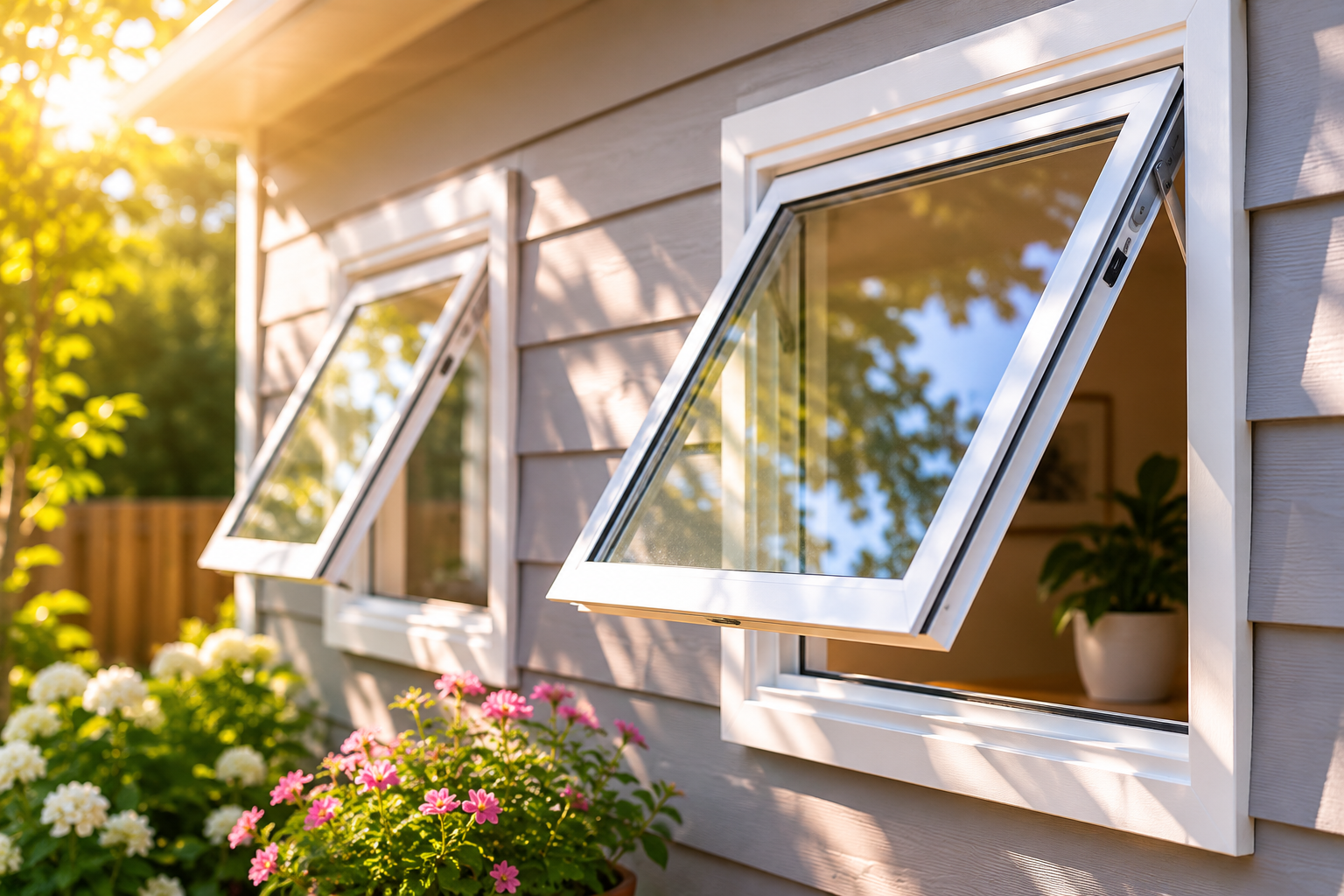
Awning windows are hinged at the top and open outward from the bottom, creating an awning-like effect that helps protect against the elements. Their unique design makes them a popular choice for kitchens, bathrooms, basements, and other areas where ventilation is a priority. When paired with picture windows, awning windows can also create a striking architectural feature that delivers expansive views and abundant natural light.
What Are Awning Windows?
Awning windows are designed to provide reliable airflow, enhanced security, weather resistance, and energy efficiency in a compact, functional package. Their defining feature is a top-mounted hinge that allows the sash to swing outward from the bottom, typically operated with a crank or winder.
This outward-opening design allows fresh air to circulate through the home while helping shield the interior from light rain. Because the sash presses tightly against the frame when closed, awning windows also create a strong weatherproof seal that helps reduce drafts and improve energy efficiency.
In addition, many awning windows feature secure locking mechanisms and relatively narrow openings, making them a practical option for households with children and homeowners seeking an extra layer of security.
The Benefits of Awning Windows
Awning windows offer a range of advantages that make them a popular choice for both modern and traditional homes.
Safety and Security
Awning windows are designed with security in mind. Their top-hinged design and outward-opening operation make them more difficult for intruders to access than many traditional window styles. Many models feature multi-point locking systems that create a secure seal when closed.
Even when partially open, awning windows can provide ventilation while maintaining a degree of security, allowing homeowners to enjoy fresh air without sacrificing peace of mind.
Weather Resistance and Energy Efficiency
One of the biggest benefits of awning windows is their ability to perform well in a variety of weather conditions. The outward-opening sash acts as a protective barrier, helping prevent rain from entering the home when the window is open.
When closed, awning windows form a tight seal against the frame, reducing air leakage and helping maintain consistent indoor temperatures. This improved insulation can contribute to lower heating and cooling costs throughout the year, making awning windows a smart choice for energy-conscious homeowners.
Airflow Control
Awning windows provide excellent ventilation, particularly when installed higher on walls or paired with other window styles. Their design allows fresh air to enter while directing airflow upward, helping improve circulation throughout a room.
Because they can often remain open during light rain, awning windows provide consistent ventilation even when the weather is less than ideal.
Budget-Friendliness
Compared to larger specialty windows or more complex operating styles, awning windows are often a cost-effective solution. Their straightforward design can help keep manufacturing and installation costs manageable while still delivering valuable benefits such as energy efficiency, natural light, and improved airflow.
Their durability can also help reduce long-term maintenance and replacement expenses, adding to their overall value.
The Downsides of Awning Windows
While awning windows offer numerous advantages, no window style is perfect. Before making a decision, it’s important to consider a few potential drawbacks.
Limited Ventilation
Although awning windows provide effective airflow, they typically offer a smaller opening area than casement windows. As a result, they may not deliver the same level of ventilation in larger rooms where maximum airflow is desired.
Homeowners looking to maximize ventilation often combine awning windows with other operable window styles to achieve the best results.
Maintenance Considerations
Like any operable window, awning windows require occasional maintenance to keep hinges, cranks, and hardware functioning properly. Over time, moving components may need lubrication, adjustment, or replacement to ensure smooth operation.
Routine inspections can help identify minor issues before they become more significant repairs.
Cleaning Challenges
Because awning windows open outward, cleaning the exterior glass can sometimes be more difficult, particularly on upper floors or in hard-to-reach locations. Depending on the window’s placement, homeowners may need specialized cleaning tools or professional assistance to safely maintain the exterior surface.
The Best Types of Homes for Awning Windows
Now that you’re familiar with the pros and cons of awning windows, you may be wondering whether they’re the right fit for your home. In many cases, the answer is yes, especially if you’re looking for a window solution that combines ventilation, energy efficiency, and weather resistance.
One of the most common applications for awning windows is in basements. Because basements are often more susceptible to moisture buildup than other areas of the home, proper ventilation is essential for reducing humidity and helping prevent mold and mildew growth.
Awning windows work particularly well in these spaces because they can fit into smaller openings while still providing reliable airflow and security. Their tight seal also helps combat drafts and moisture intrusion, reducing the risk of costly water damage.
Beyond basements, awning windows are also a popular choice for bathrooms, kitchens, laundry rooms, and other spaces where ventilation is important but wall space may be limited.
Another factor to consider is window shape. Awning windows are generally best suited for wider, horizontally oriented openings. While they can be installed in other configurations, they tend to perform best in shorter, wider spaces, particularly when positioned higher on a wall.
Homeowners can also appreciate the fact that awning windows open outward, meaning they won’t interfere with interior window treatments such as blinds, shades, or curtains.
How Do Hopper Windows Compare to Awning Windows?
At first glance, hopper and awning windows may appear similar, but their operation and ideal applications differ significantly.
Awning windows are hinged at the top and open outward from the bottom, while hopper windows are hinged at the bottom and open inward from the top. Because hopper windows open inward, they are commonly installed in basements, bathrooms, and other compact spaces where exterior clearance may be limited.
Awning windows, on the other hand, are often used in kitchens, living rooms, bedrooms, and other above-ground spaces because they can remain open during light rain while still protecting the interior from the elements.
Both window styles offer excellent energy efficiency thanks to their tight seals when closed. However, awning windows generally provide greater weather protection and versatility throughout the home. Hopper windows may be the better choice for certain lower-level applications, while awning windows excel in areas where natural light, ventilation, and all-weather performance are priorities.
Are Awning Windows the Right Choice for You?
Awning windows are an excellent option for homeowners seeking a balance of style, energy efficiency, ventilation, and weather resistance. Their versatile design makes them suitable for a wide range of spaces, from kitchens and bathrooms to home offices and living rooms.
They’re especially appealing for homeowners who want the ability to enjoy fresh air even during light rain. Their secure design, strong weather seal, and compact functionality make them a practical solution for many different applications.
Ultimately, the right window choice depends on your home’s layout, your ventilation needs, and your design preferences. If maximum airflow is your primary goal, another window style may be worth considering. However, if you’re looking for a durable, attractive, and energy-efficient window that performs well in a variety of conditions, awning windows deserve serious consideration.
Many homeowners also choose to pair awning windows with picture windows or other fixed window styles to create a beautiful combination of unobstructed views, natural light, and operable ventilation.
Closing Thoughts
Awning windows are a versatile, energy-efficient window style that offers a unique combination of ventilation, security, and weather resistance. Whether you’re upgrading basement windows, improving airflow in a bathroom, or creating a stunning picture window configuration in your living room, awning windows can deliver both practical benefits and lasting visual appeal.
While factors such as maintenance requirements and ventilation limitations should be considered, many homeowners find that the advantages far outweigh the drawbacks. By understanding where awning windows perform best and how they compare to other window styles, you can make a more informed decision when planning your next window replacement project.
If you’re looking for a durable, attractive, and weather-resistant window solution, awning windows may be the perfect fit for your home.
Frequently Asked Questions About Awning Windows
Are awning windows energy efficient?
Yes. Awning windows are known for their energy efficiency because they create a tight seal when closed, helping reduce drafts and air leakage. This can make it easier to maintain comfortable indoor temperatures and potentially lower heating and cooling costs throughout the year.
Can awning windows be left open when it rains?
In many cases, yes. Because awning windows are hinged at the top and open outward from the bottom, the open sash helps shield the window opening from light rain. However, it’s still a good idea to close the window during heavy storms or high winds to prevent water from entering your home.
Where are awning windows most commonly installed?
Awning windows are commonly installed in kitchens, bathrooms, basements, laundry rooms, and other areas where ventilation is important. They are also frequently paired with picture windows to create a combination of natural light, outdoor views, and operable airflow.
Are awning windows secure?
Yes. Many awning windows feature durable locking mechanisms and a design that makes them more difficult to access from the outside than some traditional window styles. Their secure construction makes them a popular choice for homeowners who value both ventilation and safety.
What is the difference between awning windows and casement windows?
The primary difference is how they open. Awning windows are hinged at the top and open outward from the bottom, while casement windows are hinged on the side and open outward like a door. Casement windows typically provide a larger opening for ventilation, while awning windows offer better protection from light rain when open.
Are awning windows a good choice for basements?
Absolutely. Awning windows are often used in basements because they fit well into smaller openings while still providing ventilation and natural light. Their tight seal also helps reduce moisture intrusion and improve energy efficiency in below-grade spaces.
How long do awning windows last?
The lifespan of an awning window depends on factors such as materials, installation quality, climate conditions, and maintenance. With professional installation and routine care, high-quality awning windows can provide reliable performance for decades.
Can awning windows be installed above other windows?
Yes. Awning windows are frequently installed above picture windows, fixed windows, or other larger window styles. This design allows homeowners to enjoy expansive views and natural light while still benefiting from ventilation when needed.