Windows that won’t stay up when you open them aren’t just an irritation—they can be potentially dangerous. A falling window could cause injury to a child or pet if it drops on them when they’re looking out of the opening. This kind of home repair shouldn’t be ignored.
In this complete guide, we’ll walk you through exactly how to fix a window that won’t stay up, explain why this problem happens, show you when repair makes sense versus replacement, and provide troubleshooting steps to diagnose the issue.
In This Guide:
- Why windows won’t stay up (common causes)
- 5-step repair process with photos
- Tools and materials needed
- Repair vs. replacement decision guide
- 2025 cost comparisons
- When to call a professional
Why Won’t My Window Stay Up? Common Causes
One of the main reasons a window doesn’t stay up is likely that one or both of the balances of the window have become detached from the sash. This is the most common reason for a falling window.
The Three Main Culprits:
- Broken or Detached Balances (Most Common – 60% of cases)
- Balances are spring-loaded mechanisms that counterweight the window
- They wear out over time, typically after 15-20 years
- One or both balances may have detached from the window sash
- Damaged Pivot Bar (Common – 25% of cases)
- The pivot bar connects balances to the window sash
- Can snap, bend, or become detached
- Easy to spot and relatively simple to replace
- Worn or Broken Shoes (Less Common – 15% of cases)
- Shoes are small plastic or metal blocks inside the frame
- They provide grip for the pivot bar
- Damaged shoes mean nothing for the bar to hold onto
Other Contributing Factors:
- Paint buildup on window tracks (wood windows)
- Damaged or bent window tracks
- Incorrect window installation
- Age of window (issues increase significantly after 15-20 years)
How to Fix a Window That Won’t Stay Up: 5-Step Process
Step 1: Diagnose the Problem
Before you start repairs, identify what’s actually broken:
Visual Inspection Checklist:
- Open the window fully
- Look for the pivot bar on each side of the window
- Check if the pivot bar is snapped, bent, or detached
- Inspect the shoes (plastic/metal blocks in frame)
- Try to determine if balances are functioning
Quick Test:
- Lift the window halfway
- Release it slowly
- Does it fall immediately? → Balance/shoe problem
- Does it drop slowly? → Weak balances (may just need adjustment)
- Does one side drop? → Single balance failure
What You’ll Likely Find:
- Snapped or bent pivot bar (visible damage)
- Detached balance (hanging loose in frame)
- Damaged shoes (cracked or broken plastic pieces)
Step 2: Gather Tools & Materials
Tools Needed:
- Phillips head screwdriver
- Flathead screwdriver
- Utility knife (to cut paint seal if needed)
- Flashlight
- Needle-nose pliers (optional, helpful)
- Work gloves
Materials to Buy: (Cost estimates are 2025 averages)
- Replacement pivot bars: $5-$15 per pair
- Replacement shoes: $3-$8 per pair
- Replacement balances: $20-$40 per pair (depends on window size)
- Replacement balance springs: $15-$30 per pair
Where to Buy Parts:
- Local hardware stores (Lowe’s, Home Depot, Ace)
- Online: Amazon, Repair Clinic, Window Parts Depot
- Window manufacturer (if you know your brand)
- Thompson Creek service department (for our windows)
Pro Tip: Take a photo of your window components and bring it to the hardware store. Better yet, if possible, remove the broken part and bring it in for exact matching.
Total DIY Cost: $20-$100 depending on what needs replacement
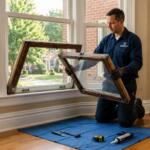
Step 3: Remove the Window Sash
Safety First: Have someone help you. Windows are heavy and awkward to handle.
Removal Process:
For Vinyl Windows (Most Common):
- Open the window fully
- Pull window down as far as it goes
- Locate the tilt latches
- Look at the top of the sash (usually near corners)
- Small plastic tabs or buttons
- Engage tilt latches
- Push both latches inward simultaneously
- Tilt the window toward you
- Lift and remove
- Once tilted, lift the window up and out
- The bottom will clear the frame
- Have your helper support the weight
For Older Wood Windows:
- Score paint seal
- Use utility knife to cut paint seal around sash
- Be careful not to damage wood
- Remove interior stops
- Carefully pry off vertical trim pieces
- Keep these – you’ll need to reinstall them
- Lift out sash
- Window should now lift out
- Watch for balance cords on very old windows
For Aluminum Windows:
- Check for release clips
- Usually located on window sides
- Press clips and lift
- Mechanism similar to vinyl windows
Step 4: Replace the Faulty Components
Now that the sash is out, you can access all components.
If Replacing Pivot Bar:
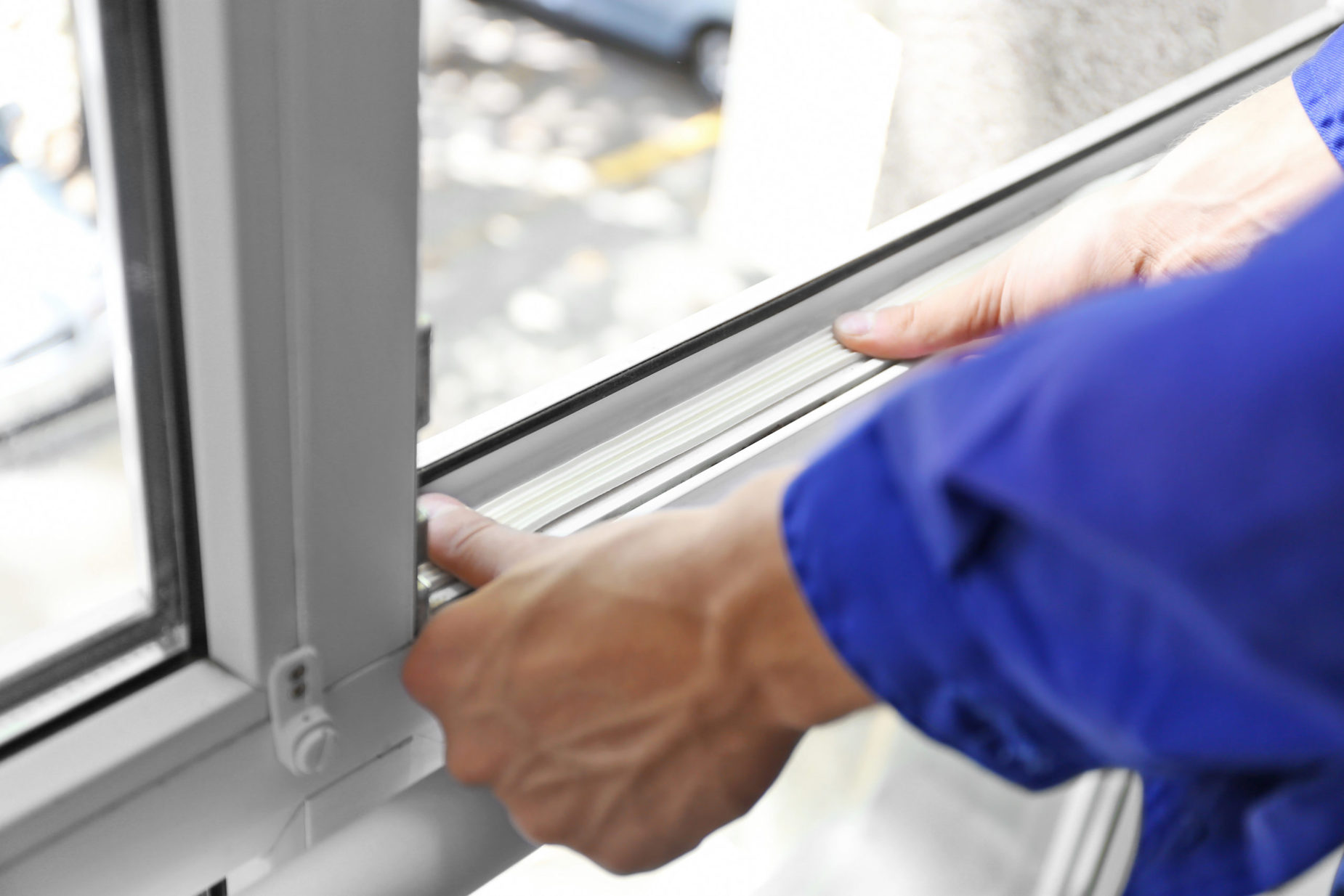
The pivot bar is the easiest fix – this bar connects the balances to the sash and holds it securely in place. A snapped or bent pivot bar is obvious, and this part is easy to replace.
- Remove old pivot bar
- Locate the small screw or clip holding it
- Unscrew or unclip the pivot bar
- Note the orientation before removing
- Install new pivot bar
- Position new bar exactly like the old one
- Secure with screw or clip
- Make sure it’s firmly attached
- Repeat on other side if needed
- Test engagement
- Check that pivot bar slides into the shoe
- Should have slight resistance but move smoothly
Time: 15-30 minutes Cost: $5-$15
If Replacing Shoes:
Shoes are small plastic or metal blocks that sit inside the frame. If these are damaged, there’s nothing for the bar to grip to hold the window in position.
- Locate the shoes
- They’re in the window track/channel
- Usually one on each side
- Remove old shoes
- May be held by small screws
- Or may slide/snap out
- Install new shoes
- Ensure correct orientation (check instructions)
- Secure with screws or snap into place
- Verify they’re level and secure
- Test grip
- Insert pivot bar into shoe
- Should lock firmly with slight click
Time: 20-40 minutes Cost: $3-$8
If Replacing Balances:
Most balances are held in place with one or two screws.
- Remove old balances
- Unscrew balance from frame (usually 1-2 screws)
- Carefully detach from pivot bar or shoe
- Note: Balance may have spring tension – hold firmly
- Install new balances
- Position new balance in same location
- Screw into frame firmly
- Connect to pivot bar/shoe mechanism
- Adjust tension (if adjustable)
- Some balances have tension adjusters
- Start with medium tension
- Can adjust after testing
- Replace both sides
- Always replace both balances, even if only one failed
- Ensures even operation and extends overall life
Time: 45 minutes to 1.5 hours Cost: $20-$40 per window
Step 5: Reassemble and Test
Reinstallation Process:
- Reinsert the window sash
- Reverse the removal process
- Tilt window into frame
- Seat it properly in tracks
- Engage mechanisms
- Make sure pivot bars slide into shoes
- Listen for engagement clicks
- Push window to upright position
- Test operation
- Open window fully
- Release slowly – it should stay up
- Try different positions (¼, ½, ¾ open)
- Check both sides operate evenly
- Test multiple times
- Open and close 10-15 times
- Verify smooth operation
- Listen for unusual sounds
For wood windows:
- Reinstall interior stops
- Use finish nails (not the same holes if possible)
- Touch up paint as needed
Signs Your Repair Worked: ✓ Window stays at any open position ✓ No unusual sounds when operating ✓ Both sides operate evenly ✓ Window locks properly when closed
What if It Still Doesn’t Work?
- Recheck pivot bar/shoe engagement
- Verify balances are properly installed
- Check for additional damage (warped frame, damaged sash)
- May indicate need for full window replacement
Our customers across The DMV trust our evaluation process. For example, Arlington homeowners with pre-1980 wood-frame windows often find the balance problem returns after repeated repairs. If you’ve fixed the same window more than twice, window replacement Arlington is worth evaluating before another season passes.
When to Repair vs. Replace Your Window
Not every window that won’t stay up needs replacement, but age and overall condition matter.
Decision Flowchart
Is your window less than 10 years old? → YES: REPAIR (window should have years of life left) → NO: Continue.
Is your window more than 20 years old? → YES: Consider REPLACEMENT (especially if other issues exist) → NO: Continue.
Do you have multiple problems? (Foggy glass, drafty, difficult to operate, water leaks, rot) → YES: REPLACE (repair costs will add up) → NO: REPAIR (isolated issue)
Is the window energy-efficient? (Double-pane with argon gas, Low-E coating) → NO: Consider REPLACEMENT (upgrade opportunity) → YES: REPAIR
For older District row homes where the balance mechanisms have worn beyond repair, window replacement Washington DC is often the more cost-effective long-term solution. Modern double-hung windows operate smoothly on tilt-in sashes that eliminate the balance issue entirely.
Cost Comparison (2025 Prices)
Repair Costs:
- DIY pivot bar replacement: $20-$50 (1 hour)
- DIY full balance replacement: $50-$100 (1-2 hours)
- Professional repair: $150-$300 per window
- Total first year: $20-$300
Replacement Costs:
- Budget vinyl window: $300-$450 installed
- Mid-range vinyl window: $450-$700 installed
- Premium vinyl window: $700-$1,200 installed
- Total first year: $300-$1,200
Long-Term Value Analysis (10 years):
Repair Old Window:
- Repair cost: $150-$300
- Higher energy bills: $100-$200/year = $1,000-$2,000
- Future repairs likely: $200-$400
- Total 10-year cost: $1,350-$2,700
Replace with Energy-Efficient Window:
- Replacement cost: $450-$700
- Energy savings: $80-$150/year = -$800 to -$1,500
- No repair costs (warranty coverage)
- Increased home value: +$200-$400
- Total 10-year value: $50-$200 net cost (or even net gain)
When Repair Makes Sense
✓ Window is less than 15 years old ✓ Only one component is broken ✓ Window is otherwise energy-efficient ✓ No signs of water damage or rot ✓ Frame and sash are in good condition ✓ You’re comfortable with DIY work
When Replacement Makes Sense
✓ Window is more than 20 years old ✓ Multiple issues present (drafty, foggy, leaky) ✓ Single-pane window (major energy waste) ✓ Recurring problems despite repairs ✓ Window frame shows rot or damage ✓ You want to improve energy efficiency ✓ Planning to sell home (new windows add value)
Energy Savings: The Replacement Advantage
If you’ve found yourself wondering how to fix a window that won’t stay up, it’s likely you’ve had your existing glazing for quite a few years and it may be time for replacements. Modern windows could help cut your heating or AC costs.
Old vs. New Window Performance:
Your Old Windows (Single-Pane or 15+ Year Old Double-Pane):
- U-Factor: 0.80-1.20 (higher = worse)
- SHGC: 0.60-0.85 (uncontrolled heat gain)
- Annual energy waste: $150-$300 per window
- Comfort issues: Drafts, cold spots, condensation
New Thompson Creek Windows:
- U-Factor: 0.20-0.30 (70% more efficient)
- SHGC: 0.25-0.40 (controlled solar heat)
- Annual energy savings: $80-$150 per window
- Comfort benefits: Even temperatures, no drafts
Whole-Home Energy Savings:
- Replace 10 windows: $800-$1,500 annual savings
- Typical payback period: 6-8 years
- Lifetime savings (30 years): $24,000-$45,000
- Plus: Increased comfort, reduced HVAC wear
Even if you aren’t having issues because a wood window won’t stay up or you’re just looking to make your home more energy-efficient, call Thompson Creek to learn about our range of sound-proof and energy-efficient windows.
Common Window Problems Beyond “Won’t Stay Up”
If your window won’t stay up, other issues may develop soon. Here are related problems and guides:
Window Won’t Close Properly
Causes: Warped sash, damaged tracks, paint buildup Solution: Track cleaning, sash adjustment, hardware replacement [Read Full Guide →]
Window is Stuck Shut
Causes: Paint seal, swollen wood, damaged mechanism Solution: Score paint, lubricate tracks, mechanism repair [Read Full Guide →]
Window is Drafty
Causes: Worn weatherstripping, gaps in frame, failed seal Solution: Weatherstripping replacement, caulking, or window replacement [Read Full Guide →]
Window Has Condensation Between Panes
Causes: Failed seal, broken insulated glass unit Solution: Requires window replacement – seal cannot be repaired [Read Full Guide →]
Window is Foggy
Causes: Failed window seal, moisture infiltration Solution: Replace insulated glass unit or entire window [Read Full Guide →]
Window Leaks Water
Causes: Damaged seal, poor installation, deteriorated caulking Solution: Re-caulk, seal replacement, or window replacement [Read Full Guide →]
FAQs: Window Repair Questions
Why won’t my window stay up?
The most common reason is failed or detached window balances—the spring-loaded mechanisms that counterweight your window. Over time (typically 15-20 years), these balances wear out, break, or detach from the window sash. Other causes include broken pivot bars (the connecting piece between balances and sash) or damaged shoes (the grip points in the frame). About 60% of cases are balance-related, 25% are pivot bar issues, and 15% are shoe problems.
How much does it cost to fix a window that won’t stay open?
DIY repair costs $20-$100 in parts (pivot bars, shoes, or balances), plus 1-2 hours of your time. Professional repair typically costs $150-$300 per window, including labor and parts. Exact cost depends on what’s broken: pivot bars ($5-$15), shoes ($3-$8), or complete balances ($20-$40 per pair). If multiple windows need repair or the window is very old, replacement may be more cost-effective ($300-$700 per window installed).
Can I fix a window myself or do I need a professional?
Most homeowners can fix a window that won’t stay up if the problem is a broken pivot bar or worn shoes—these are straightforward replacements requiring only a screwdriver. Balance replacement is moderately challenging but still DIY-friendly if you’re comfortable with basic home repairs. Call a professional if: (1) you’re uncomfortable removing the window sash, (2) the window frame shows damage or rot, (3) you can’t identify the problem, or (4) the window is very large or difficult to access.
What tools do I need to fix a window that won’t stay up?
You’ll need: Phillips head screwdriver, flathead screwdriver, utility knife (for paint seals), flashlight, and work gloves. Optional but helpful: needle-nose pliers. Parts needed depend on what’s broken: replacement pivot bars ($5-$15), shoes ($3-$8), or balances ($20-$40). Total tool investment is minimal—most homeowners already have these basic tools.
How long does it take to repair a window?
DIY repair time varies by component: pivot bar replacement takes 15-30 minutes, shoe replacement takes 20-40 minutes, and full balance replacement takes 45 minutes to 1.5 hours. Add 30-45 minutes if you’ve never removed a window sash before. Professional repairs typically take 30 minutes to 1 hour per window. First-time DIYers should budget 2-3 hours to be safe.
Are window balances universal or window-specific?
Window balances are NOT universal—they’re specific to window size, weight, and manufacturer. You’ll need to match: (1) balance type (spiral, block-and-tackle, or constant force), (2) length, (3) load rating (based on window weight), and (4) mounting style. Take photos of your existing balances and window label, or bring the old balance to the hardware store for exact matching. Using wrong balances will result in a window that still won’t stay up.
Should I repair or replace my old windows?
Repair if: window is less than 15 years old, only one component is broken, window is otherwise energy-efficient, and no other problems exist. Replace if: window is 20+ years old, you have multiple issues (drafty, foggy, leaky), window is single-pane, or frame shows rot/damage. Consider that new energy-efficient windows save $80-$150 per window annually in energy costs, often paying for themselves within 6-8 years while improving comfort and home value.
What causes window balances to fail?
Window balances fail due to: (1) Age—most last 15-20 years before weakening, (2) Frequent use—daily operation accelerates wear, (3) Weight stress—oversized or heavy windows strain balances, (4) Environmental factors—humidity, temperature extremes, and UV exposure degrade materials, (5) Poor installation—incorrect balance type or rating causes premature failure. Once one balance fails, the other typically fails soon after due to increased load.
How often do window parts need replacing?
In well-maintained windows: balances last 15-20 years, pivot bars last 20-25 years, shoes last 20-30 years. However, once a window reaches 15-20 years old, multiple components may start failing within 1-2 years of each other. This is why serial repairs on old windows often make less financial sense than replacement—you’re essentially rebuilding an outdated, inefficient window piece by piece.
Can vinyl windows be repaired?
Yes, vinyl windows can be repaired for common issues like failed balances, broken pivot bars, or damaged shoes. Unlike wood windows, vinyl doesn’t rot, so frame repairs are rarely needed. However, if the vinyl sash itself is cracked or the frame is warped, replacement is the only option—vinyl cannot be repaired once structurally damaged. Most vinyl window issues are related to internal mechanisms (balances, hardware) which are readily repairable.
When to Call Thompson Creek
While many window repairs are DIY-friendly, sometimes replacement is the smarter long-term investment.
Call us for a free evaluation if:
- Your windows are 20+ years old
- You’re dealing with multiple window problems
- You want to improve energy efficiency
- You’re planning to sell your home
- Repair costs are approaching $500+ per window
- You have single-pane windows
- Your windows have visible rot or damage
Thompson Creek Advantage:
- 50-year warranty on windows and installation
- Custom-built windows for perfect fit
- Energy-efficient designs (save $80-$150 per window annually)
- Sound Shield technology reduces noise by 35%
- Professional installation by factory-trained experts
- In-house manufacturing = no middleman markups
- Free estimates with no obligation
Call Today: (301) 450-6862