If the air inside your home contains excess moisture, this can cause condensation to appear on your sliding door panes. Investing in a dehumidifier can help get the balance of moisture in your air just right and reduce condensation.
The good news is that condensation build-up on your sliding doors doesn’t automatically mean that repairs or replacements are necessary. In this article, we’ll look at how to get moisture out of a sliding glass door and stop it from reappearing.
Is It Condensation or a Failed Seal?
When you first notice condensation inside your sliding glass door or on the outer panes, your first thought may be that there is a defect somewhere. However, understanding whether you’re dealing with surface condensation or a failed window seal makes all the difference in how you address the problem.
Surface condensation appears on the inside or outside glass surface and can be wiped away with a cloth. This is normal and happens when warm, humid air meets cold glass. It’s the same phenomenon that causes your bathroom mirror to fog up after a shower.
Foggy glass between panes indicates a failed seal in your insulated glass unit. If you see fog or moisture trapped between the two panes of glass that won’t wipe away, the hermetic seal has broken. This allows moisture to enter the space between panes, and once this happens, the seal cannot be repaired—only the glass unit or entire door can be replaced.
Quick diagnostic test:
- Wipe the glass with a dry cloth
- If fog disappears: surface condensation (fixable)
- If fog remains between panes: seal failure (requires replacement)
A failed seal also means any insulating gas (like argon) has escaped, significantly reducing your door’s energy efficiency. For more information about how window and door seals work, see our guide on what are window seals.
Understanding Why Sliding Glass Doors Get Foggy
The problem is often generated by a drastic difference in temperatures inside and outside the panes of your sliding glass door. Glass is unable to produce condensation on its own. If it is colder inside than outside, condensation may start forming on your door’s outer pane. If the temperature is warmer outside than inside, the same problem may occur on the inner pane of glass.
Beyond temperature differences, several factors contribute to moisture problems on patio doors:
High indoor humidity is especially common in Mid-Atlantic homes during summer months. Cooking, showering, and even breathing add moisture to your indoor air. When humid air contacts cold glass, condensation forms instantly.
Poor ventilation prevents moisture from escaping your home. Newer, more energy-efficient homes are tightly sealed, which is great for energy bills but can trap moisture inside without proper air circulation.
Climate factors play a significant role. Maryland, Virginia, and DC experience humid summers and cold winters—the perfect conditions for condensation issues. Seasonal transitions are particularly problematic as indoor and outdoor temperatures fluctuate dramatically.
Water intrusion around the door frame can create ongoing moisture problems. If your sliding door wasn’t installed correctly, water may be entering around the frame during rain. Learn more about identifying signs of bad window installation that could be causing moisture issues.
Simple Solutions for Surface Condensation
Condensation forms when the temperatures on the inside and outside of a glass sliding door or window are drastically different. Whether it’s the height of summer or the middle of winter, aim to keep the temperature in your home comfortable but not dramatically above or beyond the temperature outside. If you notice condensation forming, turn the thermostat down or up a few notches to counter it.
Opening your windows can help to create an even temperature throughout your home. More air circulating through your home can also help circulate and balance the moisture created by showering, appliances, or cooking. Your home will also smell fresher.
If the air inside your home contains excess moisture, this can cause condensation to appear on your sliding door panes. Investing in a dehumidifier can help get the balance of moisture in your air just right and reduce condensation.
Dehumidifier placement tips:
- Position near the sliding door during problem seasons
- Use in rooms that generate most moisture (kitchen, bathrooms)
- Empty regularly or use continuous drain option
- Run during humid summer months in Mid-Atlantic climate
Ventilation strategies:
- Use exhaust fans while cooking and showering
- Open windows on opposite sides of home for cross-ventilation
- Run ceiling fans to keep air moving
- Consider a whole-house ventilation system for persistent issues
How to Prevent Moisture on Sliding Doors Long-Term
Prevention is always better than constantly wiping away condensation. Here’s how to stop moisture problems before they start:
Weather stripping maintenance is essential. Check the rubber seals around your sliding door at least twice a year. If you’ve tried everything and you’re still being plagued by foggy panes, it could be your door that is at fault. For example, if the rubber seals on your glass door are defective, this could cause moisture build-up. If your weather stripping seals are cracked or damaged, it could be time to seek out a replacement.
Control indoor humidity levels. Aim to keep indoor humidity between 30-50% for optimal comfort and to prevent condensation. In summer, this might mean running air conditioning or a dehumidifier. In winter, you may need to reduce humidifier use or add ventilation.
Improve air circulation around your patio door. Avoid blocking the door with heavy curtains or furniture that prevents air from reaching the glass. Keep window treatments open during the day to allow warmth to reach the glass and prevent cold spots where condensation forms.
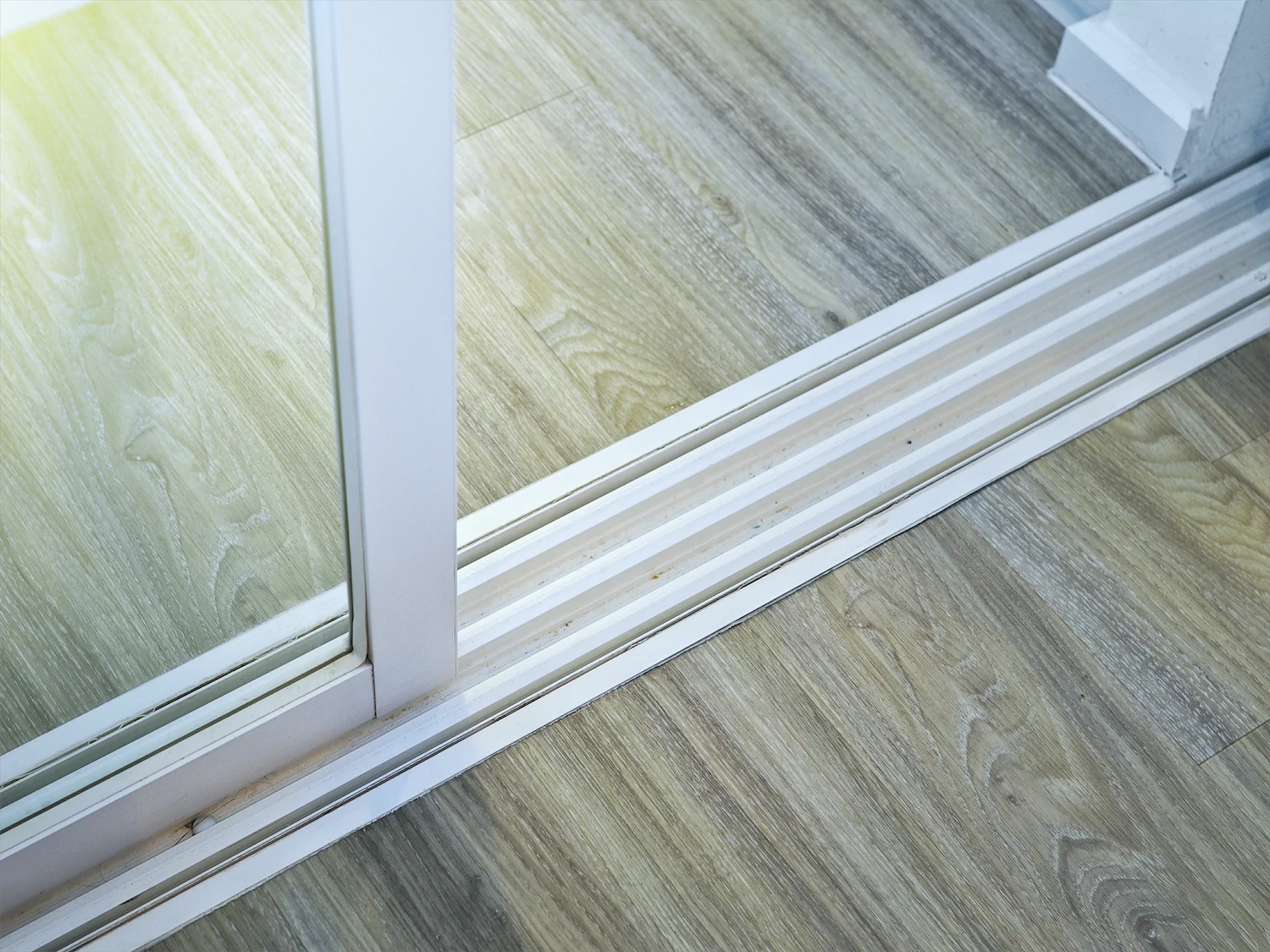
Regular cleaning helps identify problems early. Clean your sliding door tracks and frame every few months. This allows you to spot any water intrusion, damaged seals, or other issues before they become serious moisture problems.
When Moisture Means It’s Time for Replacement
Sometimes prevention and fixes aren’t enough. Certain moisture problems indicate it’s time to consider a sliding glass door replacement rather than continuing to battle condensation.
Persistent fog between panes cannot be fixed. Once the seal fails and moisture gets between the glass layers, no amount of cleaning or dehumidifying will help. The insulated glass unit has lost its effectiveness, and you’re wasting energy every day that door remains in place.
Visible water damage around the door frame signals serious problems. If you see rotting wood, peeling paint, or water stains on walls near your sliding door, water is getting in somewhere. This kind of damage only gets worse and can affect your home’s structure.
Chronically high energy bills might be caused by failed door seals. If your heating and cooling costs have increased and your sliding door is older or shows signs of seal failure, the energy loss through that door could be costing you hundreds of dollars per year.
Multiple failed repairs suggest the door has reached the end of its useful life. If you’ve already replaced weather stripping, improved ventilation, and controlled humidity but still have moisture problems, it’s time to consider how much it costs to replace your sliding glass door.
A full inspection of your sliding door will determine the cause and what can be done. At Thompson Creek, we offer high-quality, energy-efficient sliding glass doors known for effectively blocking noise and weather while also allowing in the maximum amount of light. Our custom-manufactured patio doors are built in our Maryland facility and designed specifically for Mid-Atlantic climate conditions.
Frequently Asked Questions
Why does my sliding door fog up only in certain weather?
Condensation is most likely to occur during seasonal transitions when indoor and outdoor temperatures differ dramatically. Winter cold and summer humidity create ideal conditions for fog to form on glass surfaces. Your door may fog in winter mornings when it’s coldest, or on humid summer days when your air conditioning creates a temperature difference.
Can a dehumidifier really stop sliding door condensation?
Yes, if the condensation is on the glass surface and caused by high indoor humidity. A dehumidifier removes excess moisture from the air, reducing the amount available to condense on cold glass. However, dehumidifiers won’t help if the fog is between glass panes due to seal failure.
How do I know if my sliding door seal has failed?
The clearest sign is fog or moisture trapped between the glass panes that doesn’t wipe away. Other signs include visible damage to the seal, difficulty operating the door, or dramatically increased energy bills. Seals typically last 10-20 years depending on quality and climate exposure.
Is it worth replacing just the glass or should I replace the whole door?
If only the glass seal has failed and the door frame and hardware are in good condition, replacing the insulated glass unit can be cost-effective. However, if the door is over 15-20 years old or shows other signs of wear, full replacement might make more sense. A professional assessment can help you decide.
Dealing with persistent moisture on your sliding glass doors? Thompson Creek can help determine whether you need simple repairs or if it’s time for energy-efficient replacement doors. We’d be delighted to provide you with a cost-effective free quote and show you what a difference new doors could make to your comfort and your view. Contact us to learn more about our high-quality patio sliding doors or to schedule your consultation.