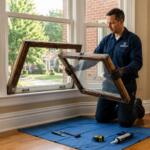
Water leaks around windows are more than an inconvenience. Left unaddressed, they can lead to structural damage, mold growth, and repairs that escalate quickly in Maryland, Virginia, and D.C.’s challenging climate.
The challenge is that not all window leaks are caused by the window itself. Water can infiltrate through roof damage, failed siding, or clogged gutters, then travel hidden paths before appearing at your windows. In this guide, we break down the most common causes of leaking windows, how to diagnose the real source of the problem, and what solutions work for Mid-Atlantic homeowners.
How to Tell If Water Is Coming From the Window
Through the cold of winter and the downpours of storms, Mid-Atlantic homeowners know it’s important to keep their windows free of leaks. A leaking window can make your home less comfortable, undermine the structural integrity of your walls, or cause mold growth. Maryland’s humid summers, Virginia’s ice storms, and D.C.’s freeze-thaw cycles all accelerate window deterioration and test even quality installations.
Before attempting any repairs, you need to determine whether water is coming from the window itself or from somewhere else in your home’s exterior envelope. Misdiagnosis is common because water often travels along hidden paths, through wall cavities, along framing members, and behind insulation before appearing indoors where you can see it.
Signs the window itself is leaking: water appears during rain but only around the window perimeter, moisture is concentrated at the window sill or frame edges, you can see deteriorated sealant or caulking around the frame, water appears when rain hits the window directly from specific directions, or peeling paint and water stains are limited to the immediate window area.
Signs water may be coming from elsewhere: water appears well below or to the side of the window opening, leaks occur during heavy rain or wind-driven storms but not light rain, multiple windows on the same wall show similar leak patterns, water stains extend beyond the immediate window area into ceilings or walls, leaks worsen after heavy snow or ice dam formation, or water appears hours after rain stops.
Pro tip for Mid-Atlantic homeowners: Use the hose test on a dry day. Have someone spray water on your window’s exterior while you observe from inside, starting at the bottom and working upward. This controlled test reveals exactly where water penetrates, helping you distinguish between window seal failure, flashing problems, and building envelope issues.
Most Common Causes of Water Leaks Around Windows
1. Worn or Failed Sealant and Weatherstripping
Most window leaks are caused by a breakdown in the sealant. Over time, caulking and weatherstripping degrade due to UV exposure, temperature fluctuations, and normal aging. This creates gaps where water can penetrate during Maryland’s frequent thunderstorms or Virginia’s nor’easters.
Visual signs of sealant failure: cracked, peeling, or missing caulk around window frames, condensation around the window edge when it rains, discoloration or brittleness in the sealant, and visible gaps between the window frame and exterior siding or trim.
South- and west-facing windows tend to experience faster sealant degradation from intense sun exposure. Windows facing prevailing storm directions also deteriorate faster due to constant moisture exposure.
When resealing is appropriate: If the window itself is structurally sound, properly installed, and shows no signs of frame damage or rot, resealing can effectively stop leaks. If water has been penetrating for an extended period, though, you may have hidden damage behind walls that requires more extensive repair beyond simple resealing.
Other common wear-and-tear issues include damaged locking mechanisms, which can prevent double-hung windows or casement windows from shutting completely. Window hardware is often inexpensive to replace without full window replacement, restoring proper seal and security.
2. Improper Window Installation
If your window leak doesn’t seem to be caused by worn sealant or hardware, poor installation may be the culprit. Installation issues often don’t become apparent until the first major rainstorm or season change, when your home’s exterior envelope is truly tested.
Common installation problems that cause leaks: flashing failures (gaps in flashing, missing flashing entirely, or flashing that doesn’t tie into weather barriers), an incorrect rough opening size that creates impossible-to-seal gaps, inadequate air sealing between window frame and wall framing, poor integration with house wrap, non-corrosion-resistant fasteners that rust and create leak paths, and improper slope, since windows must slope slightly outward for proper drainage.
These issues typically show up during heavy rain or wind-driven storms, since that’s when water is forced into areas that should be protected by proper installation technique. For more on identifying installation problems, see our guide on signs of a bad window installation.
The best way to avoid installation issues is to hire an experienced professional from the start. At Thompson Creek, our installation teams follow protocols developed specifically for Mid-Atlantic weather conditions, and every window is custom-manufactured at our Upper Marlboro, Maryland facility to exact specifications, ensuring a precise fit, then professionally installed with proper flashing, sealing, and weatherproofing.
In severe cases, addressing installation failures requires removal and reinstallation of the window or complete window replacement when the original installation has caused water damage to surrounding framing.
3. Clogged Weep Holes and Window Drainage Issues
Many homeowners don’t realize windows are designed with built-in drainage systems. Weep holes, small openings along the bottom exterior edge of window frames, allow accumulated water to escape rather than pool inside the frame.
How weep holes work: When wind-driven rain penetrates past the exterior glazing seals (which is normal and expected), water collects in channels within the window frame. Weep holes drain this water harmlessly to the exterior. When debris, dirt, insect nests, or paint blocks these holes, water has nowhere to go except into your home’s interior.
Cleaning weep holes: locate them along the bottom exterior edge of window frames, use a wire brush, toothpick, or compressed air to clear blockages, ensure holes remain open year-round, check quarterly, and never paint over or seal weep holes since they’re intentional features.
4. Failed Window Seals in Double-Pane Windows
Modern energy-efficient windows feature double- or triple-pane insulated glass units with argon or krypton gas sealed between panes. When the perimeter seal fails, moisture infiltrates between glass layers, causing fogging, condensation buildup, and compromised thermal performance.
Symptoms of broken window seals: persistent fog or cloudiness between glass panes that doesn’t wipe away, water droplets trapped inside the glass unit, mineral deposits or film on interior glass surfaces, and reduced insulation performance.
Seal failure in the insulated glass unit itself doesn’t usually cause water leaks into your home’s interior, but it destroys the window’s energy efficiency and indicates the window is nearing the end of its functional life. The same age and exposure factors that cause this kind of seal failure often coincide with frame seal deterioration, so if you see fogging between panes, check carefully for water leaks around the frame perimeter as well.
Thompson Creek’s custom-manufactured replacement windows use durable seal technology designed to maintain insulating properties and weathertight performance for decades, backed by our 50-Year No-Hassle Warranty covering both product and installation workmanship.
5. Design or Building Envelope Issues
The most difficult cause of window leaks to diagnose doesn’t have to do with the windows themselves but with how your home manages water around windows. These building envelope issues are frequently misdiagnosed as window failures when the actual problem lies in architectural design or structural deterioration.
Common design-related leak sources: insufficient roof overhangs that let rain pour directly onto windows, wall cracks and foundation settling that allow water behind the weather barrier, poor site drainage that directs rainwater against the foundation and lower-story windows, missing or failed trim details, and ice dam formation, where heat escaping through roofs melts snow that refreezes at eaves, forcing water under shingles and into walls.
Water follows the path of least resistance through wall cavities and structural framing, so a leak appearing at your window might originate from a roof issue, wall crack, or missing trim detail several feet away. If you’re not sure, consult with a professional for a comprehensive diagnosis.
Is It Really a Window Leak? Common Misdiagnoses
Water has a frustrating tendency to travel along framing, behind insulation, and through hidden paths before appearing at visible locations like window sills.
Common sources of water often mistaken for window leaks: roof-related leaks from missing shingles or damaged flashing that travel downward along studs until finding an exit point at a window opening (see our guide on steps to stop a leaking roof); clogged gutters that overflow and overwhelm window sealant, which Thompson Creek’s gutter protection systems help prevent siding failures, including cracks, missing or damaged vinyl siding, or failed fiber cement siding; HVAC condensate line issues that back up into walls near windows; and plumbing leaks that travel surprising distances before becoming visible.
A thorough exterior inspection during or immediately after rainfall, or better yet, a controlled hose test, can help identify the true water entry point and save you from unnecessary window replacement.
How to Fix a Leaking Window
After properly diagnosing the cause, the next step is matching the fix to the actual problem. Overspending on solutions that don’t address root causes wastes money, while under-addressing serious issues leads to compounding damage.
Simple Repairs and Maintenance Fixes
Gutter Cleaning and Maintenance: Ensuring gutters and downspouts are clear and properly directing water away from your home’s foundation is one of the simplest and most preventable steps to help avoid window leaks. For Mid-Atlantic homes, gutter cleaning should happen at minimum twice yearly.
Minor Sealant Repairs: If your window leak is caused by damaged sealant and the window is otherwise sound, resealing can be a DIY-friendly fix: choose a dry day with moderate temperatures, remove all old sealant, clean surfaces thoroughly, allow complete drying, apply new exterior-grade caulk in continuous beads, tool it smooth, and allow proper curing time before exposure to moisture. If you’re not confident in your ability to reseal the window yourself, a professional can help. Improper caulking technique can trap water and worsen the problem.
Hardware Adjustments and Replacement: Damaged locking mechanisms, worn weatherstripping, bent cranks, or damaged tilt latches can all prevent windows from shutting completely. Replacing or adjusting hardware is typically a targeted, cost-effective fix that restores proper seal function without full window replacement.
Weep Hole Maintenance: Clearing blocked weep holes restores proper window drainage using a wire brush, thin wire, toothpick, or compressed air.
Professional Repairs
Window Reflashing: If the original window installation included inadequate or improperly installed flashing, a qualified contractor can add or correct this critical water barrier, including proper sequencing with house wrap, flexible flashing tapes, head flashing, and sill pans.
Structural Corrections: Design flaws like missing overhangs, improper drainage slopes, or wall cracks require more extensive repairs, including carpentry, masonry work, regrading, or gutter and downspout adjustments.
Partial Remediation: Sometimes water damage has compromised the area around the window without destroying the window itself. This can involve replacing water-damaged framing lumber, mold remediation (see our guide on interior and exterior mold prevention on windows), replacing compromised insulation, and rebuilding portions of interior and exterior wall finishes while preserving the existing window.
When Window Replacement Is the Right Solution
Consider replacement when leaks persist despite proper sealing and flashing repairs, the window shows structural damage, wood rot, or failed IGU seals, installation failure is severe enough that reinstallation isn’t practical, the window is quite old and combining repair with an energy efficiency upgrade makes sense, or multiple problems exist together.
When installed by an experienced professional like Thompson Creek’s installation team, quality custom-manufactured windows can protect your home from moisture and help lower your heating and cooling bills. Our windows are tested to withstand 146 mph winds, ample protection for Mid-Atlantic hurricanes and severe weather.
Important caveat: Avoid replacing windows when the actual problem is roof damage, gutter issues, or building envelope failures elsewhere. No window, no matter how well designed or expertly installed, can solve problems that originate in your roofing system, siding, or home’s structural drainage. Always identify and correct underlying building envelope issues first, or they’ll simply cause your new windows to leak as well.
Why Ignoring Window Leaks Makes the Problem Worse
Even small water leaks around windows shouldn’t be ignored or managed with temporary measures like towels or catch pans. What appears minor on the surface often indicates more serious problems developing behind your walls where you can’t see the damage accumulating.
Water that enters around windows saturates insulation (destroying its insulating ability), soaks into framing lumber (causing rot and structural weakness), and creates ideal conditions for wood decay fungi. By the time you see obvious damage inside your home, like bubbling paint, warped drywall, or visible water stains, the structural components may already be significantly compromised.
In Maryland, Virginia, and D.C.’s humid climate, moisture problems are especially aggressive. Summer humidity prevents adequate drying between rain events, keeping water-damaged materials persistently damp and accelerating deterioration. Mold can begin growing within a day or two in damp conditions behind walls, and once established, it spreads rapidly through wall cavities.
Window leaks rarely improve on their own. Weather exposure, freeze-thaw cycles that expand cracks, and continued water penetration all accelerate deterioration once it begins. Early intervention is always less involved than delayed repairs.
What to Do If You Notice Water Leaks Around Your Windows
- Document When and Where Leaks Occur: Note whether water appears during every rain or only heavy storms, which direction rain is coming from, whether leaks appear immediately or hours afterward, and whether multiple windows are affected.
- Check Surrounding Areas First: Inspect your roof, gutters, and siding above and around the affected window before assuming you have a window problem. Walk your roofline for missing or damaged shingles, check gutters for clogs or separation, and inspect downspouts and exterior trim.
- Contain Water and Prevent Interior Damage: Place buckets or towels to catch dripping water, run a dehumidifier if leaks are ongoing, and move furniture and electronics away from affected areas.
- Avoid Temporary Fixes That Hide Symptoms: Applying caulk without identifying the true source can trap water in wall cavities rather than fixing the entry point, making damage worse.
- Schedule a Professional Assessment: If you can’t confidently identify the source or simple fixes don’t resolve the problem, a qualified professional can trace water intrusion paths, identify contributing factors across your roof, gutters, windows, and siding, and recommend a lasting solution. Thompson Creek offers free in-home consultations where our specialists evaluate your entire building envelope, not just the windows.
Frequently Asked Questions About Window Leaks
Why does my window leak only when it rains hard?
Heavy rain creates more water volume and wind-driven pressure that can overwhelm inadequate sealing or reveal hidden gaps in flashing. Light rain might not generate enough force to push water through these vulnerabilities. This pattern often points to installation or flashing issues rather than simple sealant failure.
Can resealing stop a leaking window permanently?
Resealing works long-term only if the window is properly installed with correct flashing and the leak source is truly deteriorated caulk, nothing more. If installation problems, flashing gaps, structural issues, or hidden rot exist, resealing provides only temporary improvement. As a rule of thumb, if one resealing attempt doesn’t solve the problem, the issue runs deeper than caulk failure.
Is a leaking window always an installation problem?
No. While poor installation is a common cause, leaks can also result from normal sealant aging, roof damage directing water to windows, clogged gutters, siding or wall cracks, design issues like missing overhangs, or settlement creating gaps. Proper diagnosis requires examining the entire water management system around the window.
How serious is a small window leak?
Even small leaks are worth addressing promptly. Water entering your wall cavity causes hidden damage to framing, insulation, and wall finishes that you can’t see until it becomes severe, and mold can develop within a day or two of water intrusion.
Should I try to fix window leaks myself?
Simple resealing of obviously deteriorated caulk is reasonable for confident DIYers with proper materials and technique. If the leak source is unclear, persists after resealing, or involves flashing or structural concerns, professional help prevents wasted effort and ensures proper correction.
Can window leaks cause mold in walls?
Yes. Persistent moisture from window leaks creates favorable mold growth conditions in wall cavities where humid air combines with organic materials like drywall paper and wood framing. Maryland, Virginia, and D.C.’s humid climate makes this especially likely if leaks go unaddressed.
Will homeowners insurance cover window leak repairs?
Coverage depends on the cause and your specific policy. Sudden storm damage and water damage from a covered peril are often covered; gradual deterioration from lack of maintenance or normal wear typically is not. Check your policy and document damage thoroughly with photos.
How can I prevent window leaks?
Check caulk and weatherstripping before spring and fall storm seasons, clean weep holes and gutters seasonally, trim vegetation away from windows, verify soil slopes away from the foundation, and inspect for damage after severe weather. Budgeting for resealing every several years and choosing quality windows with strong warranties up front both pay off over time.
Why Choose Thompson Creek for Window Leak Solutions
For more than 40 years, Thompson Creek has protected Mid-Atlantic homes from water damage with custom-manufactured, professionally installed replacement windows. Our local expertise means we understand exactly what Maryland, Virginia, and D.C. homeowners need: windows built to withstand humid summers, freezing winters, severe thunderstorms, nor’easters, and occasional hurricanes.
What sets Thompson Creek apart: custom manufacturing at our Upper Marlboro, Maryland facility for a precise, gap-free fit; storm-tested durability, AAMA-tested to withstand winds up to 146 mph; professional installation backed by Thompson Creek, following strict protocols for regional weather conditions; a 50-Year No-Hassle Warranty covering both products and installation workmanship; and complete accountability, since one company designs, manufactures, installs, and services your windows.
Ready to eliminate window leaks for good? Schedule your free consultation today and discover why Mid-Atlantic homeowners have trusted Thompson Creek since 1980. Our consultants will evaluate your complete building envelope, not just windows, to identify all water intrusion sources and recommend lasting solutions.