
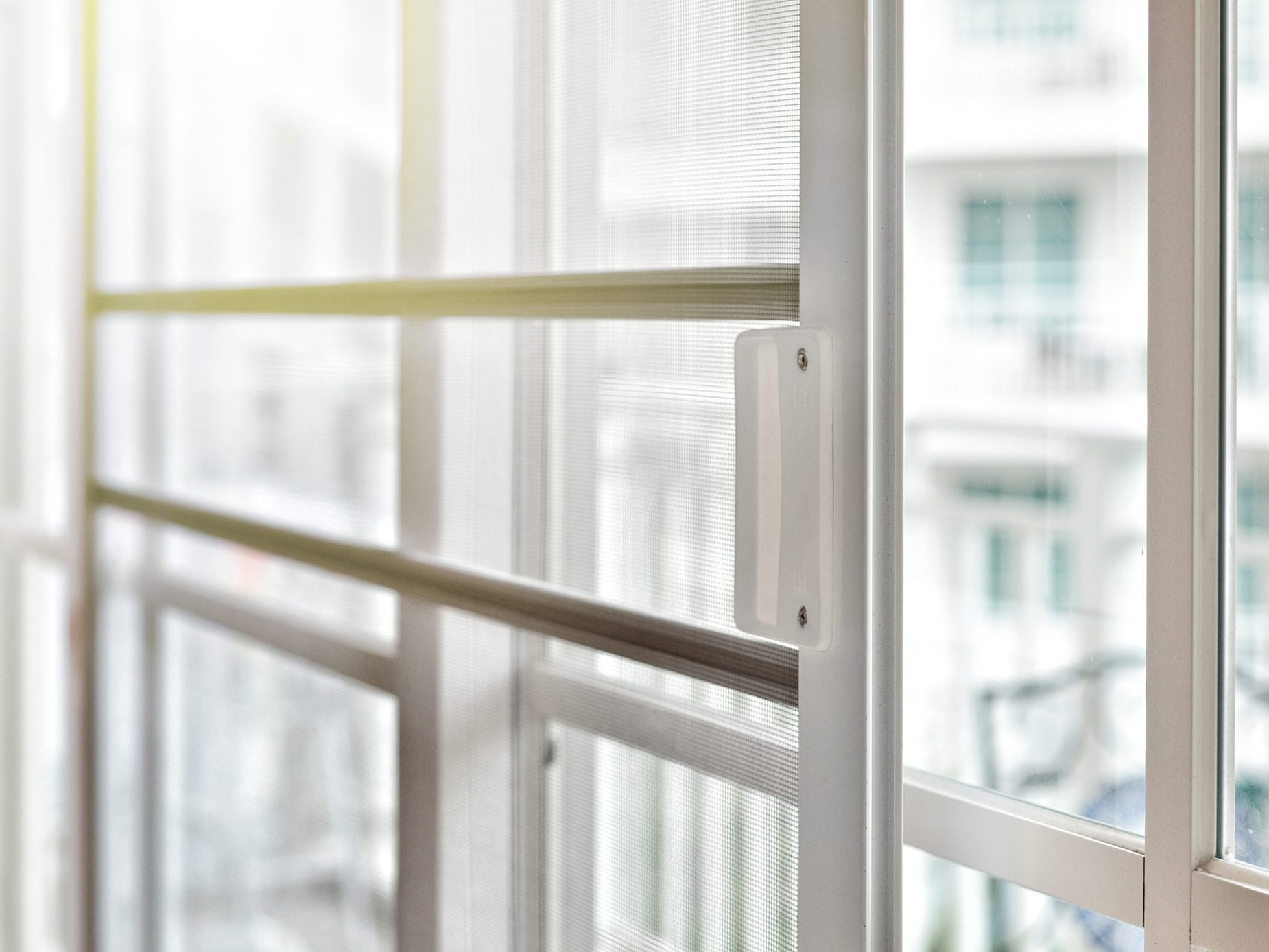
Not All Window Screens Are the Same
Most homeowners don’t think about window screens until one tears, sags, or stops keeping bugs out. But screen material varies quite a bit, and the right choice depends on your home’s location, your pets, your view priorities, and how much sun a given window gets. Screens do more than keep bugs out, too: screens play a bigger role in comfort and airflow than most homeowners realize, which is worth keeping in mind as you weigh the options below.
Fiberglass Screens
Fiberglass is the most common screen material on residential windows and doors, and for good reason. The mesh is made of woven fiberglass strands coated in vinyl, which makes it flexible, resistant to corrosion, and inexpensive to replace. A standard fiberglass mesh weave runs about 18×16, and it comes in a couple of standard shades, typically charcoal or gray; charcoal is generally considered the better choice for visibility since it reduces glare and creates less visual interference when looking through the screen. This is the mesh you’ll typically find paired with double-hung windows, since it fits the sash-and-frame design most residential double-hung units use.
Best for: most standard residential windows and doors; homeowners who want an affordable, easy-to-replace option.
Aluminum Screens
Aluminum mesh holds its shape well and resists stretching or sagging over time, which makes it a good fit for larger openings like sliding doors or porch screens. The tradeoff is that aluminum is less forgiving on impact. Where fiberglass will typically flex and bounce back, aluminum can dent or crease permanently if something hits it hard enough. The added stability also makes aluminum a common choice for the wider sash openings found on bay window installations, where a screen needs to hold its shape across a larger span.
Best for: large frames and sliding door screens where sag resistance matters more than impact flexibility.
Pet-Resistant Screens
For homeowners with dogs or cats that scratch, lean on, or push through window and door screens, pet-resistant mesh is a worthwhile upgrade. These screens are typically woven from a heavier polyester or vinyl-coated polyester and are built to resist tearing and stretching far better than standard fiberglass. Several branded versions are available on the market under different manufacturer names, and while marketing claims about exact strength multiples vary by brand, the category as a whole is built specifically to outlast standard mesh under repeated pet pressure.
Best for: households with active pets that regularly interact with screened windows or doors.
No-See-Um Screens
Standard screens use a mesh weave that’s too open to stop the smallest biting insects, sometimes called no-see-ums or biting midges, common in coastal and wetland-adjacent areas. No-see-um screens step up to a much tighter weave, often around 20×20, to block these insects while still allowing airflow, though the tighter weave does reduce airflow and visibility somewhat compared to standard mesh.
Best for: coastal homes and properties near marshes, wetlands, or standing water.
Solar Screens
Solar screens use a denser, often darker weave designed to cut down on heat and glare before it reaches the glass. They’re a popular choice for west- and south-facing windows that take on strong afternoon sun, including many garden windows, where the angled glass roof can let in a lot of direct sun on the shelf below. The amount of heat and UV blocked varies by weave density and screen product, so homeowners should check the specific product’s rated performance rather than assuming a flat percentage across all solar screens.
Best for: windows with heavy direct sun exposure, especially in rooms prone to overheating in the afternoon.
Specialty and Historic-Home Screens
Bronze mesh screens develop a natural patina over time and are a common choice for historic homes where a modern aluminum or fiberglass look would clash with the architecture. Stainless steel security mesh, meanwhile, is built for impact and intrusion resistance rather than aesthetics or airflow and is typically reserved for ground-floor windows or homes prioritizing added security.
Best for: bronze for historic-district homes with strict aesthetic requirements; stainless steel security mesh for ground-floor security concerns.
How Long Do Window Screens Last?
Lifespan depends heavily on material, sun exposure, and handling. Standard fiberglass and aluminum screens in typical residential use often last a decade or more before mesh sagging, UV degradation, or accumulated small tears make replacement the more practical option. Screens facing intense, direct sun or heavy pet or weather exposure tend to wear faster and may need attention sooner. Keeping up with a regular cleaning and maintenance routine for your screens is one of the simplest ways to get the most life out of whichever mesh you choose.
Choosing the Right Screen for Your Home
A quick way to think through it:
- Standard windows, budget-conscious: fiberglass
- Large sliding doors or porches: aluminum
- Homes with active pets: pet-resistant mesh
- Coastal or wetland-adjacent homes: no-see-um mesh
- Sun-heavy west/south-facing rooms: solar screens
- Historic homes: bronze mesh
- Security-focused ground floor windows: stainless steel security mesh
Most homes end up using a mix, standard mesh in most rooms and a specialty option where a specific problem, sun, pests, pets, or security, needs solving.
If your current screens are torn, sagging, or simply not doing their job anymore, replacing the mesh is usually a simple, affordable fix rather than a full window replacement. Many homeowners tackle screens as part of a full window and screen cleaning routine each season, which is a good time to spot mesh problems early. And if you’re noticing issues with the window itself, drafts, fogging, or a frame that no longer seals tightly, that’s a separate and more important thing to have looked at. Get a free window assessment to find out which situation you’re dealing with.


