A kitchen remodel or window replacement is one of the few home projects where a single decision changes how a room feels every single day. The window over your sink sets the light, the view, and often the whole mood of the space. If you are weighing options for a kitchen in Maryland, Virginia, Pennsylvania, or DC, here is a practical look at the styles worth considering and what makes each one work in a kitchen specifically.
Start With How You Use the Space
Before comparing styles, think about what the window needs to do. Do you want extra counter space for plants? More airflow while cooking? A view that makes doing dishes less of a chore? Kitchens have specific demands: heat, humidity, grease, and frequent hands-on use near the sink and stove. That means ventilation, ease of cleaning, and moisture resistance matter more here than in most other rooms.
Mid-Atlantic homes also deal with humid summers and cold, damp winters. Frame material and glass performance affect how a kitchen window holds up to that swing in conditions over the years.
Popular Kitchen Window Styles
Garden Windows
A garden window projects outward from the wall, typically 12 to 24 inches, with glass on three sides and an angled glass roof. It is a favorite above kitchen sinks because it adds a shelf for herbs and small plants while pulling in light from multiple directions. If you like having fresh basil or rosemary within reach while you cook, this is the style built for that, and our garden window guide covers sizing and placement in more depth.
Bay Windows
A bay window angles three window sections outward from the wall, creating a wider sightline and a small amount of extra interior space without a full addition. In a kitchen, a bay window works well over a sink or in an eat-in nook, opening up the room visually more than a flat window of the same width would.
Double-Hung Windows
Double-hung windows are the most common style in Mid-Atlantic homes for a reason: both the upper and lower sash move, so you can control airflow from the top, bottom, or both. They are easy to clean from inside the home and fit a wide range of kitchen layouts, from small galley kitchens to larger open-concept spaces.
Casement Windows
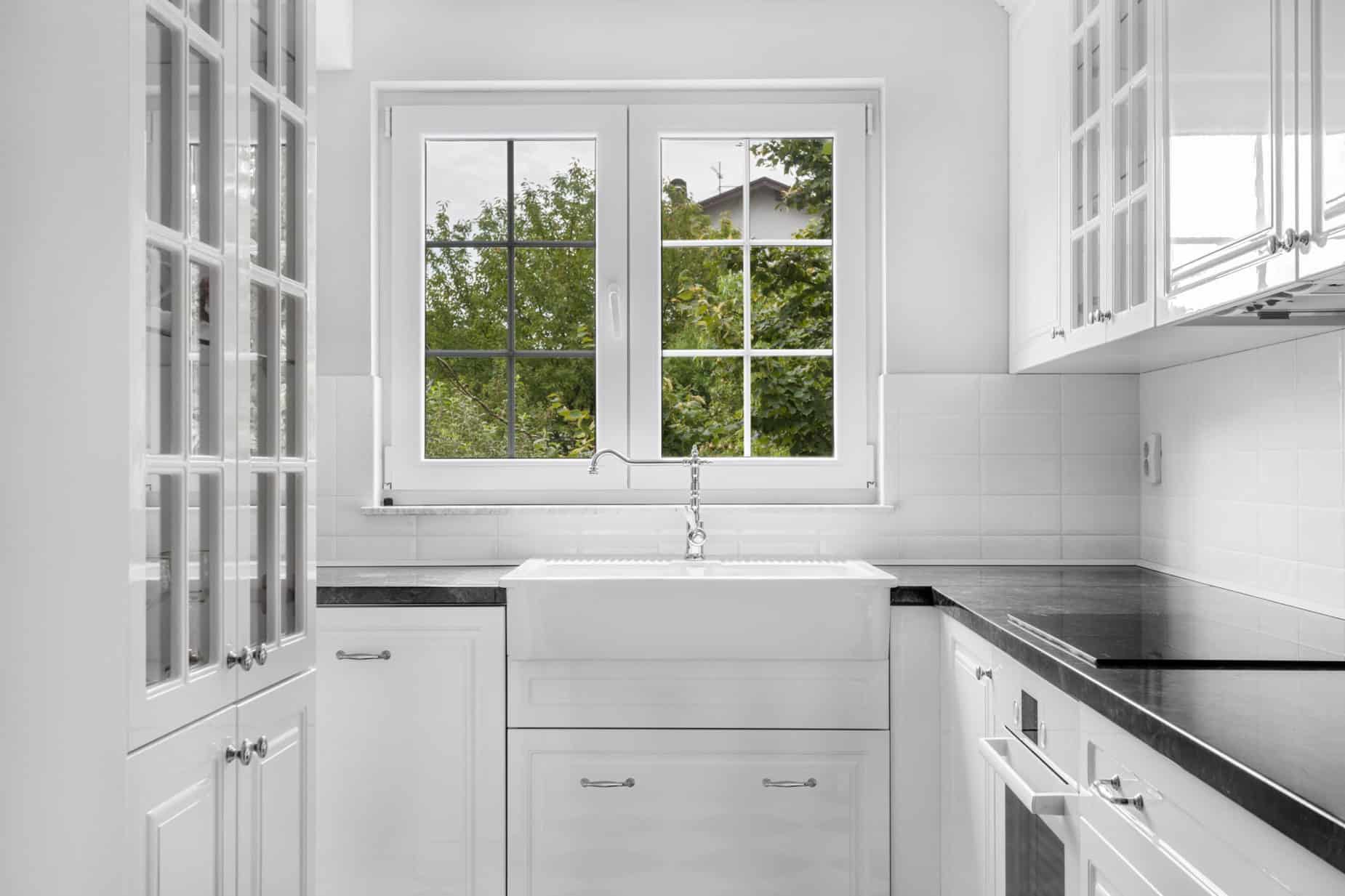
Casement windows open outward on a side hinge and crank open fully, which makes them a strong choice above a counter or sink where reaching over obstacles to open a window is inconvenient. Because the whole sash swings open, they tend to move more air than a sliding or double-hung window of the same size.
Awning Windows
Awning windows hinge at the top and open outward from the bottom, which means they can stay cracked open during a light rain without letting water in. That makes them a useful option for a kitchen window positioned above a counter where you want ventilation without worrying about a sudden shower.
Slider Windows
Slider windows move horizontally along a track and are a good fit where a wider, shorter opening makes more sense than a taller one, such as above a stretch of counter or backsplash. They are simple to operate and tend to have a clean, minimal look.
Bow Windows
A bow window is a wider, curved version of the bay window concept, typically using four or five window sections to create a gentle arc. In larger kitchens or breakfast nooks, a bow window can serve as a real focal point, offering a wide, panoramic view.
Choosing the Right Fit for Your Kitchen
There is no single “best” kitchen window. The right choice depends on your layout, how much counter space you are willing to give up, how the window will be used day to day, and the direction the wall faces. A north-facing kitchen may benefit more from a wide bay or bow window to maximize available light, while a compact galley kitchen might be better served by a double-hung or slider window that does not intrude on limited counter space.
Frame material matters too. Our breakdown ofwhy vinyl windows hold up well in this climate covers why vinyl frames resist the humidity and temperature swings common in Mid-Atlantic summers and winters without needing repainting or refinishing over time. Whatever style you choose, look for Low-E glass coatings and gas-filled insulated glass units, which help reduce heat transfer through the window in both summer and winter; our guide to the benefits of energy-efficient windows breaks down what those features mean for a kitchen specifically.
What Thompson Creek Brings to a Kitchen Window Project
Thompson Creek has served homeowners throughout the Mid-Atlantic since 1980, and every window we sell is custom-manufactured at our 120,000 sq ft facility in Upper Marlboro, Maryland, to the exact measurements of your kitchen opening. That means no compromises on fit, whether you are working with a standard-size opening or an unusual layout in an older home.
Every window is backed by our 50-Year No-Hassle Warranty, covering both the product and its installation. Our windows are also AAMA-tested to withstand winds up to 146 mph, which matters in a region that sees its share of severe summer storms. Installation is handled by professional installation teams backed by Thompson Creek, coordinated through a single point of contact from your initial consultation through the day the work is complete, and most kitchen window projects are completed in a single day.
Frequently Asked Questions
What is the best window style for a kitchen sink?
Garden windows and bay windows are the two most popular choices above a kitchen sink because they add usable space for plants or small items and bring in light from more than one direction. Double-hung and casement windows are simpler, budget-conscious alternatives that still perform well.
Do kitchen windows need special glass?
Kitchen windows benefit from Low-E glass coatings, which reduce heat transfer and help protect against fading from sun exposure. Gas-filled insulated glass units add further efficiency, which is worth considering given how much time is typically spent in the kitchen.
How much does it cost to replace a kitchen window?
Cost depends on the window style, size, frame material, and glass package you choose, along with the complexity of the installation. A free in-home consultation is the most reliable way to get an accurate estimate for your specific kitchen.
Can I add a garden window where a flat window currently is?
In many cases, yes, though it depends on the structure of the wall and whether additional support is needed for the projecting box. A design consultant can evaluate your specific opening during a free estimate visit.
Ready to Explore Kitchen Window Options?
If you are ready to see how a new kitchen window could change the light, function, and feel of your space, schedule a free consultation with Thompson Creek. Our team will walk through your options in person and provide a clear estimate based on your kitchen’s specific layout.