The decision to replace your windows is one thing. Actually going through the process is another. Most homeowners don’t know what window replacement day looks like: how long it takes, how disruptive it is, whether they need to move furniture, or when things get back to normal.
The uncertainty is usually worse than the reality. A professional window installation is, in most cases, a single-day project. Knowing what to expect at each stage removes the anxiety and helps you prepare.
Before Installation Day: What Happens First
Window replacement doesn’t begin on installation day. It begins with a free in-home consultation.
A Thompson Creek design consultant visits your home to take custom measurements, inspect existing frames, review window style options and glass packages with you, and produce a detailed estimate. This matters because our replacement windows are custom-manufactured to the exact dimensions of your home’s openings, not cut from stock inventory. Measurements taken on-site ensure the windows fit precisely before they’re built.
During this visit, the consultant will also identify anything that could affect installation: deteriorated frames, rot, structural concerns, or accessibility challenges. The quote you receive is good for one full year.
Once you approve the project, your windows enter the manufacturing queue at Thompson Creek’s 120,000-square-foot Maryland factory. You’ll be scheduled for an installation date and receive details about what to prepare in advance.
How to Prepare Your Home Before the Crew Arrives
A small amount of preparation on your end makes installation faster and protects your belongings.
Clear the area around each window. Move furniture, plants, and decorative items at least two to three feet away from each installation location. The crew needs clear access on both sides.
Remove window treatments. Take down curtains, blinds, and valances before the crew arrives. You’ll reinstall them after the project, so this is a good time to inspect the hardware for wear.
Secure pets. The front door and exterior access points will be open at various times. Keeping pets in a separate room prevents them from wandering outside.
Identify parking. The installation crew arrives with a vehicle and, for larger projects, may need a trailer. Flagging available parking to the crew in advance keeps the morning logistics simple.
Step 1: Crew Arrival and Setup
The Thompson Creek crew arrives at the scheduled time. On the first day of a multi-window project, the lead installer walks the home with you to confirm each window location, review any special instructions, and answer questions before work begins.
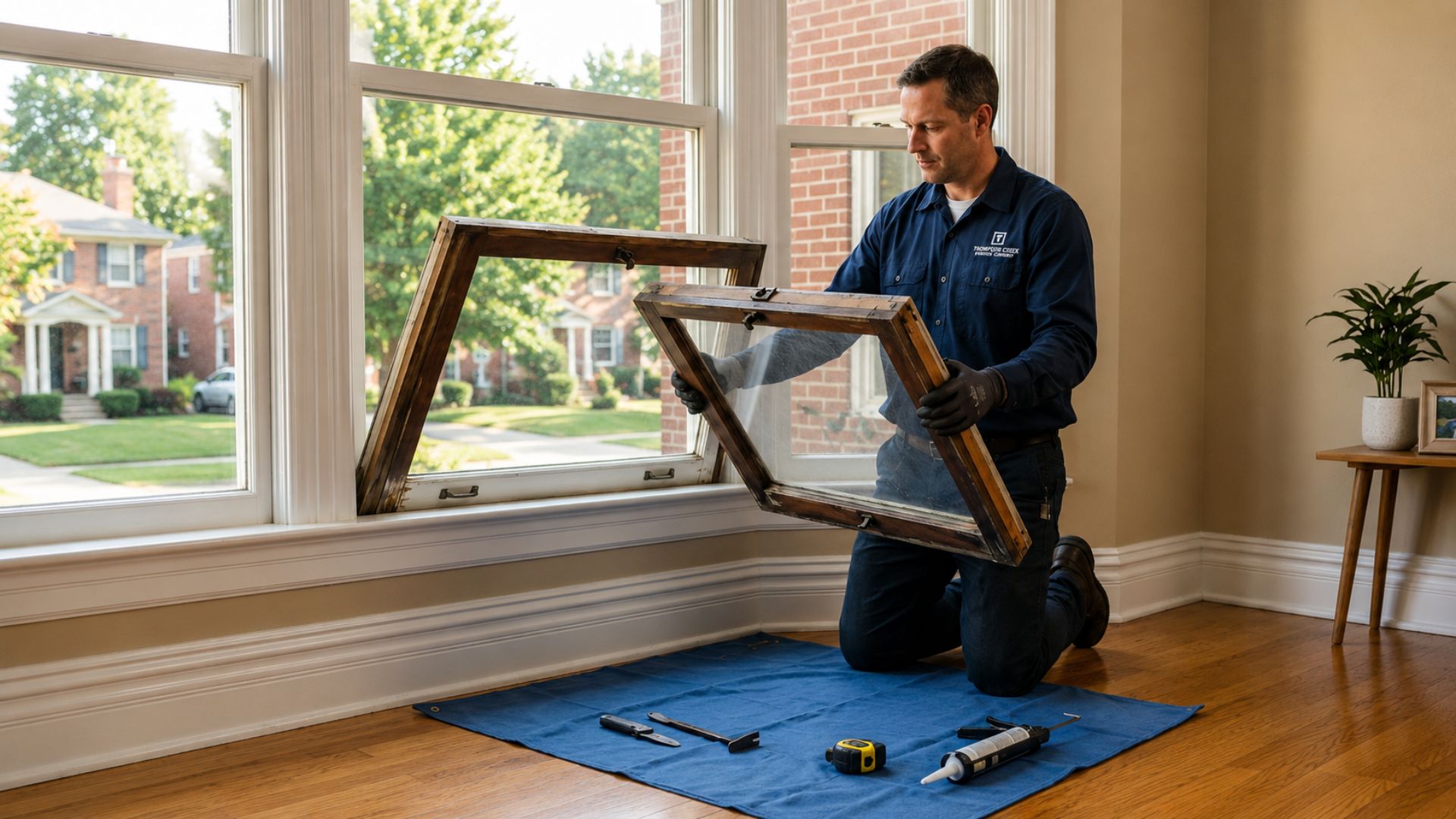
The crew protects every work area before removing anything. Drop cloths go on interior floors and window sills. Exterior access is confirmed for each opening.
Step 2: Removing the Old Window
For a standard insert (pocket) replacement, the crew removes the interior trim and stops, lifts out the existing sashes, and takes out the parting stop. The existing frame stays in place. Only the glass and sash components are removed.
For a full frame replacement, the process is more involved. The entire window assembly (frame, sash, sill, and surrounding trim) comes out. The opening is then prepared for the new unit, which may include addressing rotted wood, improving insulation in the rough opening, or adjusting the opening size.
The difference between these two approaches is explained in detail in our guide to insert vs. full-frame window replacement.
Step 3: Preparing the Opening
Once the old window is out, the crew inspects the rough opening carefully. Any deteriorated or rotted wood is removed and replaced.
Flashing tape is applied to the sill to protect against water infiltration. The sill is checked for level, and shims are used where needed to ensure the new window sits true.
This prep work is where quality installers distinguish themselves. A window set into a poorly prepared opening will underperform and may develop problems that surface years later.
Step 4: Installing the New Window
The new window unit is set into the opening and dry-fitted first, then seated against a bead of silicone caulk applied to the frame contacts.
Shims secure the window in position, holding it square, level, and plumb within the opening. Fasteners are driven through the frame into the surrounding structure. The crew verifies the window operates correctly before moving to sealing.
Once you approve the project, your windows enter the manufacturing queue at Thompson Creek’s 120,000-square-foot Maryland factory. You’ll be scheduled for an installation date and receive details about what to prepare in advance.
You can learn more about how our double-hung replacement windows are built to perform in Maryland, Virginia and D.C. homes. For homes with aging casement windows, our casement window replacement page covers what to expect for that style specifically. Explore the full replacement windows product line to understand all available options, or visit our replacement doors page if your project includes entry or patio doors as well.
Step 5: Cleanup and Final Inspection
Once all windows are installed, the crew removes all debris, collects old window components, and returns every work area to its original condition. Drop cloths come up. Floors and sills are wiped down.
A final walkthrough covers each installed window: operation is demonstrated, locks are tested, and any homeowner questions are answered. If anything doesn’t meet expectations, the crew addresses it before leaving.
Thompson Creek’s crews are trained and employed by Thompson Creek, not subcontracted. The same accountability that covers the product through the 50-Year No-Hassle Warranty extends to the installation work itself.
How Long Does Window Replacement Take?
For most standard double-hung windows, a professional two-person crew can complete an installation in approximately one to two hours per window. A whole-house project involving ten to fifteen windows is typically finished in a single day.
Specialty windows (bay, bow, or large picture windows) take longer due to size and structural complexity. Projects requiring frame repairs or full frame replacements also add time.
Thompson Creek provides a specific timeline estimate during the free consultation. Larger projects may be scheduled across two days, and the crew will communicate that clearly before the project starts.
After Installation: What Comes Next
Once your windows are installed, there’s a short settling-in period. Caulk and sealant need about 24 hours to cure fully before any cleaning. Avoid abrasive cleaners on the frames.
New energy-efficient windows sometimes prompt a counterintuitive reaction: some homeowners notice more interior condensation on the glass shortly after installation. Our article on window condensation in summer explains what’s happening. The short version: new windows seal so well that indoor humidity that previously leaked out through the old frames now collects on the new glass surface. Managing indoor humidity addresses this quickly.
Your 50-Year No-Hassle Warranty documentation will be provided at the close of the project. Keep it on file. It covers both product and installation for the full warranty period.
Frequently Asked Questions
Do I need to be home when Thompson Creek replaces my windows in Maryland or Virginia?
Yes. Someone should be present at the start and end of the project and available during the day if questions come up. You don’t need to supervise the crew continuously.
Will window replacement damage my siding or interior walls in my Mid-Atlantic home?
For insert (pocket) replacements, surrounding siding, brick, and interior drywall are not disturbed. Full frame replacements require more work at the perimeter and may involve minor interior or exterior finishing. Your design consultant will explain the full scope before any work begins.
How many windows can be replaced in a day in my Maryland or Virginia home?
A factory-trained two-person crew can typically replace eight to twelve standard windows in a single day. Specialty or oversized windows take longer, and larger projects receive accurate day estimates during the free consultation.
What happens if something goes wrong during my window installation?
Thompson Creek’s factory-trained crews handle all issues that arise during the installation process. The 50-Year No-Hassle Warranty covers both product and workmanship issues that surface after the project is complete.
How long after Thompson Creek installs my windows can I rehang curtains or blinds?
You can begin reinstalling window treatments once the caulk has cured, typically 24 hours after installation is complete.
Knowing the process makes the decision easier. Schedule a free in-home consultation with Thompson Creek and get a clear, no-pressure picture of what your replacement project would involve.