When you ask for a window replacement quote, one of the first questions a qualified contractor will ask is whether you need insert replacement or full-frame replacement. If you don’t know the difference, you’re at a disadvantage and potentially paying for work you don’t need or missing work you do.
The distinction matters for your budget, your timeline, and the long-term performance of your new windows. Here’s what each approach actually involves, how to assess which one applies to your situation, and why getting this decision right protects your investment.
What Is Insert (Pocket) Replacement?
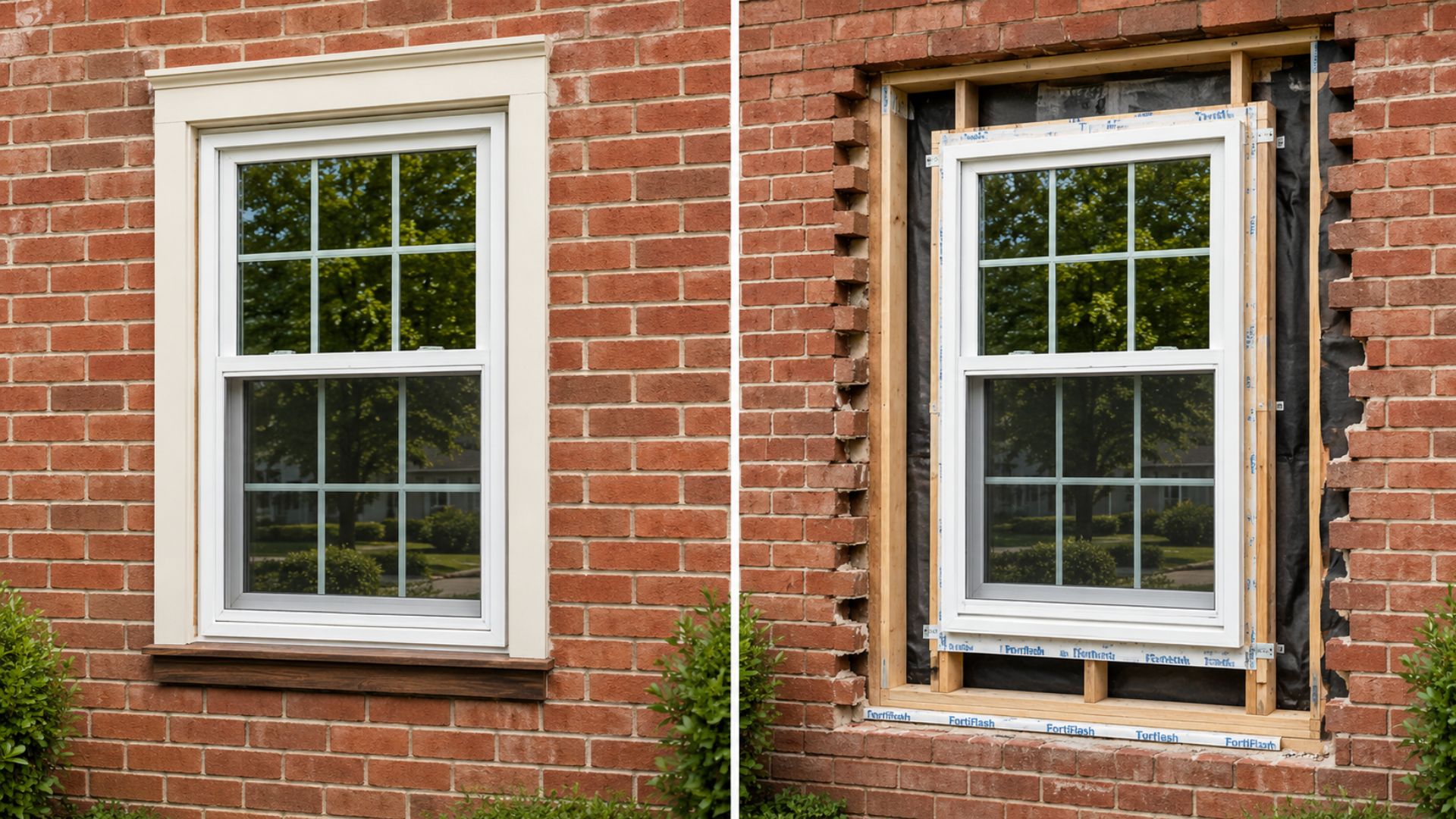
An insert replacement, also called a pocket replacement, installs a new window unit inside the existing frame. The frame, sill, and surrounding trim stay in place. Only the sash, hardware, and glass are removed and replaced with a new pre-built unit that fits into the existing frame opening.
This is the faster, less disruptive option. There’s no disturbance to exterior siding, brick, or interior drywall. A professional crew can typically complete an insert replacement in one to two hours per window. It’s the right choice when the existing frame is structurally sound: no rot, no water damage, square, and plumb.
Thompson Creek design consultants verify frame condition during free in-home consultations, using moisture meters and structural probes before recommending insert replacements. Every window we manufacture is custom-built at our 120,000-square-foot Maryland facility, so the unit is accurately sized to your actual frame opening before installation.
What Is Full Frame Replacement?
A full-frame replacement removes everything: sash, frame, sill, and the surrounding material at the perimeter of the opening. The rough opening is exposed and prepared, and a new window unit (including its own integrated frame) is set in from scratch.
This is a more labor-intensive process. It involves more material, more time, and more disruption to surrounding finishes. But it’s necessary in specific situations. In those situations, doing an insert replacement instead is a mistake that will surface as a larger problem later.
When Is Full Frame Replacement Required?
The condition of your existing frame determines which approach is appropriate. Full frame replacement is the right choice when:
The frame shows rot or water damage. Moisture infiltration over time causes wood frames to soften, stain, and eventually decompose. A window set into a rotted frame using the insert method will not be adequately supported, and moisture will continue to enter the surrounding structure. Homes built between the 1960s and 1980s often used lower-grade lumber that’s particularly susceptible to decay.
The frame is out of square. A frame that has shifted, settled, or warped out of square makes it impossible to install a new window unit that operates correctly. Full frame replacement resets the rough opening and allows for proper shimming and squaring.
You’re changing the window size or style. If you want to change the dimensions of the opening, use larger glass, have different proportions, or have a completely different window type, full frame replacement is required regardless of the existing frame’s condition.
The existing sill has deteriorated. The sill carries the weight of the window and channels water away from the opening. A deteriorated sill compromises both structural support and water management.
The surrounding insulation is inadequate. Full frame replacement exposes the rough opening, allowing improved insulation and air sealing to be installed in the cavity. This is an opportunity to address thermal bridging that insert replacement can’t touch.
When Insert Replacement Is the Better Choice
Inserting a replacement makes practical and economic sense when the existing frame is in good condition. As long as your frame fits the following criteria, an insert replacement delivers the same performance improvement at lower cost and disruption:
- Structurally intact with no rot or water damage
- Square and plumb within acceptable tolerances
- Free of significant moisture infiltration history
- The same size and profile as your new windows
Thompson Creek’s custom-manufactured windows are built to exact frame measurements, so you’re not forcing a stock unit into a gap. A proper fit means better sealing, better thermal performance, and a cleaner install.
Our guide on replacement windows vs. new construction provides a detailed breakdown of when each approach applies and what the installation process looks like for both methods. For homeowners weighing whether to replace at all, our double-hung windows page covers what today’s energy-efficient window options look like.
How to Assess Your Frame Before Getting Quotes
To get started, you can do a basic frame assessment yourself before calling for a consultation. Look for:
Visual deterioration. Peeling paint, staining, soft spots, or discoloration on the frame and sill are early signs of moisture damage. Press a fingernail or small screwdriver into the wood at the sill corners. Significant softness indicates rot.
Visible gaps. Gaps between the window frame and surrounding wall assembly allow air and water infiltration, suggesting the frame has shifted or the original installation has failed.
Operating problems. Windows that stick, bind, or won’t stay open have sashes or balances that have failed, but the frame beneath them may be fine. Distinguishing between a frame problem and a sash problem matters when choosing your replacement approach.
Water staining on interior surfaces. Staining on the interior wall below or beside a window indicates past or ongoing water infiltration that may have compromised the surrounding framing.
If you’re uncertain after a visual inspection, a Thompson Creek design consultant will assess the frame thoroughly during your free, no-obligation in-home consultation.
For a broader look at what the full replacement process involves, our window replacement overview walks through what to expect from start to finish. If you’re also considering doors while the contractor is already on-site, our entry doors page covers what a bundled project typically looks like.
Frequently Asked Questions
Can I tell from the outside whether I need insert or a full-frame replacement?
A rough visual assessment can surface obvious issues such as visible rot, staining, or significant gaps, but a definitive determination requires a hands-on inspection. Thompson Creek consultants use moisture meters and structural probes to evaluate frame integrity fully.
How does insert replacement impact energy efficiency?
Insert replacement can achieve excellent energy efficiency when the frame is sound and the perimeter is properly sealed. Full frame replacement allows for improved insulation in the rough opening cavity, which can incrementally improve performance, particularly in older homes where cavity insulation was minimal or absent.
How do I know if my frames are square?
A frame that’s slightly out of square will cause a new insert window to bind, operate poorly, or develop gaps. A professional installer checks for squareness with measuring tools during the consultation. A quick home test: if your existing windows bind or stick without obvious cause, the frame may have shifted.
DoesThompson Creek offer both replacement types?
Yes. Thompson Creek performs both methods and determines which is appropriate for your home based on the frame inspection during the free consultation. Our Maryland manufacturing facility produces custom window units built to the exact specs of your opening, whether it’s an existing frame or a reset rough opening.
Will my walls be disturbed during full-frame replacement?
Yes. Full frame replacement disturbs the perimeter of the opening on both the interior and exterior. Siding or brick may need to be temporarily removed, and interior drywall may require patching. Your Thompson Creek consultant will explain the full scope during the estimate, with no surprises.
Not sure which approach your home needs? Schedule a free in-home consultation and a Thompson Creek design consultant will inspect your frames, explain your options, and give you a clear recommendation based on what your windows actually need.