If your bay window is fogging up, letting in cold drafts, or showing signs of rot around the frame, you already know it’s not a small fix. Bay window replacement is more involved than swapping out a standard window, and most homeowners have real questions before they commit: How much will it cost? How long will it take? Will the crew tear up my living room?
This guide answers all those questions and more. You’ll learn how bay windows are structured, what styles are available, what a professional installation actually looks like, step-by-step, and why choosing a company that manufactures and installs its own windows matters for a project of this scope.
How Bay Windows Are Structured
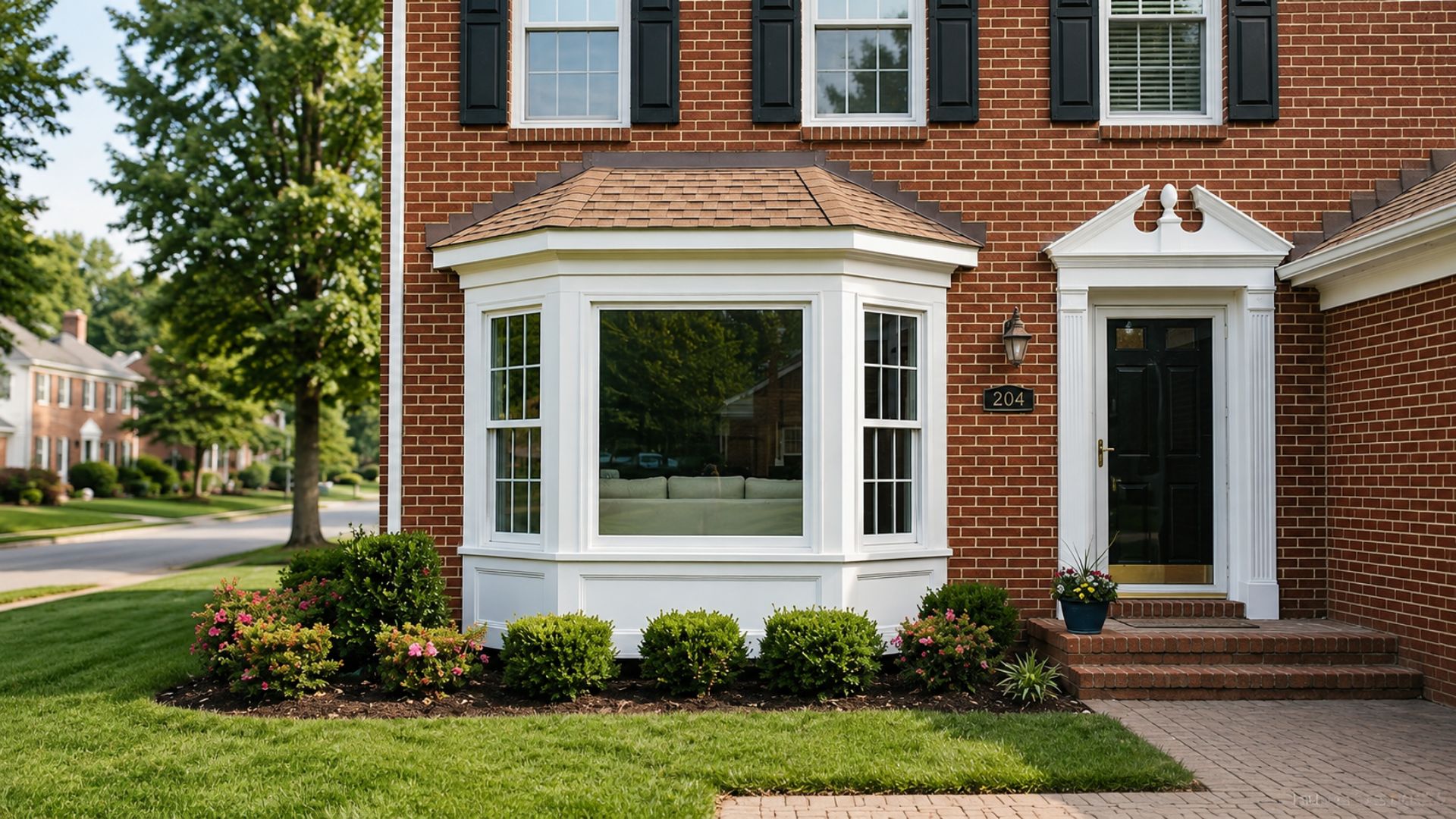
Unlike a standard window, a bay window is an assembly made up of several interconnected window units. The standard configuration has a central picture window flanked by two smaller operable windows, typically casements or double-hung units, set at 30- to 45-degree angles. The assembly projects outward from the exterior wall, creating a small alcove (essentially a nook) inside the room.
Thompson Creek’s bay windows are built this way: one center picture window that floods the room with light, with casement or double-hung windows on each side. Every assembly is custom-manufactured at our 120,000-square–foot, state-of-the-art, Maryland facility using energy-efficient glass and high-durability materials.
That structure is also what separates bay window replacement from standard window replacement. The unit needs support, typically a combination of knee braces, support cables, and a roof section tied into the soffit or hip, to carry the weight of the projecting assembly. Any replacement has to account for that from the start.
For a closer look at the types of double-hung windows that often appear as the operable side units in bay assemblies, we offer a guide that covers the options in full.
Bay Window vs. Bow Window: What’s the Difference?
Bay and bow windows are not the same thing, and the difference matters when you’re requesting quotes or comparing options.
A bay window uses three panels arranged at angles, typically 30 degrees or 45 degrees, which creates a more angular projection. It extends farther from the exterior wall and often creates enough of an alcove to accommodate a window seat or shelf.
A bow window uses four to six panels of equal size, arranged in a gentle curve, to create a softer, more rounded projection on the exterior.
Of the two, a bay window extends farther from the home. The bow window’s curved structure gives a more uniform, arch-like appearance from outside.
For homeowners deciding between the two, the detailed comparison in our bay vs. bow windows guide covers the structural, aesthetic, and cost differences.
Signs Your Bay Window Needs Replacing
Bay windows tend to show several failure modes at once because of the number of components involved. Here is what to watch for.
Fogging between the panes. Seal failure in any of the glass units lets moisture into the insulated airspace. Bay windows are especially prone to this because multiple glass units mean more opportunities for seal degradation.
Rot in the seat board, header, or frame. The projecting structure is exposed to weather on three sides. If water has reached the wood components, rot spreads fast. In many Mid-Atlantic homes built before the 1980s, the original bay window framing used lower-grade lumber that is particularly vulnerable.
Air leakage around the perimeter. The joints where the bay assembly meets the exterior wall are common infiltration points. Drafts along those joints, especially in winter, point to failed flashing or sealant.
Failed or sticking operable windows. The side casements or double-hung units eventually wear out on their own. If multiple operable units are failing at once, a full assembly replacement often makes more sense than piecemeal repairs. Our casement windows page covers what modern casement units offer in terms of performance and efficiency if you are considering an upgrade as part of the replacement.
Visible damage to the soffit or roof structure. Water that finds its way into the roof portion of a bay window assembly can cause damage beyond the window itself. Any staining, deterioration, or pest activity in the soffit area should be evaluated by a professional before the window work begins.
Which Factors Impact the Scope of a Bay Window Replacement?
Bay window replacement involves more variables than a standard window swap. Understanding what drives a project’s scope can help you plan more accurately and avoid surprises.
Assembly size and configuration. Larger openings and more complex configurations require more materials and installation time. A like-for-like replacement of an existing bay assembly is the most straightforward path. Converting from bay to bow, or enlarging the opening, adds structural work and expands the scope of the project.
Condition of existing structural support. Bay windows project beyond the exterior wall and rely on knee braces, support cables, and a roof section for support. If any of these elements show rot, corrosion, or damage, they must be addressed during the replacement. The extent of that work varies by home.
Frame and rough opening condition. Water infiltration around older bay assemblies can damage the surrounding framing. A thorough pre-installation inspection will help identify what needs repair before the new window goes in.
Glass package selected. Double-pane Low-E glass is the standard starting point. Upgraded coatings, south-facing windows that decrease solar heat gain, and triple-pane options can all impact the final scope of the project.
Interior and exterior finishing work. Every replacement includes air-sealing, flashing, and finishing work on both sides of the wall. The condition of existing trim, need for new drywall repair, and changes to the interior window seat can all affect what the finished project involves.
Thompson Creek’s factory-trained crews can provide you with a detailed, no-obligation assessment of your specific bay window before any commitment is made. Schedule a free in-home estimate to get an accurate picture of what your project involves.
Replacement Options: Like-for-Like vs. Upgrade
When it comes to replacing a bay window, there are two main directions you can take.
Like-for-like replacement installs a new bay window assembly in the same opening with the same general configuration. This is the most straightforward path when the rough opening and structural support are sound. It preserves the room layout and avoids additional framing work.
A Configuration upgrade, on the other hand, takes the opportunity to change the style, increase the size of the opening, or upgrade the glass package. This requires more structural work and cost, but it can significantly improve the finished result.
For most Mid-Atlantic homeowners, like-for-like replacement with a modern, energy-efficient glass package delivers the best combination of value and minimal disruption. Since the structural work is already done, this type of replacement focuses on the window assembly itself.
For a broader look at configuration options, the types of bay windows guide is can be a useful resource to help you decide on a style.
What to Expect During Bay Window Installation
Bay window replacement is more involved than a standard window project. Here’s what a professional installation looks like from start to finish.
Step 1: Pre-installation measurement and assessment. A Thompson Creek design consultant visits your home to measure the existing opening, inspect the structural support, assess the surrounding framing, and document anything that needs attention before the new window goes in.
Step 2: Custom manufacturing. Unlike stock replacement windows, Thompson Creek’s bay windows are custom-manufactured to the exact dimensions of your home’s opening at the Maryland facility. This ensures a precise fit and eliminates the gaps and shimming problems that compromise performance and aesthetics with off-the-shelf units.
Step 3: Structural inspection and prep. During installation, the crew evaluates the existing support cables, knee braces, and roof structure. Any compromised elements are addressed before the new assembly is set.
Step 4: Window installation. The new assembly is set in the opening, leveled, plumbed, and secured. The perimeter is air-sealed, flashed, and finished on both the interior and exterior.
Step 5: Final inspection and walkthrough. All operable units are tested, seals are verified, and the installation area is cleaned thoroughly. A walkthrough covers window operation, maintenance, and warranty terms.
We cover the full picture of what installation day looks like, from crew arrival to final walkthrough, in our window replacement process guide.
Glass Package Considerations for Bay Windows
Because bay windows span a larger surface area than standard units, the glass package has a meaningful impact on comfort and energy performance year-round.
All Thompson Creek bay windows include double-pane glass with Low-E coatings as the starting point. Double-pane glass has two panes of low thermal emissivity (Low-E) glass separated by a spacer. The space between the panes is filled with argon gas, an inert gas that’s heavier than air and therefore a great insulator, which displaces the air and reduces heat transfer.
For south-facing bay windows that receive significant direct sun, a lower Solar Heat Gain Coefficient (SHGC) helps prevent overheating in the summer while still allowing passive solar warmth in winter. Thompson Creek’s design consultants help you match the right combination of U-factor, the measurement of how much heat can pass through a window, and SHGC to your window’s orientation and your home’s location.
All Thompson Creek windows, including bay window assemblies, are designed to maximize comfort while minimizing energy loss in your home.
Why the Installer Matters for Bay Windows
Bay window replacement is not a project where installer experience is optional. The structural complexity, the need for a precise fit, and the long-term weather exposure all require a crew with the right skills, experience and expertise.
Thompson Creek’s Design-Build-Install-Guarantee model means that the same company that manufactures your window also installs it. There’s no handoff between a manufacturer and a separate installation contractor. If anything needs attention after installation, whether under the 50-Year No-Hassle Warranty or for any other reason, there is one point of contact accountable for both the product and the work, giving you convenience and peace of mind.
Thompson Creek windows are also AAMA-tested to withstand winds up to 146 mph, which matters for bay window assemblies that are exposed to weather on three sides. That’s more than just a marketing claim, it’s a proven durability built into every window unit that leaves our 120,000 square-foot Maryland factory..
Frequently Asked Questions
Can I replace my bay window with a different style, like a bow window or standard windows, in my Maryland home?
Yes. If the structural opening allows it, a bay window can be replaced with a bow window or converted to a flat wall with a combination of standard windows. These changes typically require additional framing work that increases the project’s scope. A Thompson Creek design consultant can help you assess your opening and walk you through which options make sense for your home.
How long does bay window replacement typically take for a Mid-Atlantic homeowner?
A standard like-for-like bay window replacement typically takes one day for a factory-trained crew. Projects that require structural repair, opening modification, or extensive exterior work may take longer. We’ll provide you with a specific timeline during your free in-home consultation.
Do bay windows in older Maryland and Virginia homes need special structural support before replacement?
Yes. Bay windows project beyond the exterior wall and rely on knee braces, support cables, and a roof section tied into the soffit or hip for support. In older Mid-Atlantic homes, these elements may show wear or damage that needs to be addressed as part of the replacement. Every Thompson Creek installation includes a structural inspection before the new assembly is set.
Are Thompson Creek bay windows custom-made, or are they stock units?
All Thompson Creek bay window assemblies are custom-manufactured to the exact dimensions of each home’s opening at the Maryland manufacturing facility. This ensures a precise fit and eliminates the performance and aesthetic issues that come with stock window units.
Which warranty covers a Thompson Creek bay window installation in Maryland, Virginia or DC?
Our 50-Year No-Hassle Warranty covers both the product and the installation. It applies to all Thompson Creek window types, including bay and bow window assemblies, across all of our service areas.
Your bay window is a significant part of your home. When it’s time for a replacement, the craftsmanship and installation deserve the same level of care that went into the original. Schedule a free in-home consultation with Thompson Creek to get a custom assessment of your bay window and a no-obligation estimate built around your home’s exact specifications.