That narrow band of glass above your front door, or above a large window in a room with high ceilings, is a transom window. It is one of the oldest window forms in residential architecture, and it’s having a notable revival in Mid-Atlantic homes where homeowners want more natural light without giving up wall space or privacy.
Transom windows are not just decorative. They carry real functional value, and like any window, they age, fail, and eventually need replacing. This guide covers how they work, where they fit, and when the time comes to address them.
If your transom is already showing signs of failure, you can explore Thompson Creek’s full window options or schedule a free in-home estimate to have a professional assess what needs replacing before the problem gets worse.
What a Transom Window Actually Is
A transom window is a narrow horizontal window installed above a door or another window, separated from it by a horizontal structural member called a transom bar. The name comes from that bar. In older construction, “transom” referred to the beam itself before it came to describe the window above it.
Historically, transom windows served a specific practical purpose: they allowed light and ventilation into rooms without compromising security or privacy at eye level. In 14th-century Europe, they were built into facades to bring in air and natural light before air conditioning existed and before standard ceiling heights reached the proportions common today. Early transoms were not even glazed. They used animal skins or other coverings to manage weather and airflow.
Glass changed everything. Once glazed transoms became practical, they became a fixture in both residential and commercial buildings as a way to push light deeper into interior spaces, extend the visual height of a room, and add architectural refinement to doorways and large openings.
Today they are primarily architectural, a design choice rather than a ventilation necessity, though operable transoms still appear in some installations.
Where Transom Windows Are Most Commonly Used
Transom windows are versatile enough to work in several contexts, each serving a slightly different purpose.
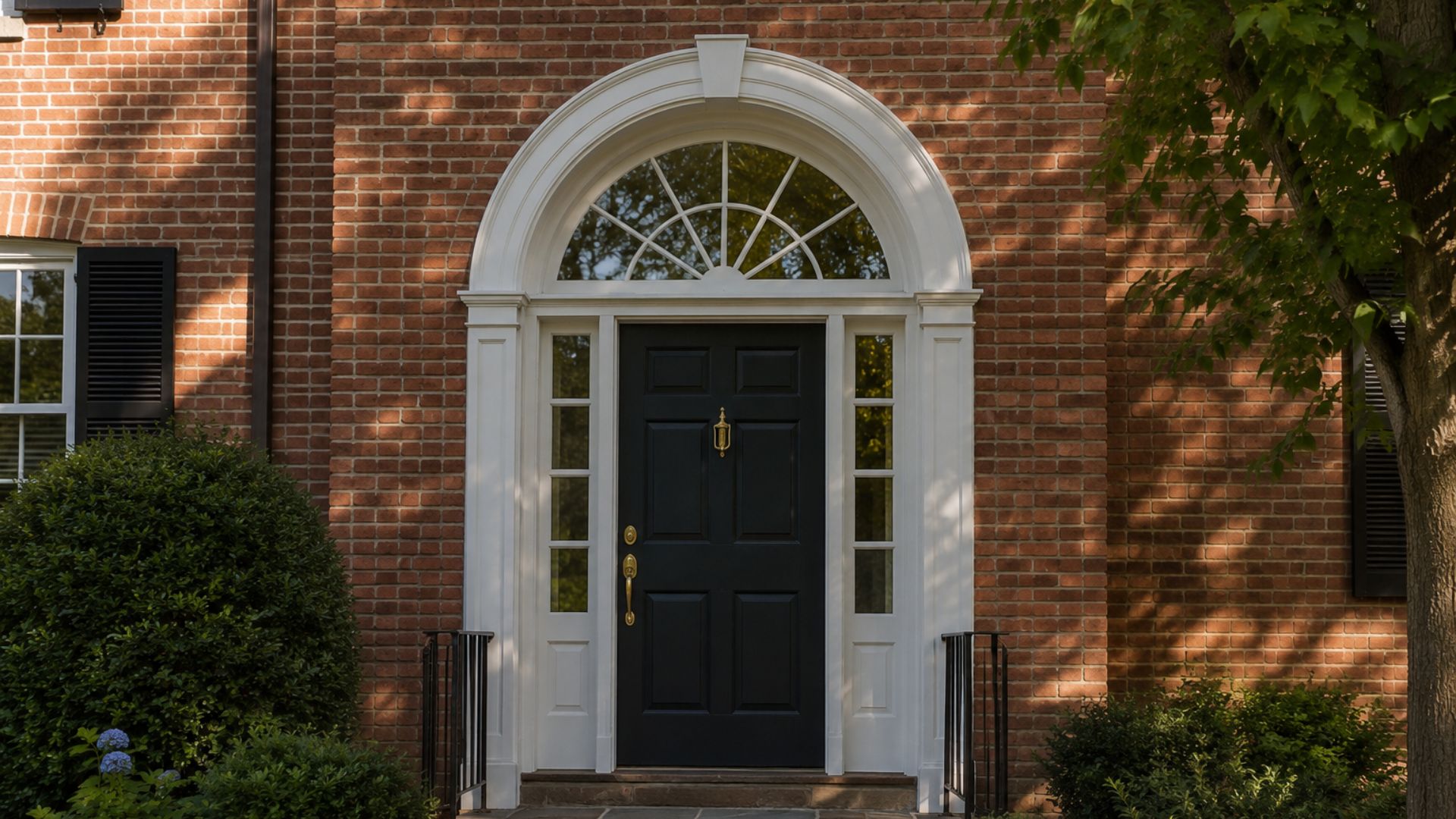
Above entry doors. This is the most traditional application. A transom above the front door brightens the entryway, makes the door surround feel taller and more formal, and reduces the need for artificial lighting in the foyer during the day. It is a defining feature of Colonial, Federal, and Craftsman-style homes throughout the Mid-Atlantic.
Above patio and sliding doors. Adding a transom above a patio door or sliding glass door extends the glass area upward, bringing light further into the adjoining room. It is a particularly effective solution in living rooms and kitchens where the ceiling is high enough to accommodate the added glass height.
Above large picture windows. Pairing a fixed picture window with a transom above creates a tall, light-catching composition. For living rooms with scenic views, it increases glass area without widening the opening. You bring in more natural light without sacrificing wall space for furniture placement.
In bathrooms. A transom near the ceiling in a bathroom provides natural light while maintaining complete privacy. Because the glass sits high on the wall, obscure or frosted glazing is not even necessary in most cases.
Between interior rooms. Interior transoms above doorways allow light to pass between rooms without opening the door. This works well in hallways, home offices, or areas where borrowed light from an adjacent sunlit room can reduce artificial lighting needs throughout the day.
Types of Transom Windows
Not all transoms are the same. The main distinctions are between fixed and operable units and among various geometric shapes.
Fixed transoms are sealed glass with no opening mechanism. They are the most common choice today, used primarily to add light and architectural character without the mechanical complexity of an operable unit.
Operable transoms open on a hinge or pivot to allow ventilation. In pre-air conditioning homes, these were practical for drawing warm air out at the top of the room. They are less common in modern replacements but still used in rooms where natural ventilation is a priority and where the ceiling height makes a top-hinged sash accessible.
Shape options. The rectangular transom is standard, but specialty shapes add significant architectural distinction. Half-round transoms, also called fanlight transoms, are a signature feature of Federal and Colonial Revival architecture common throughout Washington, D.C., Maryland, and northern Virginia. Quarter-round, elliptical, and fully arched transoms appear in custom installations and historic properties. You can see the full range of specialty shape options in our guide to different types of windows and specialty shapes.
Thompson Creek manufactures transom windows in virtually any size or shape at our 120,000-square-foot Maryland manufacturing facility, building each unit to the exact specifications of your home’s opening.
Glass Options for Transom Windows
The glass package in a transom window matters as much as it does in any other window.
Clear double-pane with Low-E. The standard choice for most installations. It provides full light transmission, thermal performance, and UV protection. Appropriate above doors and in rooms where direct viewing through the glass is acceptable.
Obscure or privacy glass. A pattern embedded in the glass surface allows light to pass while blocking clear views. Used in bathroom transoms and entry applications where you want light without visibility from the street.
Decorative and art glass. Leaded, beveled, or custom-patterned glass is commonly used in transom applications, particularly in craftsman and traditional home styles, where the transom is as much an architectural ornament as a light source.
For energy performance, Thompson Creek’s transom windows are built with the same Low-E coatings and argon gas fill as our standard double-hung replacement windows. Every unit is energy-efficient and designed specifically for the Mid-Atlantic climate zone.
What Affects the Scope of Transom Window Replacement
Replacement scope varies based on several factors: the window type (fixed vs. operable), shape complexity, glass package, frame condition, and whether the project involves a standalone transom or a combined door-and-transom assembly.
Simple rectangular fixed transoms are typically the most straightforward to replace. Custom shapes, half-round fanlights, and specialty glazing carry higher production requirements due to the custom manufacturing involved. Existing frame damage or structural issues around the opening will affect scope and labor as well.
Thompson Creek custom-builds every transom window at our 120,000-square-foot Maryland manufacturing facility, which means you’re not paying a distributor markup or waiting on stock inventory. A Thompson Creek design consultant will give you an accurate estimate during a free in-home consultation with no obligation. For broader context on what drives window replacement costs, see our complete guide to replacement window costs.
When a Transom Window Needs Replacing
Transom windows age the same way other windows do. The signs to watch out for are the same regardless of location or style.
Fogging between the panes. Hazy or milky appearance in the glass that does not respond to cleaning means the sealed unit has failed. In a double-pane transom, this indicates the insulating gas has escaped and the window is no longer performing thermally. This is also one of the top signs any window needs replacing.
Visible frame decay. Wood-framed transoms above exterior doors are particularly exposed to weather. Water that runs down the face of a door or accumulates on the sill can reach the transom frame and cause rot. Look for soft spots, peeling paint, and discoloration at frame edges.
Drafts or air leakage. A transom above an exterior door that is leaking air contributes to heating and cooling loss year-round. Run your hand along the perimeter on a cold day. Consistent cold air movement indicates failed sealing.
Failed hardware on operable units. Hinges that stick, rods that do not work, or a sash that will not stay in position are signs the operating mechanism has reached the end of its service life.
Broken or cracked glass. For specialty shapes like half-rounds, replacement requires custom glazing because standard stock sizes will not fit. Thompson Creek’s manufacturing capability handles these non-standard dimensions without the lead time issues that come with ordering specialty shapes from general suppliers.
Replacing a Transom: What the Process Looks Like
For most transom replacements, the approach mirrors a standard window replacement. The failed unit is removed, the frame and surrounding materials are evaluated, the new unit goes in, and the perimeter is sealed. Thompson Creek’s factory-trained installation crews handle every step.
Two situations make transom replacement more complex.
Historic or specialty shapes – A half-round fanlight above a Federal-style entry door requires a custom-manufactured unit that matches the original profile. The surrounding trim, the door surround itself, and in some cases the masonry or siding at the perimeter all influence how the replacement is designed and installed. Our guide on specialty window shapes and round windows walks you through what to expect in those situations.
Combined door and transom replacements – In many entryways, the transom and the door itself are part of the same assembly: a sidelite-door-transom unit. Replacing the transom independently of an aging door assembly may not be the most practical approach. A Thompson Creek design consultant can assess whether a combined door and transom replacement makes more sense than addressing the transom alone. You can see the full door replacement options here.
Every Thompson Creek installation is backed by our 50-Year No-Hassle Warranty. It covers both the product and the installation, so you’re not managing two different claims between a manufacturer and a separate installer. One company handles all of it, which is the Design-Build-Install-Guarantee model we have operated on since we first began serving the Mid-Atlantic in 1980.
Frequently Asked Questions
What does a transom window above my front door actually do for my home?
A transom above a door brings natural light into the entryway and the room beyond without sacrificing security, privacy, or wall space at eye level. In older Mid-Atlantic homes, operable transoms also provided ventilation before air conditioning was standard. Today, fixed transoms are primarily architectural, adding light and visual height to the entry without requiring structural changes to the door opening.
Does my transom window in Maryland need to be tempered glass?
Safety codes typically require tempered or safety glass for windows within a specific proximity to floor level. Transoms above doors and windows are generally positioned high enough that tempered glass requirements do not apply, though local codes vary across Maryland, Virginia, D.C., Pennsylvania, and New Jersey. Thompson Creek ensures all installations meet applicable safety requirements for your jurisdiction.
Can I add a transom window to a door that does not already have one in my Maryland home?
Yes, but it requires modifying the rough opening above the door, which involves the wall framing. It is a feasible project for most Mid-Atlantic homes but should be evaluated by a professional to understand the structural and finishing scope before you commit. Schedule a free in-home estimate to find out what your specific opening requires.
What shapes are available for a custom transom window replacement?
Standard rectangular transoms are the most common, but Thompson Creek manufactures transom windows in half-round, quarter-round, elliptical, arched, and fully custom profiles to match your home’s existing architectural details. Every unit is custom-built to the exact opening dimensions at our 200,000 sq ft Maryland manufacturing facility.
How do I know if my transom window needs replacing versus just resealing?
If the glass has fogged between the panes, resealing will not fix it. The sealed insulating glass unit has failed and needs to be replaced. If the issue is perimeter air leakage without glass failure, recaulking and weatherstripping may extend the window’s service life. A Thompson Creek consultant can tell you which situation you are dealing with during a no-obligation in-home visit.
A transom window is a small element with a real impact on how a room feels. When it is working well, you do not notice it. Light just flows in naturally. When it fails, you feel the draft near the door, see the foggy glass, and watch the energy loss add up month after month.
Schedule a free in-home consultation with Thompson Creek to have your transom windows assessed alongside your other windows. We will tell you what needs replacing and what can wait, with no obligation.