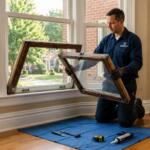
Window flashing is a thin, weather-resistant material installed around window openings to direct water away from your home’s interior. When properly installed, flashing is the critical barrier that prevents thousands of dollars in rot, mold, and structural repairs. Skip it or install it wrong, and you’re inviting water damage into your walls.
For Maryland, Virginia, and DC homeowners, understanding window flashing isn’t optional; it’s essential. Mid-Atlantic weather delivers intense rainstorms, snow, and humidity that test window flashing systems harder than most regions. Professional window flashing installation in Maryland protects your investment and ensures your replacement windows perform as designed for decades.
How Window Flashing Works to Protect Your Home
Window flashing creates a layered waterproof system around each window opening, similar to how roof shingles overlap to shed water. The flashing directs moisture down and away from vulnerable areas, preventing it from seeping behind siding, into wall cavities, or rotting window frames.
Here’s how the three-layer system protects your home:
- Sill flashing (bottom): Installed first, it catches any water that enters the opening and channels it outward
- Jamb flashing (sides): Overlaps the sill flashing and runs up both sides of the window
- Head flashing (top): The final piece that sheds water away from the top of the window
Proper installation sequence is critical. In our 40+ years installing windows across the Mid-Atlantic, we’ve seen how installing flashing out of order, or skipping the sill pan entirely, creates water entry points that lead to expensive damage.
Types of Window Flashing Materials
Not all flashing works for every home. Your installer should pick materials based on what you’ve got: vinyl siding versus brick, sheltered windows versus wind-blasted exposures, and standard openings versus unusual angles.
Self-Adhesive Membrane Flashing
The most common choice for modern window installations, this flexible material bonds directly to rough openings and window frames. Benefits include excellent adhesion, flexibility for corners, and compatibility with different siding materials. Thompson Creek uses premium membrane flashing for all custom replacement windows to ensure complete water protection.
Metal Flashing (Aluminum or Galvanized Steel)
Durable and long-lasting, metal flashing excels in high-exposure areas. It’s particularly effective for large windows and areas facing severe weather. Metal flashing works well with traditional siding and brick installations.
Vinyl Flashing
Often integrated with vinyl window systems, this material matches window frames and provides adequate protection for standard installations. It’s cost-effective but less adaptable to irregular openings.
Liquid-Applied Flashing
Used for complex details and transitions, liquid flashing fills gaps and creates seamless barriers around unusual window shapes or penetrations.
Signs Your Window Flashing Has Failed
Even quality windows fail when flashing is improperly installed or deteriorates over time. Mid-Atlantic homeowners should watch for these warning signs:
Water Stains: Discoloration on walls or ceilings near windows indicates moisture penetration, often from flashing failure at the header.
Mold or Mildew Odor: Musty smells near windows suggest water accumulation inside wall cavities; a direct result of compromised flashing.
Peeling Paint or Wallpaper: Interior finishes that bubble or separate from walls near windows signal chronic moisture problems.
Visible Rot: Soft, deteriorating wood around window frames means water has been entering for extended periods.
Drafts or Air Leaks: While weatherstripping addresses minor air infiltration, persistent drafts often indicate structural gaps from water damage.
If you notice any of these signs, schedule a professional window inspection immediately. Early intervention prevents minor flashing issues from becoming major structural problems.
The Critical Relationship Between Flashing and Window Installation
Proper window flashing installation requires coordination with your home’s weather-resistant barrier (WRB)—the membrane behind your siding. Professional installers integrate flashing with this barrier using a specific sequence:
- Prepare the rough opening: Clean and inspect the framing, ensuring it’s square and sound
- Install sill flashing first: This critical step creates the foundation of water protection
- Cut and fold WRB: Create strategic cuts that allow proper overlap
- Set the window: Position carefully to maintain flashing integrity
- Install side and head flashing: Layer properly to shed water downward
- Seal and integrate with WRB: Create continuous water barrier
This process explains why DIY window replacement often leads to problems. Missing a single step or installing components out of sequence creates permanent water entry points. Poor window installation frequently stems from flashing errors that only become apparent after water damage occurs.
Window Flashing Requirements for Different Window Types
Different window styles require specific flashing approaches:
Casement and Awning Windows
These casement windows project outward when open, requiring robust head flashing to protect the operating mechanism. Side jamb flashing must account for hinge hardware without compromising water protection.
Double-Hung Windows
Traditional double-hung windows demand careful attention to the meeting rail area where both sashes overlap. Flashing must extend adequately to protect this vulnerable zone.
Bay and Bow Windows
These large window assemblies require complex flashing systems that protect multiple window units and the structural platform supporting them. Professional installation is essential for these complicated installations.
Large Picture Windows
Expansive fixed windows need extra-careful flashing because they’re more susceptible to wind-driven rain. The larger surface area increases water exposure, making perfect flashing installation critical.
Window Flashing and Mid-Atlantic Climate Challenges
Maryland, Virginia, and DC face unique weather conditions that stress window flashing systems:
Hurricane and Tropical Storm Remnants: Wind-driven rain tests flashing like nothing else. Water forced horizontally against windows finds any gap in protection.
Freeze-Thaw Cycles: Winter temperature swings cause expansion and contraction. Inferior flashing materials crack and separate, creating openings for spring rains.
High Humidity Summers: Warm, humid air meeting air-conditioned interiors creates condensation. Proper flashing prevents this moisture from accumulating in wall cavities.
Nor’easters: These powerful coastal storms deliver sustained rain and wind from multiple directions, requiring comprehensive flashing systems.
Thompson Creek’s hurricane-resistant windows include enhanced flashing systems engineered specifically for severe weather protection. Our AAMA testing ensures windows and their flashing withstand winds up to 146 mph.
Common Window Flashing Mistakes to Avoid
Even experienced contractors make these critical errors:
Skipping the Sill Pan: The most important flashing component gets skipped to save time. Without it, water entering the opening has no path to exit—it just sits there rotting your framing.
Improper Overlap Sequencing: Installing head flashing before side flashing creates upward water pathways, the opposite of what’s needed.
Using Incompatible Materials: Mixing certain flashings with specific siding materials causes chemical reactions that degrade waterproofing.
Inadequate Extension: Flashing that doesn’t extend far enough beyond the window frame leaves vulnerable gaps.
Over-Reliance on Caulk: Sealants supplement flashing but can’t replace it. Caulk eventually fails, while proper flashing provides long-term protection.
Window Flashing for Professional Contractors
For contractors installing multiple windows, Thompson Creek offers consistent flashing quality across every unit manufactured in our Maryland facility. Our installation crews use the same premium materials and techniques whether installing one window or fifty—critical for maintaining reputation and avoiding callbacks.
We understand that your business depends on reliable suppliers who deliver quality materials on schedule. Our factory-direct model eliminates the uncertainty of third-party sourcing, and our technical support team helps you solve installation challenges efficiently.
When to Replace Window Flashing
Existing window flashing typically requires replacement when:
- Installing new replacement windows
- Addressing water damage from previous installation failures
- Updating older homes with modern weather barriers
- Converting window sizes or styles
Most flashing is inaccessible after installation without removing windows. This is why choosing experienced installers matters; you can’t easily fix flashing mistakes later.
Thompson Creek installers receive factory training on proper flashing techniques for all window types. Every installation includes comprehensive flashing as part of our standard process, backed by our 50-year No-Hassle Warranty.
Pre-Winter Window Checkup: Inspecting Your Flashing
Before Maryland’s winter weather arrives, inspect your windows for potential problems. While flashing itself is hidden behind siding, you can identify issues by checking:
- Water stains on interior walls near windows
- Peeling or bubbling paint around window frames
- Visible gaps between windows and siding
- Soft spots in wood trim indicating moisture damage
- Previous caulk repairs that have failed repeatedly
These symptoms suggest flashing problems that need professional attention before winter precipitation arrives.
Frequently Asked Questions About Window Flashing
How much does window flashing cost?
Professional window flashing is typically included in replacement window installation costs. At Thompson Creek, comprehensive flashing is standard on every window we install; it’s not an optional upgrade.
Can I install window flashing myself?
We don’t recommend it. Improper flashing installation is the #1 cause of water damage in DIY window projects. The installation sequence is critical, and mistakes create permanent water entry points that won’t show up until you’ve got mold growing in your walls.
How long does window flashing last?
Quality flashing materials installed correctly last 20-50 years. Thompson Creek’s 50-year warranty covers both the flashing and installation, so you’re protected for decades.
What’s the most common window flashing mistake?
Skipping the sill pan, the bottom piece that channels water outward. Without it, water has no escape route and accumulates inside your walls. We see this constantly in DIY installations and work from inexperienced contractors.
Does Thompson Creek use subcontractors for installation?
Never. We manufacture windows in our 70,000 sq ft Maryland facility and install them with our own factory-trained crews. This complete accountability means if any installation issue arises, we address it immediately, with no finger-pointing between manufacturers and installers.
How do I know if my current windows have proper flashing?
Look for the warning signs: water stains, peeling paint, mold odors, or soft wood around frames. If you see any of these, schedule an inspection. Most flashing problems aren’t visible until they’ve caused damage.
Why Choose Thompson Creek for Window Installation and Flashing
Thompson Creek has installed tens of thousands of custom windows across Maryland, Virginia, and DC since 1980. Our installation expertise ensures every window receives professional flashing that protects your home for decades.
What sets Thompson Creek’s installation apart? We provide:
- Factory training on proper flashing techniques for all window types
- Premium materials selected specifically for Mid-Atlantic weather
- Complete integration with your home’s existing weather barrier
- Quality verification at every installation step
- 50-year warranty covering both windows and installation
We manufacture windows in our Maryland facility and install them with our own crews, never subcontractors. This complete accountability means if any installation issue arises, we address it immediately without finger-pointing between manufacturers and installers.
Concerned about your current windows or planning a replacement project? Schedule a free consultation to learn how professional installation with proper flashing protects your home and investment. Our experts can assess your current windows and recommend solutions backed by our industry-leading warranty.