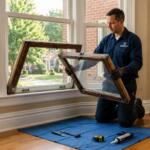
Traditional windows open either by sliding sashes or by a cranking mechanism. Two of the most common types of windows with crank-open mechanisms are awning and casement windows. Awning and casement windows are similar in function but are definitely not the same. Because of this, it’s important to understand their specific differences to ensure you choose the right type of replacement window for your home.
In this guide, you’ll learn more about awning vs. casement windows, understand when one should be chosen over the other, and discover how Thompson Creek’s custom-manufactured crank windows deliver superior performance for Mid-Atlantic homes.
Awning vs. Casement Windows: The Main Difference
The biggest difference between awning and casement windows is that awning windows have hinges along the top of the window, while casement windows have hinges on the side. This fundamental design difference affects how they operate, where they work best, and what benefits they deliver.
Awning Windows: When the crank mechanism is turned on an awning window, the window opens from the bottom with the pane of glass being raised outward and away from the frame. The top remains fixed while the bottom swings out, creating an awning-like overhang that shields the opening from rain.
Casement Windows: With a casement window, the same crank process applies, with the exception that the window opens either to the left or to the right depending on the hinge configuration. The side remains fixed while the opposite side swings out for full ventilation.
Both window types use easy-to-operate crank mechanisms that make them ideal for hard-to-reach locations and provide excellent ventilation when opened. Understanding the different types of windows available helps you select the right style for each location in your home.
When to Choose Awning Windows
Awning windows are ideal on walls where the width is greater than the height. For this reason, awning windows are often found on the lower portions of a home, such as finished basements, where horizontal window openings suit the space proportions.
Best Applications for Awning Windows
Kitchens: Another common area for awning windows is within kitchens, where added ventilation is needed. Position awning windows above sinks or countertops where you want fresh air without sacrificing valuable wall space. The crank mechanism allows easy opening even over obstacles.
Bathrooms: Awning windows excel in bathrooms, providing ventilation and natural light while maintaining privacy. Install them high on walls to allow air circulation without compromising privacy, and their weather-resistant design means they can stay open during showers for continuous ventilation.
Basements: Finished basements with limited wall height benefit from awning windows’ horizontal orientation. The outward-opening design maximizes ventilation in below-grade spaces, while the crank operation makes them accessible even in tight spots.
Above Doors: Awning windows positioned above entry or patio doors add natural light and ventilation without interfering with door operation. This combination creates attractive exterior elevations while improving air circulation.
Weather Protection Advantage: Unlike most windows, awning windows can remain open during light rain. The outward-tilted glass creates a natural awning that sheds water away from the opening, allowing fresh air even in inclement weather. This makes them particularly valuable in the humid Mid-Atlantic climate, where ventilation needs don’t stop when weather turns wet.
When to Choose Casement Windows
Opposite to awning windows, casement windows are best suited for walls where the height is greater than the width. This is often because these windows tend to be thinner in width, although multiple casement windows can be combined to fill a larger window space.
Best Applications for Casement Windows
Living Rooms and Bedrooms: Casement windows work beautifully flanking picture windows or filling tall, narrow openings. Their vertical proportions suit standard room layouts and provide excellent views when closed and unobstructed ventilation when opened.
Dining Areas: Multiple casement windows installed side-by-side create dramatic window walls that flood dining spaces with natural light. The crank operation allows precise control over how much each window opens, fine-tuning airflow for comfort.
Home Offices: Casement windows provide maximum ventilation when fully opened, catching breezes and directing fresh air into workspaces. The unobstructed opening (no center post or meeting rail) delivers superior air circulation compared to double-hung or sliding windows.
Contemporary Design: Modern and contemporary architectural styles often feature casement windows for their clean lines and minimal visual interruption. When closed, casement windows present simple rectangles of glass without the horizontal rails that characterize double-hung windows. Learn more about modern window style trends and how casement windows contribute to contemporary aesthetics.
Narrow Wall Spaces: Tall, narrow wall sections between rooms or architectural features accommodate casement windows perfectly. Where double-hung windows might feel cramped, casement windows’ vertical emphasis suits the space proportions.
Awning and Casement Window Similarities
Beyond their differences, awning and casement windows share several important characteristics that make them both excellent window choices:
Unobstructed Views
Awning and casement windows are both excellent choices when you want an unobstructed view of the outdoors because they do not have rails or meeting sashes. Unlike double-hung or slider windows with horizontal rails that divide the glass, crank windows feature single panes of uninterrupted glass when closed, maximizing views and natural light.
Easy Operation for Hard-to-Reach Spaces
They are also ideal for hard-to-reach spaces because their cranks allow for easy opening and closing without stretching or straining. Kitchen windows above sinks, bathroom windows positioned high for privacy, and basement windows in tight spaces all become easily operable with crank mechanisms. This accessibility makes them particularly valuable for aging-in-place scenarios where easy window operation becomes increasingly important.
Superior Ventilation
For areas where ventilation is important, such as in a bathroom, kitchen, or basement, both awning and casement windows excel. Because the windows open fully outward, they allow air to flow completely through the entire opening of the window. Unlike sliding windows that can only open 50% at most, crank windows capture passing breezes and direct them into rooms for excellent natural ventilation.
Easy Cleaning and Maintenance
Casement and awning windows are also very easy to clean and maintain. Most models feature hardware that allows the sash to swing inward after releasing a mechanism, bringing the exterior glass surface within easy reach for cleaning from inside your home. This design eliminates dangerous ladder work for upper-story windows.
Customization Options
Both types of windows can be easily customized to suit the look of any home. Thompson Creek offers multiple frame colors, grid patterns, hardware finishes, and glass packages to match your architectural style and performance requirements. Whether you prefer traditional or contemporary aesthetics, crank windows adapt to your design vision.
Energy Efficiency Excellence
Both casement and awning windows deliver exceptional energy efficiency. When closed, the crank mechanism compresses weatherstripping all around the sash perimeter, creating superior air sealing compared to sliding window types. This compression seal eliminates drafts and reduces energy loss, making crank windows among the most energy-efficient operable styles available. Discover why energy-efficient windows are a smart investment for long-term comfort and savings.
Important Installation Considerations
Both types of windows crank open, so they require a certain amount of free space on the outside of the home in order to open. Before installing, any shrubs, plants, or trees should be removed or relocated to allow enough space for the windows to be opened to their fullest possible setting.
Clearance Requirements
Awning Windows: Require vertical clearance below the window opening equal to the window height. For example, a 24-inch-tall awning window needs approximately 24 inches of clear space below when fully opened at 90 degrees.
Casement Windows: Require horizontal clearance to the side equal to the window width. A 30-inch-wide casement window needs roughly 30 inches of clear space to the hinge side when fully opened.
Exterior Obstacles to Consider
- Walkways and patios: Ensure windows don’t swing into pedestrian traffic areas
- Air conditioning units: Position units away from window swing paths
- Outdoor furniture: Leave adequate clearance or use furniture that can be easily moved
- Landscaping: Plant shrubs and flowers outside the window swing radius
- Deck railings: Plan window placement to avoid conflicts with deck structures
- Exterior lighting: Position light fixtures clear of window operation zones
Screen Placement
Because crank windows open outward, screens mount on the interior side of the window. This interior screen placement protects screens from weather damage and makes them easily accessible for cleaning or seasonal removal. Interior screens also allow you to open windows during rain (particularly awning windows) while maintaining insect protection.
Comparison Chart: Awning vs Casement at a Glance
| Feature | Awning Windows | Casement Windows |
| Hinge Location | Top of window | Side of window |
| Opening Direction | Bottom swings out | Entire sash swings left or right |
| Best Proportions | Width > Height | Height > Width |
| Rain Operation | Excellent (can stay open in rain) | Good (should close in heavy rain) |
| Ideal Locations | Kitchens, bathrooms, basements, above doors | Living rooms, bedrooms, dining areas, tall openings |
| Ventilation | Excellent (full opening) | Excellent (full opening) |
| Views | Unobstructed (no rails) | Unobstructed (no rails) |
| Energy Efficiency | Excellent (compression seal) | Excellent (compression seal) |
| Operation | Crank mechanism | Crank mechanism |
| Cleaning | Easy (interior access) | Easy (interior access) |
| Privacy | High when installed elevated | Moderate (full glass exposure) |
Advanced Performance Features
Thompson Creek’s custom-manufactured awning and casement windows include advanced features that enhance performance beyond basic operation:
Multi-Point Locking Systems
Both window types feature multi-point locking mechanisms that engage at multiple points around the sash when locked. This security system distributes force across multiple contact points, making forced entry significantly more difficult while ensuring consistent weatherstripping compression for superior air sealing.
Low-E Glass and Argon Gas
All Thompson Creek crank windows include Low-E coated glass with argon gas fills as standard equipment. These energy-efficient glass packages reduce heat transfer, block UV rays that fade furnishings, and improve comfort near windows by keeping glass surfaces closer to room temperature.
Corrosion-Resistant Hardware
Crank mechanisms, hinges, and locks use corrosion-resistant materials and finishes designed for long-term durability in humid Mid-Atlantic climates. Smooth, reliable operation continues year after year without binding, sticking, or hardware failure.
Fusion-Welded Frames
Vinyl frames feature fusion-welded corners rather than mechanical fasteners. This welding process creates seamless, airtight corners that won’t separate, leak, or fail over time, maintaining structural integrity and energy performance for decades. Learn about affordable windows built to last through superior manufacturing quality.
Custom Sizing
Every Thompson Creek crank window is custom-manufactured to exact specifications in our Maryland facility. This precision manufacturing ensures a perfect fit, eliminates gaps, and optimizes energy efficiency. No shimming to adapt stock sizes, no compromises on performance.
Making Your Decision: Awning or Casement?
Choosing between awning and casement windows primarily depends on the physical characteristics of your wall opening and the specific functional requirements of each location.
Choose Awning Windows When:
- Wall opening is wider than it is tall
- Window will be positioned above counters, sinks, or other obstacles
- High installation for privacy is desired (bathrooms, bedrooms)
- Ventilation during rain is important
- Basement or below-grade installation
- Installing above doors for light and ventilation
Choose Casement Windows When:
- Wall opening is taller than it is wide
- Maximum unobstructed views are priority
- Contemporary or modern design aesthetic
- Creating window walls with multiple units
- Flanking picture windows or doors
- Standard room applications (living rooms, bedrooms, dining rooms)
Consider Combining Both:
Many homes benefit from using both awning and casement windows in different locations. Awning windows in bathrooms and kitchens, casement windows in living areas. This combination optimizes each window type’s strengths throughout your home.
Frequently Asked Questions About Awning and Casement Windows
Which is better, awning or casement windows?
Neither is inherently better. The best choice depends on your wall opening proportions and functional needs. Awning windows excel in horizontal openings and situations requiring rain-safe ventilation. Casement windows suit vertical openings and applications prioritizing maximum views and airflow. Both deliver excellent energy efficiency, ventilation, and ease of operation.
Can awning windows be used in bedrooms?
Yes. Awning windows work well in bedrooms, particularly when installed higher on walls for privacy while maintaining natural light and ventilation. They’re especially effective in smaller bedrooms or above beds where wall space is limited. Some homeowners combine picture windows below with awning windows above for light and ventilation.
Do casement windows leak when it rains?
Quality casement windows like Thompson Creek’s should not leak when properly installed and closed. When opened during heavy rain, water can enter as with any open window, so close casement windows during storms. The compression weatherstripping creates excellent seals against wind-driven rain when closed.
Are crank windows hard to open?
No. Quality crank mechanisms operate smoothly with minimal effort. Thompson Creek’s windows feature precision-engineered hardware that turns easily even for those with limited hand strength. Regular lubrication (annually) maintains smooth operation. If a crank becomes difficult to turn, it may indicate a hardware issue requiring professional service.
How long do awning and casement windows last?
With proper maintenance, Thompson Creek’s custom-manufactured awning and casement windows last 25 to 30 years or more. Our 50-year No-Hassle Warranty covers both materials and installation, demonstrating our confidence in long-term performance. Regular cleaning and occasional hardware lubrication help maximize lifespan.
Can I install screens on crank windows?
Yes. Awning and casement windows use interior-mounted screens that attach to the frame. Because the window sash swings outward, screens remain on the inside, protecting them from weather while keeping them easily accessible for cleaning. This design allows awning windows to stay open during rain while screens provide insect protection.
Are awning and casement windows more expensive than double-hung?
Crank windows typically cost 10 to 20% more than comparable double-hung windows due to more complex hardware mechanisms. However, their superior energy efficiency, ventilation performance, and longevity often provide better long-term value. Thompson Creek’s factory-direct pricing makes high-quality crank windows affordable for most budgets.
Do crank windows work with window air conditioners?
Generally no. Because crank windows open outward rather than sliding vertically, they cannot accommodate traditional window air conditioner installations. For homes relying on window AC units, double-hung or sliding windows work better. Consider central air or ductless mini-split systems if you want crank window benefits throughout your home.
Professional Installation Makes the Difference
Proper installation is crucial for maximizing awning and casement window performance. These windows require precise alignment to ensure smooth operation, weathertight sealing, and long-term durability. Thompson Creek’s factory-trained installers understand the specific requirements of crank window installation.
Installation Excellence Includes:
- Precise opening preparation and squaring
- Correct shimming for smooth operation
- Proper flashing and weatherproofing
- Hardware adjustment for optimal function
- Thorough air sealing and insulation
- Quality inspection before completion
Our installation is backed by our 50-year No-Hassle Warranty covering both materials and labor, providing complete peace of mind for decades.
Why Choose Thompson Creek for Awning and Casement Windows
Since 1980, Thompson Creek has specialized in custom-manufacturing replacement windows for Mid-Atlantic homes. Our Maryland facility produces awning and casement windows built to exact specifications for a perfect fit and maximum performance.
Thompson Creek Advantages:
- Custom manufacturing at factory-direct pricing
- ENERGY STAR® certified performance
- Advanced Low-E coatings and argon gas fills standard
- Corrosion-resistant hardware for long-term reliability
- Professional installation by factory-trained crews
- 50-year No-Hassle Warranty covering materials and labor
- Over 40 years serving Maryland, Virginia, D.C., Pennsylvania, and North Carolina
When you choose Thompson Creek, you’re investing in proven expertise, complete accountability from design through installation and service, and industry-leading warranty protection.
Interested in Casement or Awning Windows?
If you want to have new replacement windows installed on your home, then contact Thompson Creek today. We custom design, build, and install our windows. We handle it all! Our windows are made using only the highest quality materials, and we customize every order, so you’re guaranteed your windows will operate as good as they look.
Whether you need awning windows for your kitchen and bathrooms, casement windows for living areas, or a combination throughout your home, Thompson Creek delivers the perfect solution for your specific needs.
Ready to transform your home with high-performance crank windows? Contact the window experts at Thompson Creek and get a free estimate for your new window installation today.
Call (301) 901-5275 or request your free consultation online. Our window specialists will help you choose between awning and casement windows based on your home’s unique characteristics and your specific performance requirements.
Serving Maryland, Virginia, D.C., Pennsylvania, and North Carolina since 1980. Custom windows, professional installation, exceptional value.