
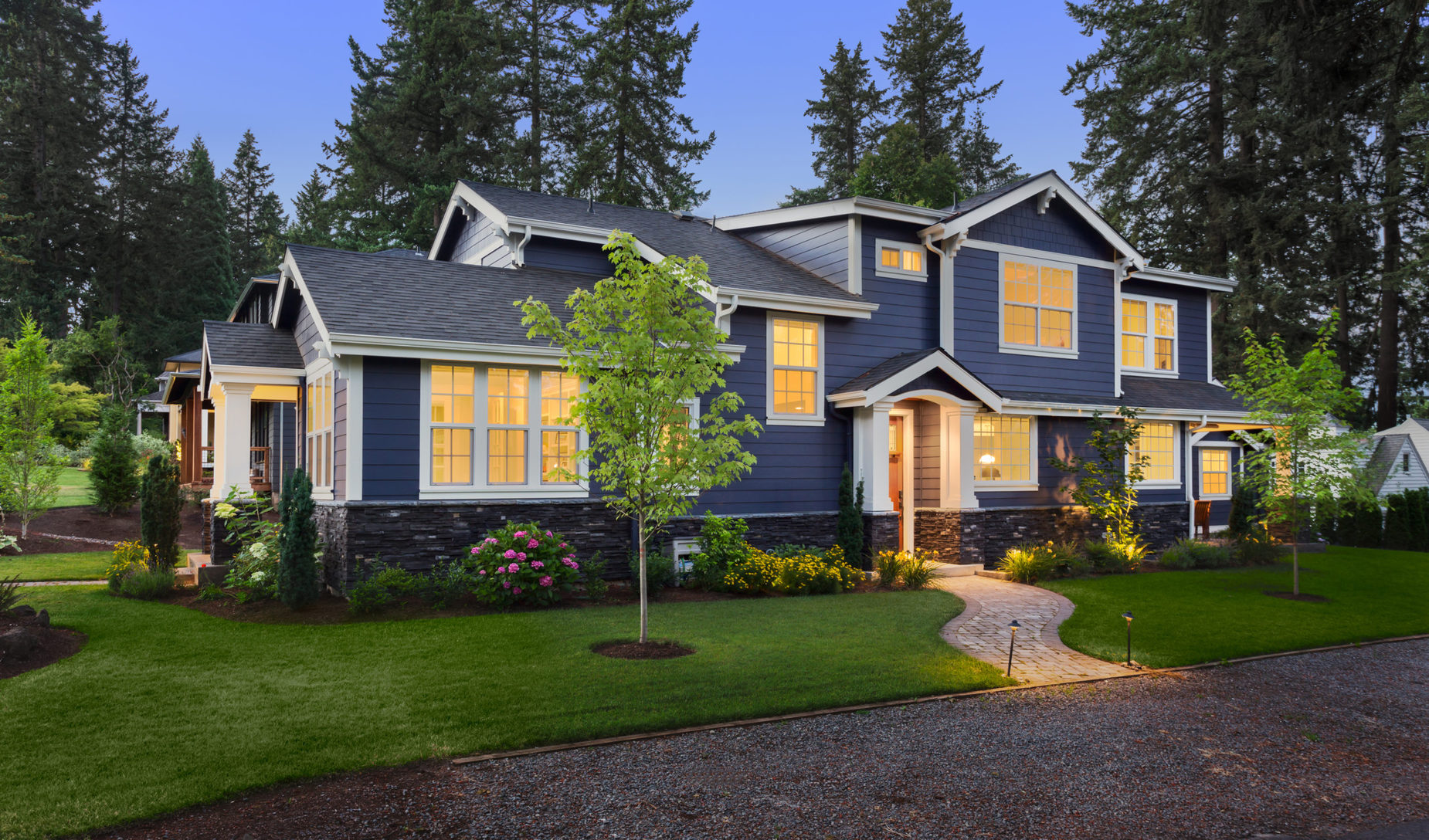
Colonial homes are built on symmetry, and the windows are a big part of that. Get the proportions, grid pattern, or frame material wrong, and a colonial facade can look off even if nothing else about the house has changed. This guide covers the main colonial home styles found across Maryland, Virginia, and the Washington, DC area; the window types that suit each one; and what to consider when it’s time to replace them.
The Colonial Styles You’ll See Across the Mid-Atlantic
Colonial homes are not one single look. A few variations show up most often in this region, each with its own window expectations.
Georgian Colonial homes are the most formal and symmetrical of the group, typically with a centered front door, evenly spaced windows on either side, and paired chimneys. Multi-pane double-hung windows with decorative trim are the standard here.
Cape Cod Colonial homes are simpler and more compact, often one and a half stories with gable-front dormers and minimal exterior detailing. Smaller, evenly proportioned windows fit this style better than large picture windows, and casement windows are a common fit in dormer spaces where a crank-out design makes more sense than a raised sash.
Spanish Colonial homes lean into stucco walls, courtyard-facing layouts, and arched details, giving homeowners more room to work with shape and placement than the stricter Georgian style allows.
Dutch Colonial homes are known for a distinctive gambrel roof, which often creates shorter, wider window openings on the upper floor compared to the tall, narrow proportions typical of Georgian colonials.
Window Styles That Work Well on Colonial Homes
Double-hung windows are the most historically accurate choice for nearly every colonial variation, and for good reason: the tall, narrow proportions and classic sash design are part of what defines the look. Adding multi-pane grids and grilles reinforces the traditional appearance homeowners are usually going for.
Bay and bow windows show up on colonial homes too, though usually as a later addition rather than part of the home’s original design. A bay window can work well on a dining room or living room wall as long as its proportions don’t compete with the home’s overall symmetry.
Casement windows fit naturally into Cape Cod dormers and smaller upper-floor openings, and their crank operation makes them a practical choice for tighter spaces.
Picture windows are worth considering as a focal point on a rear or side elevation, where strict street-facing symmetry matters less, but a large picture window on the front facade of a Georgian colonial can throw off the balance the style depends on.
Choosing between these styles often comes down to more than looks alone. If your home mixes a formal front facade with more flexible living spaces in the back, it’s worth reading through a guide on combining more than one window style in a single home before finalizing a plan room by room.
Frame Color and Grid Patterns Matter as Much as Shape
Getting the window shape right is only part of the job. Frame color and grid pattern carry a lot of the colonial look too. White and off-white frames remain the most common choice for a traditional appearance, though black and other deeper tones have become more popular for homeowners wanting added contrast against light-colored siding. For a closer look at how to choose a shade that fits your home’s exterior, see this guide to selecting window and door colors.
Multi-pane grids, whether six-over-six, six-over-one, or another traditional pattern, are what most readily signal “colonial” to the eye. Frame material plays a role here as well. Vinyl frames now offer authentic-looking grid profiles without the upkeep that came with older wood windows, which is one of several reasons vinyl has become the frame material most homeowners choose for replacement projects in this region.
What to Consider Before Replacing Colonial Windows
Match the existing proportions. A colonial home’s symmetry depends on consistent window sizing across the front facade. Measure the existing openings carefully so replacements keep that alignment intact.
Keep the grid pattern consistent. Mixing grid styles across the front of the home, even subtly, tends to stand out more than homeowners expect once the new windows are installed.
Plan for the region’s weather. Windows here need to hold up to Mid-Atlantic storms, humidity swings, and cold winters. Thompson Creek windows are AAMA-tested to withstand winds up to 146 mph, which is a meaningful factor for older colonial homes that may still have original framing behind the new windows.
Think about long-term maintenance. Older wood-frame colonial windows often require regular scraping, painting, and re-caulking. A frame material that holds its finish without that upkeep is worth weighing against the cost of preserving an all-wood look.
Why Homeowners Choose Thompson Creek for Colonial Home Windows
Thompson Creek has served homeowners across Maryland, Virginia, and the Washington DC area since 1980, and every window is custom-manufactured at our 120,000 sq ft facility in Upper Marlboro, Maryland, to match your home’s exact opening and grid pattern. Installation is handled by professional installation teams backed by Thompson Creek, with a single point of contact managing your project from the initial consultation through completion.
Every window installed by Thompson Creek is backed by our 50-Year No-Hassle Warranty, covering both the product and its installation, and our windows are built to withstand the wind loads and weather swings common across the region.
Frequently Asked Questions
What is the most historically accurate window style for a colonial home?
Double-hung windows with multi-pane grids are the most historically accurate choice for nearly every colonial variation, from Georgian to Dutch Colonial.
Can I use bay or bow windows on a colonial home?
Yes, though they usually work best as a later addition on a side or rear elevation rather than as part of a strictly symmetrical front facade.
Do casement windows fit a colonial style?
Casement windows fit well in Cape Cod colonial dormers and other tighter upper-floor openings where a crank-out design is more practical than a raised sash.
What frame color is most common for colonial homes?
White and off-white remain the most traditional choice, though black and other deeper tones are increasingly popular for added contrast.
How do I keep a colonial home’s symmetry when replacing windows?
Match the existing window sizing and grid pattern across the front facade, since even small inconsistencies tend to stand out once new windows are installed.
Ready to Update the Windows on Your Colonial Home?
If you’re planning a window replacement project for a colonial-style home, schedule a free consultation with Thompson Creek. Our design team can help you match the right window style, frame material, and grid pattern to your home’s architecture.


