You wake up to foggy windows. Water droplets stream down the glass, pooling on the sill. Is it a window problem? A humidity issue? Something that needs immediate repair?
The answer depends on where the condensation appears, and that determines everything from urgency to solution cost. Moisture on the interior glass surface means one thing. Condensation on the outside signals something entirely different. Fogging between panes indicates a problem you cannot fix yourself.
Most homeowners cannot tell the difference at first glance. They just see wet windows and worry. This troubleshooting guide helps you identify which type of condensation you are facing, what causes it, and exactly what to do about it.
Let us start with the diagnostic test that determines your next steps.
Step 1: Where Is the Condensation? The Diagnostic Test
Walk up to your foggy window and touch the glass where moisture appears.
The moisture is on the room-facing side (you can wipe it with your finger): You have interior condensation. This is the most common type; it indicates high indoor humidity, and you can address it yourself with ventilation and humidity control.
The moisture is on the outdoor-facing side (you cannot reach it from inside): You have exterior condensation. This is normal, temporary, and actually indicates efficient windows. No action is required.
The moisture is trapped between the glass panes (you cannot wipe it from either side): You have seal failure. This requires professional window repair or replacement and will not resolve on its own.
That simple touch test tells you everything you need to know about urgency and next steps. Now let us dig into each type.
Interior Condensation: The High-Humidity Warning Signal
Interior window condensation happens when warm, moisture-laden indoor air hits cold glass surfaces. The glass temperature sits below the dew point of your indoor air, causing water vapor to condense into visible droplets.
Think of it like a cold drink on a summer day. Moisture from humid air condenses on the cool surface of the glass.
What Causes Interior Condensation
Normal household activities generate significant moisture. A family of four adds roughly 18 gallons of water into indoor air every week through everyday living. Cooking releases steam. Showers create bathroom humidity. Even breathing contributes moisture as you exhale water vapor with every breath.
Laundry dried indoors, houseplants, unvented gas appliances, and aquariums all pump additional moisture into your home’s air.
Modern homes trap this humidity efficiently. New construction and recently renovated homes seal tightly to improve energy efficiency. That is excellent for heating and cooling costs, but it creates a side effect: moisture-laden air cannot escape as easily as it did in drafty older homes.
Your replacement windows are doing their job by keeping conditioned air inside. The trapped humid air then condenses on the coldest surface available, which is the window glass.
Mid-Atlantic winters make this worse. When outdoor temperatures drop to 20°F and indoor temperatures sit at 70°F, window glass becomes very cold despite insulation improvements. That 50-degree differential almost guarantees condensation if indoor humidity runs high. It is a pattern we see every winter across Maryland, Virginia, and Washington, D.C. If your home also deals with frost forming on the glass, our guide on keeping your windows frost-free walks through exactly what to do.
Why Interior Condensation Matters
Interior condensation is not just annoying. It creates real problems if left unaddressed.
Mold and mildew growth. Persistent moisture on window frames, sills, and surrounding walls creates ideal conditions for mold. You will see black spots appearing, smell musty odors, and potentially face health issues from mold exposure. Our post on interior and exterior mold prevention on windows covers how to stop it before it spreads.
Wood rot. Water pooling on wood sills soaks into the grain. Over months and years, this moisture degrades wood, causing rot that requires expensive repairs.
Paint and finish damage. Moisture destroys paint on window frames and surrounding trim. You will see peeling, bubbling, and discoloration.
Reduced visibility. Heavy condensation obscures your view. You cannot see outside without constantly wiping windows, which gets frustrating fast.
Structural damage. In severe cases, moisture migrates into walls, damaging drywall, insulation, and framing. This type of damage gets expensive quickly.
Fixing Interior Condensation: Proven Solutions
1. Control humidity with dehumidifiers
Ideal indoor humidity runs 30–50% during winter months. Purchase a hygrometer to measure actual levels. If you are consistently above 50%, run a dehumidifier in problem areas.
Whole-house dehumidifiers integrate with HVAC systems and automatically maintain target humidity. Portable units work well for single rooms like basements or bedrooms where condensation concentrates.
2. Improve ventilation throughout your home
Run bathroom exhaust fans during showers and for 20 minutes afterward. Use kitchen exhaust fans while cooking, especially when boiling water or running the dishwasher.
Open windows briefly each morning to exchange humid indoor air with drier outdoor air. Even 5–10 minutes makes a measurable difference in winter humidity levels. For seasonal guidance on when to remove screens and prepare your windows for temperature changes, see our fall window cleanup checklist.
3. Increase air circulation
Run ceiling fans year-round. In winter, set them to clockwise rotation (looking up) to push warm air down from ceilings without creating drafts.
Leave interior doors open to prevent humidity from concentrating in closed-off rooms. Bedrooms and bathrooms with doors shut all day trap moisture with nowhere to go.
4. Reduce moisture sources
Cover pots while cooking to trap steam. Vent your dryer outside, never into the home. Fix plumbing leaks promptly since even small drips add humidity over time.
Move houseplants away from windows or reduce their number if condensation persists. Store firewood outside or in a detached garage. Freshly cut wood releases significant moisture as it acclimates to indoor temperatures.
5. Manage window treatments strategically
Keep blinds and curtains open during the day to allow air circulation around glass. Heavy drapes trap humid air against cold window surfaces, concentrating condensation.
At night, closing insulating cellular shades raises interior glass temperature slightly, reducing the temperature differential that causes condensation.
6. Maintain consistent indoor temperatures
Avoid letting temperatures drop significantly at night. Large temperature swings create conditions where condensation forms as glass cools. Maintaining at least 68°F consistently produces the best results.
Exterior Condensation: The “Nothing Wrong” Scenario
Exterior window condensation appears on the outside glass surface. It shows up most often on spring and fall mornings or on summer evenings when outdoor humidity runs high.
This condensation forms identically to interior moisture: warm, humid outdoor air contacts cool glass. The difference is that it indicates excellent window performance rather than a problem.
Why Exterior Condensation Actually Means Good Windows
Your energy-efficient windows insulate so well that indoor heat does not warm the outer glass pane. The exterior surface cools overnight, dropping below the outdoor dew point. Morning humidity condenses on this cold glass exactly like dew forms on your lawn.
This is proof your windows are keeping conditioned air inside and outdoor temperatures outside. That is exactly what high-performance windows are supposed to do. If you want to understand the full picture of the benefits of energy-efficient windows, that post explains why this behavior is a feature, not a flaw.
When Exterior Condensation Appears
Summer mornings after clear nights. Clear skies allow window glass to radiate heat into the atmosphere, cooling the exterior surface below ambient air temperature. High morning humidity then condenses on this cold glass. Homeowners in humid markets like Richmond and the Chesapeake region deal with this more often in summer. Our post on managing humidity with windows in Virginia’s muggy summers goes deeper on that specific challenge.
Spring and fall transition seasons. Temperature swings between day and night create ideal conditions. Warm, humid days followed by cool nights result in exterior condensation that burns off by mid-morning.
After running air conditioning. Your AC cools interior air efficiently. Well-insulated windows prevent that cooling from reaching the exterior pane. If outdoor dew point is high enough, exterior condensation forms.
Fixing Exterior Condensation (You Do Not Need To)
Exterior condensation disappears naturally as temperatures rise. The sun warms glass and evaporates the moisture, exactly like it evaporates morning dew from grass.
If the appearance bothers you during those brief morning hours, trim shrubs near windows to improve air circulation and allow faster drying. You can also apply water-repellent treatments like Rain-X to exterior glass so water beads and runs off rather than spreading across the surface. This does not prevent condensation but makes it less visible.
The truth is exterior condensation is cosmetic and temporary. It proves your windows are working correctly.
Between-Pane Condensation: The Seal Failure Problem
Condensation trapped between window panes indicates a failed seal. This is the only type of window condensation that requires professional repair or replacement.
What Happened to Your Windows
Double-pane and triple-pane windows are sealed units. Two or three panes of glass are separated by spacers, sealed around the edges, and filled with argon or krypton gas for insulation.
A desiccant material inside the spacer absorbs any residual moisture during manufacturing, ensuring the space between panes stays completely dry.
When seals fail, outside moisture infiltrates this sealed space. The desiccant becomes saturated and can no longer absorb incoming moisture. The argon or krypton gas escapes. You are left with moisture-laden air between panes and no way to reach it to wipe it away. Our dedicated post on fogged window glass and failed seals covers every stage of this process in detail, including how to tell early-stage failure from permanent fogging.
What Causes Seal Failure
Age and UV exposure. Window seals degrade over 15–25 years from ultraviolet exposure and temperature cycling. South- and west-facing windows fail faster due to greater sun exposure. For a full breakdown of how and why this happens, see our post on what causes window seals to fail.
Thermal stress. Extreme temperature swings expand and contract window frames and glass at different rates. This constant movement eventually breaks down adhesive seals. This is a real concern in the Mid-Atlantic, where summer heat, winter cold, and hurricane-season pressure swings put exceptional stress on window systems.
Poor-quality windows with inferior seals. Economy windows use less durable sealants and lower-quality spacer systems. They fail in 10–15 years versus 25–40 years for custom-manufactured replacement windows built with premium materials. If you are wondering how to evaluate what you currently have, our guide on how to tell if windows are energy efficient gives you a reliable checklist.
Installation problems. Improper installation that allows frame flexing or water infiltration accelerates seal degradation.
Why Between-Pane Condensation Demands Action
Failed seals destroy your window’s insulation properties. Once argon gas escapes and moisture fills the space, your insulation value drops by 30% or more.
You are now heating and cooling your home with significantly less efficient windows. Energy costs rise. Comfort decreases near windows. The view becomes permanently obscured by hazy, streaked glass that never clears.
Etching and mineral deposits on interior glass surfaces become permanent. Even if moisture temporarily evaporates during summer heat, residue remains. Your windows look perpetually dirty from the inside.
Our post on five things your windows are trying to tell you is a useful companion read here, particularly if you are noticing other warning signs alongside the fogging.
Fixing Between-Pane Condensation
Option 1: Defogging services
Some companies drill small holes in the glass, flush out moisture and residue, inject drying agents, and seal the holes. This temporarily clears fogging but does not restore insulation since the gas fill is gone and seals remain compromised.
Expect condensation to return within 1–5 years. If full replacement is not immediately feasible, this can buy time, but it is not a lasting solution.
Option 2: Glass unit replacement ($200–$400 per window)
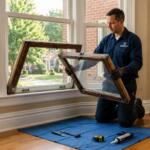
Replace just the insulated glass unit (IGU) while keeping existing frames. This works if frames are sound and only the glass unit has failed.
Full performance restoration at a lower cost than complete window replacement. Most manufacturers warranty IGU replacements for 10–20 years. Cost factors include glass package, window size, and the number of units being replaced.
Option 3: Complete window replacement ($600–$1,200 per window installed)
When frames are also deteriorating or windows are 20-plus years old, complete replacement makes more sense. You get current technology, better efficiency, improved operation, and full warranties. For a thorough breakdown of what drives those costs, our complete guide to replacement window costs lays out everything from window size to material choices.
Thompson Creek has manufactured and installed replacement windows for Mid-Atlantic homeowners since 1980. Every window is custom-manufactured at our 70,000 sq ft Maryland facility, which means no stock sizes, no middleman markup, and a 50-year No-Hassle Warranty covering both the product and the installation. Our windows meet or exceed 2022 ENERGY STAR® criteria for the Mid-Atlantic climate zone, so the efficiency gains start with your very first utility bill after installation. Complete replacement costs more than a repair, but it provides the longest-term solution and the greatest performance improvement.
Troubleshooting Specific Condensation Scenarios
Condensation only on bedroom windows in the morning
Cause: Bedrooms generate significant moisture overnight from breathing. Two people release roughly 1 pint of moisture over 8 hours of sleep.
Solution: Crack bedroom windows 1–2 inches overnight or run a small dehumidifier. Leave the bedroom door open to allow air circulation with the rest of the house.
Heavy condensation only in winter
Cause: Normal. Winter creates a maximum temperature differential between indoor and outdoor surfaces. Indoor humidity from heating-season activities (closed windows, more cooking) compounds the effect.
Solution: Temporarily reduce indoor humidity to 30–40% during the coldest months. Increase to 40–50% during milder weather.
New windows show more condensation than old windows did
Cause: Your new windows seal better, trapping indoor humidity that previously escaped through drafty old windows. This reveals existing high humidity you did not notice before.
Solution: This is actually proof your new windows work better. Address the underlying humidity problem with ventilation and dehumidification.
Condensation only on specific windows
Cause: Those windows face colder exposures (north-facing), have more direct contact with outdoor temperature (no attic above), or sit in rooms with higher localized humidity (bathrooms, kitchens).
Solution: Target solutions to problem areas. A dehumidifier in a problem room and extra ventilation for those specific windows handle most cases.
Condensation appears suddenly when it never did before
Cause: Something changed. A new humidifier, recent weatherization work, a plumbing leak adding moisture, a broken exhaust fan, or changed heating patterns.
Solution: Identify what changed recently and address that source. If you also notice the window is difficult to open or feels drafty around the frame, our post on common window problems and repairs covers those symptoms alongside condensation.
When to Call a Professional
Call a window contractor when:
Condensation appears between window panes (seal failure requires replacement). Interior condensation persists despite controlling humidity and improving ventilation. Mold growth appears on window frames or surrounding walls. Wood rot develops on sills or frames. Windows become difficult to operate, or frames show warping.
For interior and exterior condensation, you can resolve most problems yourself with the strategies in this guide. Between-pane condensation always requires professional assessment.
If you are seeing fogged panes, peeling frames, or windows that no longer open and close cleanly, Thompson Creek offers free in-home consultations across Maryland, Virginia, Washington, D.C., and Pennsylvania. Our team will assess your windows, explain your options without pressure, and give you a clear picture of what replacement would cost and what you would gain. That is the kind of accountability that comes from a company that designs, builds, installs, and stands behind every window it sells.
Frequently Asked Questions
Is window condensation something Maryland and Virginia homeowners should worry about?
It depends on where the moisture appears. Interior condensation signals high indoor humidity, which can cause mold growth and wood damage if left unaddressed. Exterior condensation is normal and harmless. It actually confirms your windows are insulating well. Condensation trapped between the glass panes always indicates seal failure and requires professional attention. Location tells you everything about how urgently to act.
How do I stop condensation forming on my windows during a Mid-Atlantic winter?
Reduce indoor humidity to 30–40% using a dehumidifier, run bathroom and kitchen exhaust fans consistently, open windows briefly each morning to exchange humid indoor air, reduce active moisture sources such as indoor drying and unvented cooking, and keep indoor temperatures steady around 68°F. Winter condensation decreases as you bring humidity under control.
What causes the fogging that appears between my window panes?
Seal failure allows outdoor moisture into the space between the glass panes. Window seals degrade over 15–25 years from UV exposure, thermal cycling, and age. Once seals break, argon gas escapes and the desiccant inside the spacer becomes saturated. The result is persistent haze you cannot reach from either side. This type of condensation means the glass unit or the entire window needs replacement.
Does condensation mean my windows are failing?
Not necessarily. Interior or exterior condensation reflects humidity conditions in your home, not window quality. In fact, newer, well-sealed replacement windows often show more interior condensation than drafty older windows simply because they no longer let humid air escape. Between-pane condensation is the exception: fogging inside the sealed unit always means the seal has failed and repair or replacement is needed.
Can I prevent exterior window condensation on my home?
Exterior condensation is temporary and harmless, typically burning off by mid-morning as the sun warms the glass. It confirms your windows are insulating well. While trimming nearby shrubs improves airflow and helps moisture evaporate faster, no intervention is necessary. Exterior condensation is evidence of proper window performance, not a sign of a problem.