Choosing the right replacement windows for your Maryland home requires understanding how the Mid-Atlantic’s demanding four-season climate affects window performance. From sweltering summers with humidity levels reaching 80% to winters where temperatures plunge below 20°F, your windows face a 70-degree annual temperature swing. This guide will help Maryland homeowners select energy-efficient windows that deliver lasting comfort and reduce utility costs year-round.
Maryland’s Four-Season Climate: What Your Windows Must Withstand
Maryland’s location in the Mid-Atlantic creates unique climate challenges that directly impact window selection. The state experiences extreme seasonal variations that test even the best windows.
Summer Demands:
- Temperatures regularly exceed 90°F with heat index values reaching 105°F
- High humidity levels (70-80%) that can cause condensation and mold
- Intense UV exposure degrading interiors and increasing cooling costs
- Afternoon thunderstorms with strong winds and heavy rain
Winter Challenges:
- Temperatures dropping to 20°F or below in northern Maryland counties
- Ice and snow accumulation requiring robust weather sealing
- Freezing winds that exploit poor insulation
- Rapid temperature changes causing frame expansion and contraction
Spring and Fall Transitions:
- Heavy rainfall from coastal storms and nor’easters
- Wind gusts from tropical storm remnants
- Temperature swings of 30-40 degrees between day and night
- Pollen and allergen infiltration through poorly sealed windows
Your replacement windows need ENERGY STAR® certification specifically for the Northern climate zone to handle these conditions effectively.
Best Replacement Window Types for Maryland Homes
Selecting the right window style and configuration makes a significant difference in performance and energy savings across Maryland’s diverse climate.
Double-Pane vs. Triple-Pane: Which is Right for Maryland?
Double-pane windows remain the standard for most Maryland homes, offering excellent value and performance:
- Two glass panes with argon gas fill provide strong insulation
- U-factors typically range from 0.25-0.30 for quality units
- Sufficient for Baltimore, Annapolis, and southern Maryland homes
- Better cost-to-performance ratio for moderate climates
Triple-pane windows deliver maximum efficiency for specific situations:
- Three glass panes with krypton gas insulation
- U-factors as low as 0.15-0.20 for superior thermal performance
- Recommended for western Maryland mountain regions
- Ideal for north-facing walls and exposed coastal locations
- Higher upfront cost justified by 15-25% additional energy savings
For most Mid-Atlantic homeowners, premium double-pane windows with Low-E coatings offer the best balance of performance and investment.
Window Frame Materials: Durability Meets Efficiency
The right frame material withstands Maryland’s humidity, temperature extremes, and coastal salt exposure.
Vinyl Frames (Recommended for Maryland):
- Excellent insulation properties (R-value of 3.0-4.0)
- No painting or staining required—low maintenance
- Resistant to moisture, rot, and Maryland’s humid summers
- Custom-manufactured for precise fit and maximum efficiency
- Won’t warp, crack, or peel in temperature extremes
Fiberglass Frames:
- Superior strength-to-weight ratio
- Minimal thermal expansion/contraction
- Higher cost but longest lifespan (40+ years)
- Best for coastal Maryland homes facing salt air
Wood Frames:
- Traditional aesthetic appeal
- Good natural insulation
- Requires regular maintenance in humid Mid-Atlantic climate
- Can warp or rot without proper sealing and upkeep
Composite Frames:
- Combines wood fiber and polymer resins
- Better moisture resistance than solid wood
- Mid-range pricing between vinyl and fiberglass
For Maryland’s climate, vinyl frames custom-manufactured to your home’s specifications deliver the best combination of performance, durability, and value.
Energy Efficiency: Understanding Window Ratings for Maryland
The National Fenestration Rating Council (NFRC) provides standardized metrics that help Maryland homeowners compare window performance.
Critical ENERGY STAR® Ratings for the Mid-Atlantic
U-Factor (Heat Transfer Coefficient):
- Target: 0.30 or lower for Maryland homes
- Measures how well windows prevent heat loss in winter
- Lower numbers mean better insulation
- Premium windows achieve U-factors of 0.25 or below
Solar Heat Gain Coefficient (SHGC):
- Target: 0.25-0.40 for balanced Maryland performance
- Measures solar heat transmission through windows
- Lower values reduce summer cooling costs
- Choose 0.25-0.30 for south and west-facing windows
Air Leakage Rating:
- Target: 0.3 cfm/ft² or lower
- Measures air infiltration around closed windows
- Critical for Maryland’s windy coastal and mountain regions
- Quality windows achieve 0.1-0.2 cfm/ft²
Visible Transmittance (VT):
- Target: 0.40-0.60 for good natural light
- Measures visible light passing through glass
- Higher values provide more natural daylight
- Balance with SHGC for energy efficiency
Low-E Glass Technology: Essential for Maryland Homes
Low-E (low-emissivity) glass coatings are non-negotiable for Maryland’s climate extremes. These microscopic metallic layers reflect heat while allowing visible light to pass through.
Summer Benefits:
- Reflects up to 70% of solar heat away from your home
- Reduces air conditioning costs by 12-33% in Maryland summers
- Protects furniture, flooring, and artwork from UV damage
- Maintains comfortable indoor temperatures during heat waves
Winter Benefits:
- Reflects interior heat back into living spaces
- Reduces heating costs by 15-30% during Mid-Atlantic winters
- Prevents cold spots near windows
- Minimizes condensation on interior glass surfaces
Argon Gas Fill Enhancement:
- Argon gas between panes provides 30% better insulation than air
- Non-toxic, colorless, and odorless noble gas
- Reduces heat transfer and improves U-factor ratings
- Standard in quality double-pane windows
Combined with proper installation, Low-E glass and argon fill can reduce your Maryland home’s energy costs by $200-400 annually.
Thompson Creek: Maryland’s Custom Window Manufacturing Advantage
Since 1980, Thompson Creek has manufactured custom replacement windows specifically engineered for Mid-Atlantic climate conditions. Our 70,000 square foot Maryland facility produces windows designed, built, and installed by our expert team—providing complete accountability you won’t find with national retailers.
Why Choose Custom-Manufactured Windows?
Perfect Fit Guarantee:
- Every window custom-manufactured to your exact specifications
- Eliminates gaps that cause air leakage and energy loss
- Proper fit crucial for Maryland’s temperature extremes
- No one-size-fits-all solutions
Mid-Atlantic Climate Optimization:
- ENERGY STAR® certified for Northern climate zone
- Tested to withstand winds up to 146 mph (AAMA certified)
- Engineered for Maryland’s humidity and temperature swings
- Proven performance in hurricanes, nor’easters, and winter storms
50-Year No-Hassle Warranty:
- Industry-leading coverage for both product and installation
- Transferable to new homeowners
- No hidden exclusions or prorated coverage
- Local service and support throughout warranty period
Complete Accountability:
- Design consultation through final installation
- Factory-trained professional installers
- One company responsible for manufacturing quality and installation integrity
- No finger-pointing between manufacturer and installer
Thompson Creek Window Features
Our custom-manufactured replacement windows include:
- Premium vinyl frames with multi-chamber design for superior insulation
- Double or triple-pane configurations with Low-E4 glass
- Argon gas fill standard (krypton available)
- Fusion-welded corners for structural integrity
- Multiple locking points for enhanced security
- Tilt-in sashes for easy cleaning
- Available in casement, double-hung, bay, bow, and picture window styles
Professional Installation: Critical for Maryland Performance
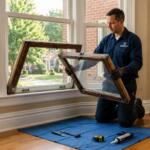
Even the highest-quality windows will underperform without proper installation. Maryland’s climate demands expert installation techniques to prevent air leakage, water infiltration, and thermal bridging.
Why Professional Installation Matters
Proper Air Sealing:
- Eliminates drafts that waste heating and cooling energy
- Prevents moisture infiltration that causes mold and rot
- Critical in Maryland’s humid summers and cold winters
- Requires specialized materials and techniques
Correct Flashing Installation:
- Directs water away from window openings
- Prevents leaks during Maryland’s heavy spring rains
- Protects structural framing from water damage
- Must integrate with home’s drainage system
Insulation Application:
- Low-expansion foam insulation fills gaps without distorting frames
- Maintains structural integrity and window operation
- Prevents thermal bridging in extreme temperatures
- Requires training and experience to apply correctly
Building Code Compliance:
- Maryland building codes specify minimum window performance
- Counties like Montgomery and Baltimore have additional requirements
- Professional installers ensure all code compliance
- Permits and inspections handled by installation company
Optimal Installation Timing for Maryland
Spring (March-May):
- Moderate temperatures ideal for installation
- Lower humidity levels
- Minimal impact on home heating/cooling
- Book early—peak installation season
Fall (September-November):
- Comfortable working conditions
- Prepare home for winter
- Less scheduling competition than spring
- Complete before heating season begins
Summer Considerations:
- Schedule morning installations to avoid peak heat
- Interior temperature control during installation
- Completed same-day to minimize exposure
- Higher demand—book several weeks in advance
Winter Installations:
- Possible with proper precautions
- Special low-temperature materials required
- Brief exposure to cold air during installation
- Lower demand may provide scheduling flexibility
Thompson Creek’s professional installation teams complete most window replacement projects in a single day, minimizing disruption to your Maryland home.
Replacement Windows for Different Maryland Regions
Maryland’s geographic diversity requires tailored window solutions for different areas of the state.
Coastal Maryland (Eastern Shore, Anne Arundel County)
Climate Challenges:
- Salt air corrosion
- Hurricane-force winds from tropical storms
- High humidity year-round
- Intense UV exposure
Recommended Features:
- Vinyl or fiberglass frames for corrosion resistance
- Impact-resistant glass for storm protection
- AAMA-tested wind resistance ratings
- Low-E coatings with low SHGC (0.25-0.30) for UV protection
- Multiple weatherstripping layers
Urban Maryland (Baltimore, Montgomery County)
Climate Challenges:
- Urban heat island effect increasing summer temperatures
- Noise pollution from traffic
- Security concerns
- Historic home preservation requirements
Recommended Features:
- Laminated glass for noise reduction
- Multi-point locking systems
- Low-E glass to combat urban heat
- Custom configurations for historic architecture
- Energy savings offset higher utility costs
Western Maryland (Garrett, Allegany Counties)
Climate Challenges:
- Coldest winter temperatures in Maryland
- Heavy snow loads
- High elevation wind exposure
- Longer heating season
Recommended Features:
- Triple-pane windows for maximum insulation
- Low U-factors (0.20 or below)
- Reinforced frames for snow load
- Warm-edge spacers to prevent condensation
- Focus on heat retention over solar heat gain
Central Maryland (Howard, Frederick Counties)
Climate Challenges:
- Temperature extremes from both mountain and coastal influences
- Moderate humidity
- Suburban setting with varied sun exposure
- Four distinct seasons
Recommended Features:
- Quality double-pane windows with Low-E glass
- Balanced SHGC (0.30-0.35) for year-round comfort
- Vinyl frames for low maintenance
- Standard insulation sufficient for moderate climate
- Focus on all-season performance
Long-Term Value: ROI on Maryland Window Replacement
Investing in quality replacement windows provides multiple returns for Maryland homeowners beyond energy savings.
Energy Cost Savings
Annual Savings Estimates:
- Replace single-pane windows: $300-600/year
- Replace builder-grade double-pane: $150-350/year
- Vary by home size, window count, and current efficiency
- Higher savings in extreme climate regions
Payback Period:
- Quality window replacement: 7-12 years typical
- Accelerated by energy efficiency rebates and tax credits
- Reduced HVAC maintenance from lower system strain
- Increased savings as energy costs rise
Home Value Increase
Appraisal Impact:
- New energy-efficient windows increase home value 5-10%
- Enhanced curb appeal attracts buyers
- Energy efficiency increasingly important to homebuyers
- Transfer able warranty adds value
ROI at Resale:
- Window replacement typically recovers 70-80% of cost
- Higher in competitive Maryland housing markets
- Premium features justify higher asking prices
- Attractive to buyers concerned with utility costs
Comfort and Quality of Life
Improved Indoor Comfort:
- Eliminate drafts and cold spots
- Reduce outside noise infiltration
- Consistent temperatures throughout home
- Less strain on HVAC systems extends equipment life
UV Protection:
- Prevents fading of furniture, carpets, and artwork
- Protects wood flooring from sun damage
- Maintains interior color and appearance
- Reduces glare on screens and televisions
Frequently Asked Questions About Maryland Window Replacement
When is the best time to replace windows in Maryland?
Spring (March-May) and fall (September-November) offer optimal installation conditions with moderate temperatures and lower humidity. However, quality window companies like Thompson Creek can install year-round with proper techniques. Schedule 4-8 weeks in advance during peak seasons.
How long do replacement windows last in Maryland’s climate?
Quality replacement windows with professional installation should last 20-30 years in Maryland. Thompson Creek’s custom-manufactured windows are backed by our 50-year No-Hassle Warranty, providing confidence in long-term performance despite Mid-Atlantic weather extremes.
Are triple-pane windows necessary for Maryland homes?
Triple-pane windows are recommended for western Maryland mountain regions, north-facing walls, and homes with particularly high energy costs. For most Maryland homeowners in Baltimore, Annapolis, and southern regions, premium double-pane windows with Low-E coatings and argon gas fill provide excellent performance at better value.
What window features matter most for Maryland’s climate?
Prioritize these features for Maryland’s four-season climate:
- U-factor of 0.30 or lower for winter insulation
- SHGC of 0.25-0.40 for balanced summer heat control
- Low-E glass with argon gas fill for year-round efficiency
- Quality weatherstripping for air leakage prevention
- ENERGY STAR® certification for Northern climate zone
- Professional installation to ensure proper performance
Do I need permits to replace windows in Maryland?
Most Maryland counties require permits for window replacement, though specific requirements vary by jurisdiction. Montgomery County, Baltimore County, and Howard County have detailed permitting processes. Professional window replacement companies like Thompson Creek handle all permit applications and inspections as part of their installation service.
How much can I save on energy bills with new windows?
Maryland homeowners typically save $200-400 annually by replacing old single-pane windows with ENERGY STAR® certified replacement windows. Savings vary based on home size, current window condition, number of windows replaced, and regional energy costs. Homes in extreme climate areas (western mountains or coastal regions) may see higher savings.
Can replacement windows improve my home’s resale value?
Quality replacement windows increase Maryland home values by 5-10% and typically provide 70-80% return on investment at resale. Energy efficiency is increasingly important to homebuyers, and Thompson Creek’s 50-year transferable warranty adds significant value. Improved curb appeal and lower utility costs make homes more attractive to potential buyers.
What makes Thompson Creek windows different from big box store windows?
Thompson Creek custom-manufactures every window in our Maryland facility for your specific home measurements—no stock sizes or generic solutions. This ensures perfect fit, maximum energy efficiency, and superior performance. Our complete accountability model means one company designs, manufactures, installs, and services your windows with our industry-leading 50-year warranty. Big box stores sell manufacturer-branded windows installed by third-party contractors, creating potential accountability gaps.
Why Choose Thompson Creek for Your Maryland Window Replacement
Thompson Creek has served Maryland homeowners for over 40 years with custom-manufactured windows engineered specifically for Mid-Atlantic climate conditions. Our 70,000 square foot manufacturing facility in Maryland produces windows designed to withstand the region’s temperature extremes, humidity, and coastal weather challenges. Every window installation includes our 50-year No-Hassle Warranty and professional installation by factory-trained technicians—complete accountability from design through service.
Ready to upgrade your Maryland home with climate-optimized replacement windows? Schedule your free in-home consultation today and discover how Thompson Creek’s custom-manufactured windows can reduce your energy costs while enhancing comfort year-round. Our local experts will assess your home’s specific needs and provide honest recommendations backed by four decades of Mid-Atlantic experience. Baltimore homeowners face additional considerations, the city’s historic row houses and non-standard window dimensions require custom manufacturing. Learn more about replacement windows Baltimore from Thompson Creek’s Maryland facility, 30 miles from downtown. The same climate demands apply across the DC metro area. Thompson Creek’s replacement windows Washington DC are engineered to the same Mid-Atlantic specifications from our Maryland facility, 15 miles from downtown