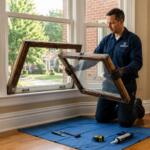
Owning a historic home in the Fan District, Church Hill, Monument Avenue, or one of Richmond’s other historic neighborhoods means weighing two different paths when your windows start to fail: restoring the originals or replacing them with modern energy-efficient windows. The right choice depends on your windows’ current condition, your home’s historic designation, your budget over time, and how much upkeep you’re willing to take on. This guide walks through both options so you can make a decision that fits your home and your household.
Richmond’s Historic District Requirements
If your home sits within one of Richmond’s designated historic districts, window changes typically need review from the Richmond Commission of Architectural Review before work begins. The commission generally wants to see that replacement materials and profiles closely match your home’s original period detailing, particularly on street-facing elevations. In practice, this means historic guidelines often favor restoration when a window is salvageable, while recognizing that a custom replacement may be the more realistic option once a window has deteriorated past the point of reliable repair. Working with a company that has experience navigating this kind of review can help avoid delays, and it’s worth confirming requirements with the commission directly before finalizing a plan.
The Case for Window Restoration
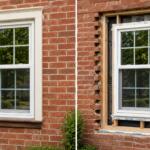
Restoration keeps your home’s original materials and craftsmanship in place, which matters for historic authenticity and, in many districts, for maintaining your home’s historic designation. Older wood windows were often built from old-growth lumber that can hold up for generations when properly maintained, and a full restoration typically involves removing failed glazing and paint, repairing or replacing rotted wood sections, reinstalling or upgrading weatherstripping, restoring original hardware, and refinishing the frame.
The tradeoff is ongoing maintenance. Richmond’s humid Mid-Atlantic climate is hard on wood, and restored windows generally need attention again every several years to stay ahead of moisture damage. Restoration timelines also tend to run longer than replacement, since each window is handled individually rather than manufactured and installed as a set.
The Case for Modern Replacement Windows
Replacement windows trade some of that hands-on craftsmanship for consistency and lower long-term upkeep. A well-built replacement window in a historic-appropriate style can offer tighter seals, better resistance to Richmond’s humidity, and multi-point hardware that’s more secure than many original mechanisms, all without the recurring maintenance cycle that wood restoration requires.
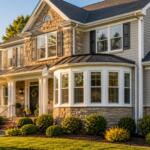
Double-hung windows are the most common historic window style in Richmond and are available in profiles designed to echo traditional sightlines. For homes with more distinctive architectural features, casement windows and bay windows are also available in configurations built to complement a historic facade rather than compete with it.
Vinyl frames are a common choice for replacement windows in this climate specifically because they don’t absorb moisture or rot the way wood can, which matters given how much humidity Richmond sees across a typical summer. Our guide on why vinyl performs well in this region goes into more detail on that tradeoff, and our look at how Richmond’s humidity affects different window types covers the climate side of that decision in more depth.
The Hybrid Approach
Many Richmond homeowners don’t treat this as an all-or-nothing decision. A common middle path is restoring the most visible, character-defining windows, often the ornate or street-facing ones, while replacing less visible windows on the rear or side of the home with historic-appropriate replacements. This can stretch a renovation budget further while still satisfying a historic commission’s expectations on the elevations that matter most to them.
Weighing the Decision for Your Home
A few factors tend to drive this decision more than any other:
Window condition. A window with isolated hardware or weatherstripping issues on an otherwise sound frame is usually a strong restoration candidate. A window with significant wood rot, a failed seal, or a warped frame is a harder and more expensive restoration case, and replacement often becomes the more practical option at that point.
Long-term cost, not just upfront cost. Restoration is generally less expensive per window upfront, but it comes with a recurring maintenance cycle. Replacement typically costs more upfront but is designed to need little more than routine cleaning for years afterward. Weighing the two against a longer time horizon, not just the initial project cost, gives a clearer picture of which option fits your budget.
Climate durability. Richmond’s combination of humid summers, cold snaps, and heavy seasonal rain is demanding on any window. Whichever option you choose, make sure the materials and installation are suited to handle that range.
Historic designation and resale. If your home carries a historic designation, confirm what your district requires before committing to either path, since some districts are stricter about street-facing elevations than others. For resale, buyers in Richmond’s historic neighborhoods often value windows that look period-appropriate regardless of whether they’re original or a well-matched replacement.
Tax Credits and Incentives to Ask About
Virginia’s state historic rehabilitation tax credit can offset a portion of qualifying rehabilitation costs on certified historic structures, and it’s worth asking the Virginia Department of Historic Resources whether your restoration project qualifies. On the replacement side, it’s worth noting that the federal residential energy tax credit that previously applied to qualifying window purchases expired for property placed in service after December 31, 2025, and is no longer available. Tax rules in this area change, so before you count on any specific credit, confirm current eligibility with a tax professional or the relevant state and federal agencies rather than relying on a general guide like this one.
Frequently Asked Questions
How long does each option take?
Restoration is typically handled window by window and can take a few weeks per window depending on the extent of the repair. A whole-home replacement project is generally much faster to install once the custom windows have been manufactured, though manufacturing lead time should be factored into your overall timeline.
Will replacement windows still look authentic in my historic home?
A well-matched replacement window can closely echo a historic profile, sightlines, and grid pattern, which is why many historic commissions approve custom replacements when the original is beyond reasonable repair. It’s still worth confirming your specific commission’s expectations before ordering.
Which window styles fit Richmond’s historic homes best?
Double-hung windows are the most historically consistent choice for most Richmond period homes. Casement and bay windows can also work well for specific architectural features, but they’re a better fit for some historic styles than others.
Can I restore some windows and replace others?
Yes. The hybrid approach, restoring prominent street-facing windows and replacing less visible ones, is a common and practical way to balance historic authenticity against budget and long-term maintenance.
How do replacement windows hold up in Richmond’s climate?
Vinyl-framed replacement windows with quality weatherstripping and sealed glass units are built to resist the humidity, temperature swings, and storms this region sees. Wood windows, whether original or restored, need more consistent upkeep to perform the same way over time.
What tax credits should I ask about?
Ask the Virginia Department of Historic Resources about the state historic rehabilitation tax credit if your project involves restoring a certified historic structure, and confirm current federal tax rules with a tax professional before assuming any window-specific credit applies, since federal rules in this area have recently changed.
Why Homeowners Choose Thompson Creek
Thompson Creek has served Mid-Atlantic homeowners, including in the Richmond area, since 1980, and every window is custom-manufactured at our 120,000 sq ft facility in Upper Marlboro, Maryland, engineered to fit historic openings as closely as new construction. Installation is handled by professional installation teams backed by Thompson Creek, and every window is backed by our 50-Year No-Hassle Warranty, covering both the product and its installation. Our windows are also AAMA-tested to withstand winds up to 146 mph, an important consideration given the storms this region sees.
Ready to Talk Through Your Options?
If you’re weighing restoration against replacement for your historic Richmond home, schedule a free consultation with Thompson Creek. A design consultant can look at your specific windows and walk through which approach, or which combination, makes the most sense for your home. If you already know replacement is the direction you’re leaning, getting accurate measurements is a useful first step before your consultation.